 Pod Save America Hosts Call on Democrats to Cut All Israel Military Aid, No Longer Accept AIPAC Funding
 Jews, Israelis Targeted in Austria Amid Surge in Antisemitic Incidents; Local Jewish Community Calls for Action
 ‘All of Our Strength’: Over 1,000 Pro-Israel Activists Gather in DC for Solidarity Conference
 ‘Devastated’: Wesley LePatner, Killed in Manhattan Mass Shooting, Was a Jewish Communal, Philanthropic Leader
 Sen. Angus King Vows to No Longer Vote for Israel Military Aid Until Gaza Conditions Improve
 Europe Won’t Pressure Israel to ‘Commit Suicide’ Amid Gaza Backlash, Palestinian State Push, Says Israeli FM
 Israel’s National Soccer Coach Attacked in Athens Before Soccer Fans Chant ‘F–K Israel, Free Palestine’ at Match
 New York Judge Sentences Neo-Nazi to 5 Years for Livestreaming Bomb Threats Against Jewish Hospitals
 US Pressures Lebanon to Issue Cabinet Decision to Disarm Hezbollah Before Talks Continue
 UK Plans to Recognize Palestinian State in September Unless Israel Meets Conditions, Starmer Says


Israeli Pharma Giant Teva Donates Millions of Doses of Potential Coronavirus Drug to US Hospitals
Error: Contact form not found.
 by Algemeiner Staff

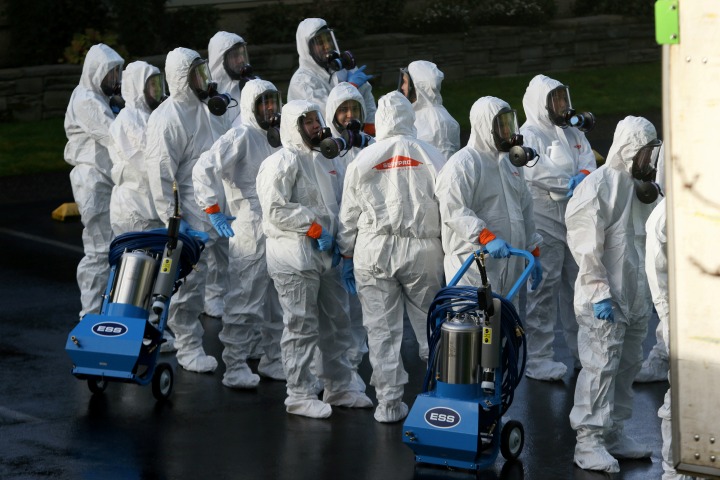
Members of a cleanup crew wearing hazardous material suits prepare to enter a Seattle-area nursing home at the epicenter of one of the biggest coronavirus outbreaks in the US, in Kirkland, Washington, March 11, 2020. Photo: Reuters / Jason Redmond.
Israeli pharmaceutical giant Teva on Friday announced that it would donate millions of tablets containing a possible coronavirus cure to hospitals across the US.
A statement from the company said that more than 6 million doses of hydroxychloroquine sulfate — touted as a potential remedy for coronavirus sufferers — would be distributed through its wholesalers.
“We are committed to helping to supply as many tablets as possible as demand for this treatment accelerates at no cost,” Brendan O’Grady — Teva Executive Vice President, North America Commercial — stated. “Immediately upon learning of the potential benefit of hyroxychloroquine, Teva began to assess supply and to urgently acquire additional ingredients to make more product while arranging for all of what we had to be distributed immediately.”
Hydroxychloroquine is an arthritis medicine that also can be used to prevent malaria. It is available in the US by prescription only. It is marketed under the brand name Plaquenil and it is also sold as a generic medicine.
Teva’s statement emphasized that while hydroxychloroquine was “not currently approved for use in the treatment of COVID-19, it is currently under investigation for efficacy against the coronavirus and has been requested by US government officials to be made available for use immediately.”
Teva added that it was “also reviewing supply of both hydroxychloroquine and chloroquine globally to determine whether there are additional supply and access opportunities for patients.”
At his White House press conference on Thursday, President Donald Trump hailed hydroxychloroquine as a potential “game-changer” as the US battles the spread of the virus.
Medical professionals were less sanguine, however. Asked about the president’s comments during an interview with CNN later on Thursday, Dr. Anthony Fauci — director of the National Institute of Allergy and Infectious Diseases — responded, “There’s no magic drug out there right now.”
Fauci added: “That doesn’t mean that we’re not going to do everything we can to make things that have even a hint of efficacy more readily available.”