 Pod Save America Hosts Call on Democrats to Cut All Israel Military Aid, No Longer Accept AIPAC Funding
 Jews, Israelis Targeted in Austria Amid Surge in Antisemitic Incidents; Local Jewish Community Calls for Action
 ‘All of Our Strength’: Over 1,000 Pro-Israel Activists Gather in DC for Solidarity Conference
 ‘Devastated’: Wesley LePatner, Killed in Manhattan Mass Shooting, Was a Jewish Communal, Philanthropic Leader
 Sen. Angus King Vows to No Longer Vote for Israel Military Aid Until Gaza Conditions Improve
 Europe Won’t Pressure Israel to ‘Commit Suicide’ Amid Gaza Backlash, Palestinian State Push, Says Israeli FM
 Israel’s National Soccer Coach Attacked in Athens Before Soccer Fans Chant ‘F–K Israel, Free Palestine’ at Match
 New York Judge Sentences Neo-Nazi to 5 Years for Livestreaming Bomb Threats Against Jewish Hospitals
 US Pressures Lebanon to Issue Cabinet Decision to Disarm Hezbollah Before Talks Continue
 UK Plans to Recognize Palestinian State in September Unless Israel Meets Conditions, Starmer Says


Israelis Told to Keep Within 100 Meters From Home for Recreation
Error: Contact form not found.
 by Reuters and Algemeiner Staff

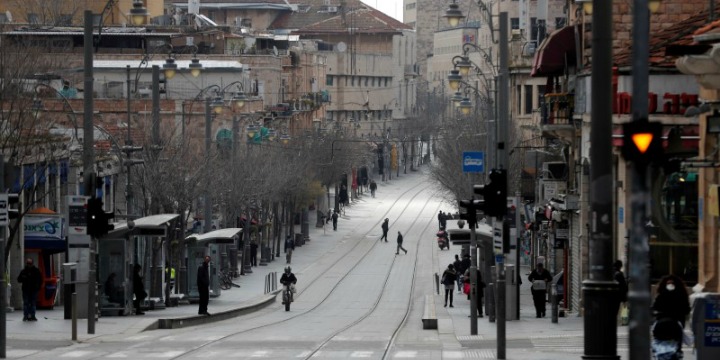
A general view of a usually-busy Jerusalem street is seen as Israel tightened a national stay-at-home policy following the spread of the coronavirus disease (COVID-19), March 22, 2020. Photo: Reuters / Ronen Zvulun / File.
Israelis hoping for a stroll or jog were instructed on Wednesday to stay within 100 meters of their homes for a week under tightened restrictions to curb the coronavirus.
Israel has confirmed more than 2,000 cases and five fatalities so far.
The new restrictions further reduced public transport, required employers to check workers for fever and set sanctions for people who defy rules.
Israelis have been instructed to stay home where possible, schools have been shut and many businesses have closed, prompting more than 500,000 layoffs so far.
The specter of people, out for fresh air, jogging and congregating on city streets has alarmed health authorities. The new 100 meter limit is meant to end such activity.
The private sector has had to limit employees at the workplace to 10 people or 30% of the company’s workforce, and most of the public sector has been put on leave.
Public transportation, already operating on reduced schedules, was restricted further to journeys to and from “essential” businesses and taxis were limited to one passenger.
Israelis, though, could still drive themselves to work or to shops for essentials, and food delivery services were operating.
Penalties ranging from fines to a six-month jail term were set for anyone defying the orders.
Employers were ordered to prevent anyone with a fever of 38 Celsius (100.4 Fahrenheit) from entering the workplace.
Israel’s central bank on Tuesday projected an economic contraction of 2.5 percent in 2020 as long as the partial lockdown eases by the end of April.
The coronavirus crisis comes as Israel is grappling with political deadlock after three inconclusive elections in less than a year. Israeli Prime Minister Benjamin Netanyahu is heading a caretaker government and his centrist political rival, former military chief Benny Gantz, has been tasked with forming a new coalition government.
But neither Gantz nor Netanyahu won the backing of a clear and stable parliamentary majority in the March 2 election and negotiations to form a unity government comprising both their parties have come to a halt in the past few days.