 Pod Save America Hosts Call on Democrats to Cut All Israel Military Aid, No Longer Accept AIPAC Funding
 Jews, Israelis Targeted in Austria Amid Surge in Antisemitic Incidents; Local Jewish Community Calls for Action
 ‘All of Our Strength’: Over 1,000 Pro-Israel Activists Gather in DC for Solidarity Conference
 ‘Devastated’: Wesley LePatner, Killed in Manhattan Mass Shooting, Was a Jewish Communal, Philanthropic Leader
 Sen. Angus King Vows to No Longer Vote for Israel Military Aid Until Gaza Conditions Improve
 Europe Won’t Pressure Israel to ‘Commit Suicide’ Amid Gaza Backlash, Palestinian State Push, Says Israeli FM
 Israel’s National Soccer Coach Attacked in Athens Before Soccer Fans Chant ‘F–K Israel, Free Palestine’ at Match
 New York Judge Sentences Neo-Nazi to 5 Years for Livestreaming Bomb Threats Against Jewish Hospitals
 US Pressures Lebanon to Issue Cabinet Decision to Disarm Hezbollah Before Talks Continue
 UK Plans to Recognize Palestinian State in September Unless Israel Meets Conditions, Starmer Says


Israel’s Image on Ramadan TV Programs Has Highs and Lows
Error: Contact form not found.
 by Edy Cohen

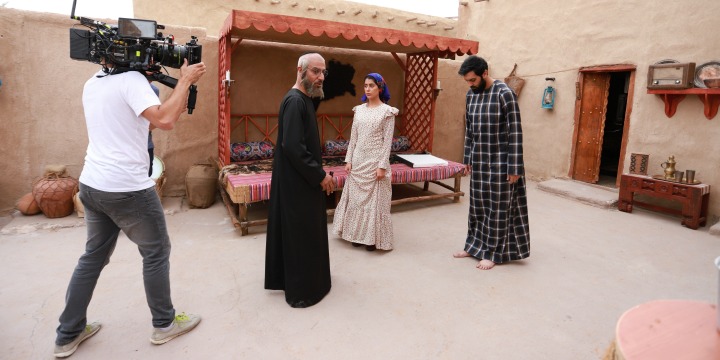
Saudi actor Abdulmohsin Al Nimir (L), Kuwaiti actress Farah al Saraf (C) and Iraqi actor Nawaf Al Najam (R) are seen at a shooting set during filming of MBC’s Ramadan Arabic series ‘Umm Haroun,’ in Dubai, United Arab Emirates, Dec. 7, 2019. Photo: Al Fahad Establishment for Art Production & Distribution / Handout via Reuters.
During the holy month of Ramadan, which is one of the Five Pillars of Islam, adult Muslims fast from sunrise to sunset. (This year is unusual as there is debate over whether fasting is appropriate amid the coronavirus crisis.)
A Ramadan tradition has developed over time in which Arab Muslim families gather after breaking the fast each evening to watch television shows that were produced specifically for the holiday. The content is typically family-oriented, and each episode is aired once during the month.
Ramadan TV is thus a hallmark of the holiest time of the year. It is emblematic of the principles underlying the observance of the holiday — sanctity, community, reflection, and joy.
In recent years, however, Ramadan TV has become highly politicized. Saudi Arabia banned the broadcast of Turkish programs, supposedly because of an over-identification of young Arabs with the shows’ protagonists. In Egypt, a drama series called Haret al-Yahud (The Jewish Quarter) portrays Jews and Israel in a negative light, and presents a distorted history of the establishment of the Jewish state. The plot blames Israel for conflict between Jews and Arabs and downplays the expulsion by the Egyptian government of most of the country’s Jewish community.
Arab governments have long understood the potential of television and other visual media as a means of transmitting political messages. They actively promote TV shows that conform to their agendas, such as fostering negative images of political rivals both abroad and at home. Many dramas produced in recent years, especially in Turkey and Egypt, have featured Jewish, Israeli, and Zionist elements for the purpose of demonizing them.
As noted, domestic enemies are targeted as well as Jews. The Egyptian government bankrolled a TV show called al-Jama’a that depicts the Muslim Brotherhood even more negatively than the Jews and Israel.
There are three shows that were broadcast this year dealing with Jewish people and politics that deserve particular attention.
The first, an Egyptian show called The End, is the first science fiction series to be aired during Ramadan. It depicts the destruction of Israel 100 years after its establishment as a result of a war that “liberates” Jerusalem.
And what happens to Israel’s Jewish population in the show’s universe? They “return” to the countries from which they came — a message reiterating the antisemitic idea that Jews are foreign to the region. Despite the fact that Egypt and Israel signed a peace treaty 41 years ago, the culture still considers the annihilation of Israel something to be imagined with pleasure.
In contrast to the Egyptian-produced show, the other two series, which were produced either directly by Saudi Arabia or with its approval, indicate a positive trend regarding attitudes toward Israel in the Gulf States.
Um Haroun (Mother of Aaron), which depicts the lives of Jews in the Gulf region, was seen by many as an effort to promote normalization of relations with Israel. The first episode illustrates the daily life of a Jewish woman who lives, as does the rest of her community, side-by-side with her Muslim neighbors. The episode concludes with the establishment of the State of Israel, a monumental event that disrupts the harmony between Muslims and Jews and leads to the murder of a Jewish resident. Despite that turn in the story, the show portrays the Jewish community in a positive light.
The third show, Exit 7, is similarly of Saudi origin and is also considered an effort to promote closer ties with Israel. It features the most famous actors in the kingdom. While it deals primarily with social issues, the first episode contains heavy criticism of the Palestinians. One scene shows the main character saying he does business with Israel because Israel is not really an enemy. Hinting at the Palestinians, he says the real enemy is someone who doesn’t appreciate you. This scene is a depiction of the palpable existing tension between Saudis and the Palestinians.
The Palestinians, who oppose normalization with Israel by any segment of the Arab world and consider it deeply threatening to their cause, were enraged to see such scenes aired on Saudi television. But perhaps this is a hopeful sign for Israel’s future in the region.
Dr. Edy Cohen is a researcher at the BESA Center and author of the book The Holocaust in the Eyes of Mahmoud Abbas (Hebrew).
A version of this article was originally published by Israel Today and The BESA Center.





