 Pod Save America Hosts Call on Democrats to Cut All Israel Military Aid, No Longer Accept AIPAC Funding
 Jews, Israelis Targeted in Austria Amid Surge in Antisemitic Incidents; Local Jewish Community Calls for Action
 ‘All of Our Strength’: Over 1,000 Pro-Israel Activists Gather in DC for Solidarity Conference
 ‘Devastated’: Wesley LePatner, Killed in Manhattan Mass Shooting, Was a Jewish Communal, Philanthropic Leader
 Sen. Angus King Vows to No Longer Vote for Israel Military Aid Until Gaza Conditions Improve
 Europe Won’t Pressure Israel to ‘Commit Suicide’ Amid Gaza Backlash, Palestinian State Push, Says Israeli FM
 Israel’s National Soccer Coach Attacked in Athens Before Soccer Fans Chant ‘F–K Israel, Free Palestine’ at Match
 New York Judge Sentences Neo-Nazi to 5 Years for Livestreaming Bomb Threats Against Jewish Hospitals
 US Pressures Lebanon to Issue Cabinet Decision to Disarm Hezbollah Before Talks Continue
 UK Plans to Recognize Palestinian State in September Unless Israel Meets Conditions, Starmer Says


Yemen Pledging Drive Hopes to Raise $2.4 Billion to Save Aid Ops as Virus Spreads
Error: Contact form not found.
 by Reuters and Algemeiner Staff

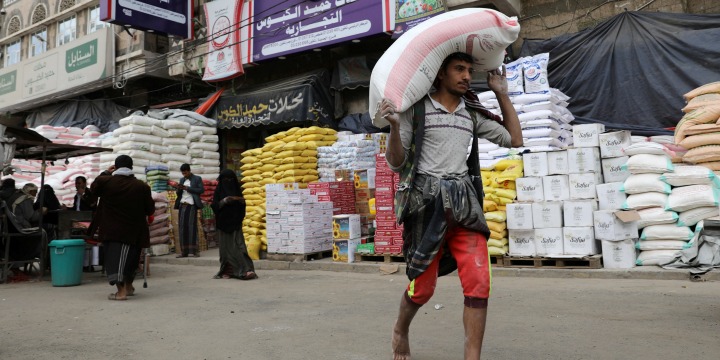
A worker carries a sack of wheat flour outside a food store, amid concerns over the spread of the coronavirus disease (COVID-19), in Sanaa, Yemen, May 13, 2020. Photo: Reuters / Khaled Abdullah.
The United Nations and Saudi Arabia host a pledging conference for war-ravaged Yemen on Tuesday to help raise some $2.4 billion as funding shortages imperil the world’s biggest aid operation.
The conflict between a Saudi-led coalition and the Iran-aligned Houthi group has left 80 percent of Yemen’s population reliant on aid. The country now faces the spread of the novel coronavirus among an acutely malnourished people.
“Anything below $1.6 billion and the operation will be facing catastrophic cutbacks,” Lise Grande, UN Humanitarian Coordinator for Yemen, told Reuters just days prior to the conference.
“We won’t be able to provide the food people need to survive, or the health care they need or the water or sanitation or the nutrition support which helps to keep 2 million malnourished children from dying,” she said.
The UN-coordinated humanitarian plan received $3.2 billion last year, but so far in 2020 has only secured $474 million, aid chief Mark Lowcock said on Thursday, adding that most agencies are weeks away from being broke.
Lowcock, asked about Saudi Arabia co-hosting the event, said Riyadh was a large donor and the UN would continue to call out warring parties on actions “they should not be doing.”
Saudi Arabia has already pledged $525 million. The United States said last month it would extend $225 million in emergency aid for food.
Some $180 million of required funding is needed to combat coronavirus in a country with shattered health systems and inadequate testing capabilities.
“Yemen is at a precipice. All indications point to COVID19 spreading fast and wide across the country, overwhelming the health system,” pledge organizers said in a statement on Tuesday.
Yemen has been mired in violence since the Houthis ousted the Saudi-backed government from the capital, Sanaa, in late 2014, prompting the coalition to intervene a few months later.
Donors had cut funding to Houthi-held areas over concerns the group is hindering aid delivery, a charge it denies.
Grande said several issues had now been addressed by Houthi authorities, including waiving a 2-percent tax on aid operations, allowing needs assessments and providing the World Food Programme with approval to start a pilot on a biometric registration and verification system.





