 Pod Save America Hosts Call on Democrats to Cut All Israel Military Aid, No Longer Accept AIPAC Funding
 Jews, Israelis Targeted in Austria Amid Surge in Antisemitic Incidents; Local Jewish Community Calls for Action
 ‘All of Our Strength’: Over 1,000 Pro-Israel Activists Gather in DC for Solidarity Conference
 ‘Devastated’: Wesley LePatner, Killed in Manhattan Mass Shooting, Was a Jewish Communal, Philanthropic Leader
 Sen. Angus King Vows to No Longer Vote for Israel Military Aid Until Gaza Conditions Improve
 Europe Won’t Pressure Israel to ‘Commit Suicide’ Amid Gaza Backlash, Palestinian State Push, Says Israeli FM
 Israel’s National Soccer Coach Attacked in Athens Before Soccer Fans Chant ‘F–K Israel, Free Palestine’ at Match
 New York Judge Sentences Neo-Nazi to 5 Years for Livestreaming Bomb Threats Against Jewish Hospitals
 US Pressures Lebanon to Issue Cabinet Decision to Disarm Hezbollah Before Talks Continue
 UK Plans to Recognize Palestinian State in September Unless Israel Meets Conditions, Starmer Says


Trump’s Troop Cut in Germany Blindsided Senior US Officials
Error: Contact form not found.
 by Reuters and Algemeiner Staff

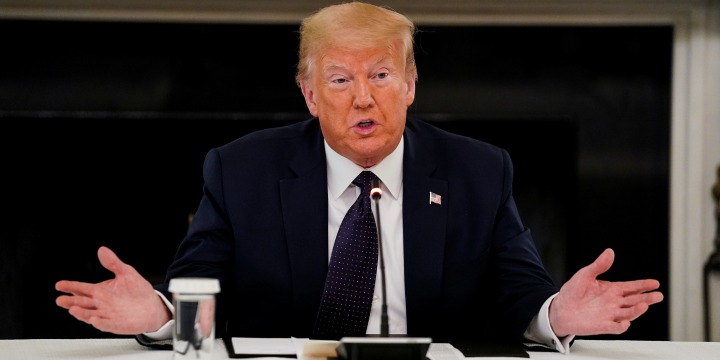
US President Donald Trump. Photo: Reuters / Kevin Lamarque.
President Donald Trump’s decision to cut US troop levels in Germany blindsided a number of senior national security officials, according to five sources familiar with the matter, and the Pentagon had yet to receive a formal order to carry it out, Reuters has learned.
Trump decided to remove 9,500 troops from Germany, one of America’s strongest allies, reducing the number there to 25,000 from 34,500, a senior US official said on Friday.
That official said it was the result of months of work by the US military leadership and had nothing to do with tensions between Trump and German Chancellor Angela Merkel, who thwarted his plan to host an in-person Group of Seven (G7) summit this month.
But other sources familiar with the matter said a number of US officials at the White House, State Department and Pentagon were surprised by the decision and they offered explanations ranging from Trump’s pique over the G7 to the influence of Richard Grenell, the former US ambassador to Germany and a Trump loyalist.
Reuters could not determine if Grenell had played a direct role with Trump in the decision-making. Grenell resigned his post on June 1, according to a State Department spokeswoman.
The Defense and State Departments referred questions to the White House National Security Council, which declined comment.
Asked for comment, Grenell said that “this is all gossip” and declined to address specific questions about the decision and his role in it. The reduction, he said, had been “in the works since last year.”
He underscored US frustration over Germany’s failure to meet a NATO target of defense spending of 2 percent of GDP. He noted that NATO Secretary General Jens Stoltenberg named Germany as the only country that had not submitted a credible plan for how to reach their commitment.
At an online event hosted by the Atlantic Council think tank on Monday, Stoltenberg declined to comment on what he termed “media leakages and media speculation” when asked about US plans to cut troop numbers in Germany. He said NATO was “constantly consulting with the United States, with other NATO allies on the military posture, presence in Europe.”
Speaking on condition of anonymity, a US official told Reuters the Pentagon had not received a formal order to cut troops and that the decision caught some Defense Department officials off guard and scrambling to figure out its meaning and impact on relations with Germany.
Germany was not consulted before the decision was first reported by The Wall Street Journal on Friday, two sources familiar with the matter said.
German government officials said on Monday that Berlin had not received confirmation of the US move. But Peter Beyer, the German coordinator for transatlantic ties, said it would “shake the pillars of the transatlantic relationship.”
The Trump administration pushed to reduce US troops in Germany for years and Grenell has criticized Berlin in public and private for failing to meet the NATO target of spending 2 percent of GDP on defense, said a source briefed on US-German military relations.
“In that sense, it wasn’t a surprise, but there was no consultation or coordination. And Trump administration officials had said they did not expect a withdrawal of forces,” the source added.
The decision — which has not been officially confirmed by the White House — also surprised a number of senior national security officials in the US government.
Senior State Department, Pentagon and some national security council officials were blindsided and “learned something was up when calls started coming around and the WSJ article hit,” said a third source familiar with the matter.
‘Not playing ball’
A US military drawdown from Germany could sharpen trans-Atlantic tensions that Trump has fueled by questioning the value of NATO and criticizing some alliance members’ defense spending.
Security experts have called the withdrawal plan a “gift” to Russia as it comes amid serious tensions between Washington and Moscow over arms control, Moscow’s support for separatists in Ukraine, the US withdrawal from the Iran nuclear deal and other issues.
But current and former officials noted the Trump administration had at times announced steps — such as the total withdrawal of US troops from Syria in 2018 or an immediate $1 billion cut in US funding for Afghanistan in March — that did not come to pass.
A congressional aide familiar with the matter said he was told Trump’s decision was motivated, in part, by Merkel’s reluctance to attend the US G7 summit because of the coronavirus pandemic.
“This was originally only done at very high levels and he (Grenell) was involved. This was kept extremely close hold,” said the congressional aide on condition of anonymity, saying he was told the decision was “sped up because he (Trump) was mad at Merkel for cancelling his G7 party because of COVID.”
US Ambassador to Poland Georgette Mosbacher and Grenell publicly warned in August that Trump could withdraw some troops from Germany and suggested they could be relocated to Poland unless Merkel responded to Trump’s calls to increase defense spending.
“It would be the ultimate kind of slap to Germany if they were rotated out of Germany and into Poland,” said a former senior US official familiar with the matter, who requested anonymity in order to speak freely. “From their (Grenell’s and Mosbacher’s) point of view, the Germans were not playing ball and should be punished.”