 Pod Save America Hosts Call on Democrats to Cut All Israel Military Aid, No Longer Accept AIPAC Funding
 Jews, Israelis Targeted in Austria Amid Surge in Antisemitic Incidents; Local Jewish Community Calls for Action
 ‘All of Our Strength’: Over 1,000 Pro-Israel Activists Gather in DC for Solidarity Conference
 ‘Devastated’: Wesley LePatner, Killed in Manhattan Mass Shooting, Was a Jewish Communal, Philanthropic Leader
 Sen. Angus King Vows to No Longer Vote for Israel Military Aid Until Gaza Conditions Improve
 Europe Won’t Pressure Israel to ‘Commit Suicide’ Amid Gaza Backlash, Palestinian State Push, Says Israeli FM
 Israel’s National Soccer Coach Attacked in Athens Before Soccer Fans Chant ‘F–K Israel, Free Palestine’ at Match
 New York Judge Sentences Neo-Nazi to 5 Years for Livestreaming Bomb Threats Against Jewish Hospitals
 US Pressures Lebanon to Issue Cabinet Decision to Disarm Hezbollah Before Talks Continue
 UK Plans to Recognize Palestinian State in September Unless Israel Meets Conditions, Starmer Says


Jewish Scholars and the Tangled History of Race Relations
Error: Contact form not found.
 by Harold Brackman

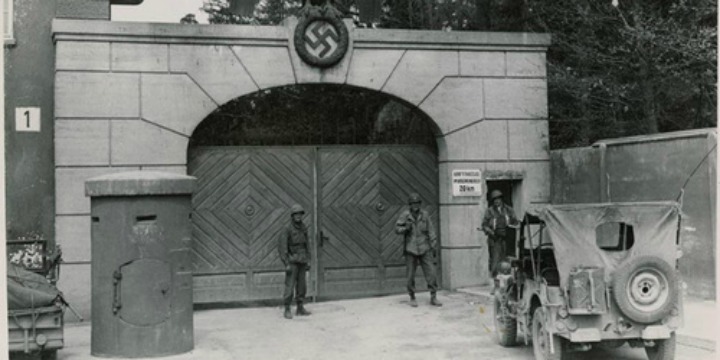
The front gate of the Dachau concentration camp. Photo: Wiki Commons.
Bruno Bettelheim survived pre-war Dachau and Buchenwald to come to the US, where he won acclaim as a psychoanalytic authority on concentration camp victims and autistic children. In 1990, he committed suicide and his reputation plummeted after allegations made against him.
My concern is Bettelheim’s first publication, 1943’s Individual and Mass Behavior in Extreme Situations, and its unanticipated impact on studies of slavery’s effects on African-Americans.
In 1959, historian Stanley Elkins, a Jewish World War II veteran, authored Slavery: A Problem in American Institutional and Intellectual Life.
The 1960s began with Bettelheim’s essay in Harper’s Magazine criticizing Anne Frank’s family for “hiding out in the attic” (he considered Europe’s Jews “passive” during the Holocaust). It continued with Bettelheim’s influence on Hannah Arendt’s thesis in Eichmann in Jerusalem that Jews, compelled by Nazis to run wartime Judenrats, were complicit in the Holocaust.
Relying on Bettelheim, Elkins argued that concentration camp inmates — a “cross section” of Europeans not solely Jews — were “infantilized” by the horrific experience. He read little in slave memoirs, but argued that the same applied to American slaves. He discounted the differences between plantations where slaves had to be kept alive for profit and camps whose motive was murder.
Then — after the 1965 race riots — a new generation of scholars, mostly African-Americans and some Jews, demolished Elkins’ book for shoddy research and dubious theorizing. Others found merits to his arguments.
By the late 1960s, Elkins’ book had contributed to an unfortunate breakdown — of the African-American and Jewish civil rights alliance. Black radicals began to blame Jewish liberals like Elkins for distorting African-American history in order to make former slaves look “weak.”
Historian Harold Brackman is coauthor with Ephraim Isaac of From Abraham to Obama: A History of Jews, Africans, and African Americans (Africa World Press, 2015).