 Pod Save America Hosts Call on Democrats to Cut All Israel Military Aid, No Longer Accept AIPAC Funding
 Jews, Israelis Targeted in Austria Amid Surge in Antisemitic Incidents; Local Jewish Community Calls for Action
 ‘All of Our Strength’: Over 1,000 Pro-Israel Activists Gather in DC for Solidarity Conference
 ‘Devastated’: Wesley LePatner, Killed in Manhattan Mass Shooting, Was a Jewish Communal, Philanthropic Leader
 Sen. Angus King Vows to No Longer Vote for Israel Military Aid Until Gaza Conditions Improve
 Europe Won’t Pressure Israel to ‘Commit Suicide’ Amid Gaza Backlash, Palestinian State Push, Says Israeli FM
 Israel’s National Soccer Coach Attacked in Athens Before Soccer Fans Chant ‘F–K Israel, Free Palestine’ at Match
 New York Judge Sentences Neo-Nazi to 5 Years for Livestreaming Bomb Threats Against Jewish Hospitals
 US Pressures Lebanon to Issue Cabinet Decision to Disarm Hezbollah Before Talks Continue
 UK Plans to Recognize Palestinian State in September Unless Israel Meets Conditions, Starmer Says


Tel Aviv University, Bayer to Test Drugs on 3D-Printed Human Heart Tissue
Error: Contact form not found.
 by Israel Hayom / JNS.org

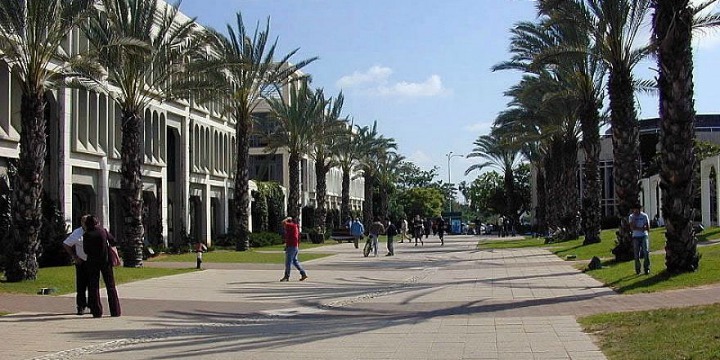
Leigh Engineering Faculty Boulevard, Tel Aviv University. Photo: Ido Perelmutter via Wikimedia Commons.
JNS.org – Tel Aviv University has printed human heart tissues on a 3D-printer to be used to test the cardiotoxicity of experimental drugs, as part of a collaboration between the university’s tech-transfer company, Ramot, and German pharmaceutical giant Bayer.
It was undertaken in TAU Professor Tal Dvir’s Laboratory for Tissue Engineering and Regenerative Medicine.
“We are excited to start this new collaboration with Tel Aviv University, which will address a new area of early assessment of safety and tolerability of drug candidates,” said Eckhard von Keutz, head of Translational Sciences at Bayer. “We already have a global network of partners, and this new project will enable Bayer to expand its open innovation activities to Israel, which provides a dynamic ecosystem for innovation in biotech and medical research.”
Last April, Dvir’s lab successfully produced the first-ever 3D-printed heart using tissue extracted from a patient. Such technology could revolutionize drug screening.
Drug candidates go through several stages of screening: First, the new compound is tested on human tissue cultures in Petri dishes. Next, it is administered to lab animals. Then the drug is approved for human clinical trials.
The 3D-printed tissues could make the process faster, cheaper and more efficient, said the university.
“In a Petri dish, all the cells line up in 2D, and it’s only one type of cell,” explained Dvir. “In contrast, our engineered tissues are 3D-printed, and therefore better resemble real heart tissues. Our printed tissues contain cardiac muscle, blood vessels and the extracellular matrix that connects the different cells biochemically, mechanically and electrically. Moving away from Petri dishes to 3D-printed tissues could significantly improve drug tests, saving precious time and money with the hope of producing safer and more effective medication.”
He added that “our end goal is to engineer whole human hearts, including all the different chambers, valves, arteries and veins—the best analog of this complex organ–for an even better toxicological screening process.”
According to a press release by Bayer, Ramot licensed the technology to a spin-off company, Matricelf, whose first focus is on engineering personalized spinal-cord implants to treat paralyzed patients.