 Pod Save America Hosts Call on Democrats to Cut All Israel Military Aid, No Longer Accept AIPAC Funding
 Jews, Israelis Targeted in Austria Amid Surge in Antisemitic Incidents; Local Jewish Community Calls for Action
 ‘All of Our Strength’: Over 1,000 Pro-Israel Activists Gather in DC for Solidarity Conference
 ‘Devastated’: Wesley LePatner, Killed in Manhattan Mass Shooting, Was a Jewish Communal, Philanthropic Leader
 Sen. Angus King Vows to No Longer Vote for Israel Military Aid Until Gaza Conditions Improve
 Europe Won’t Pressure Israel to ‘Commit Suicide’ Amid Gaza Backlash, Palestinian State Push, Says Israeli FM
 Israel’s National Soccer Coach Attacked in Athens Before Soccer Fans Chant ‘F–K Israel, Free Palestine’ at Match
 New York Judge Sentences Neo-Nazi to 5 Years for Livestreaming Bomb Threats Against Jewish Hospitals
 US Pressures Lebanon to Issue Cabinet Decision to Disarm Hezbollah Before Talks Continue
 UK Plans to Recognize Palestinian State in September Unless Israel Meets Conditions, Starmer Says


For Israel, Disasters Like COVID-19 Necessitate a New Mindset and Modus Operandi
Error: Contact form not found.
 by Gershon Hacohen

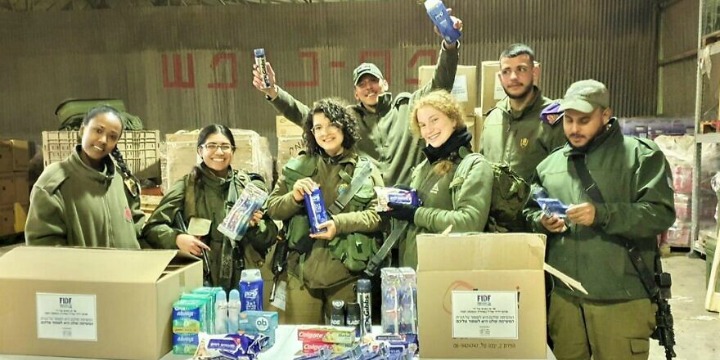
Israeli soldiers on base receiving hygiene kits and other packages while stationed there due to the coronavirus (COVID-19) from Friends of the Israel Defense Forces, Marcn 2020. Photo: FIDF.
In times of crisis, it is natural for people and societies to put their trust in organizations that were built to deal with emergencies. But emergencies are not all the same, and can in fact set new precedents. Even when they contain familiar elements, such as collapsing buildings in an earthquake, each disaster is unique in terms of nature, scope, and intensity.
The degree of damage to vital infrastructure such as power plants, hospitals, roads, bridges, and communications largely determines the status of the event as a precedent-setting crisis. Organizations like the IDF’s Home Front Command are geared toward dealing with certain disaster scenarios, but they can find themselves unprepared to handle hitherto unknown emergencies.
Even armies, for all their constant preparation for war, can be thrown dangerously off balance in the face of unprecedented developments. For example, the IDF mishandled the first year of the Palestinian intifada that broke out in December 1987. Similarly, the execution of the Gaza disengagement in the summer of 2005 necessitated six months of thorough preparation. As commander of the IDF and police forces during that operation, I can attest to the complexity of the preparations required to adapt the structure and modus operandi of forces to an unprecedented mission.
A distinction must therefore be drawn between two types of emergencies: those that are familiar and conform to the modes of preparedness and standard operating procedures (SOP) of existing emergency organizations, and those that are unprecedented and require a brand new organizational and operational logic in the face of an unpredictable and unfamiliar situation. In such circumstances, existing emergency organizations may find themselves ill-prepared for their unique new challenge. The COVID-19 crisis is by every possible measure an unprecedented state of emergency.
Therein lies the trap attending the arrogance of the modern state, which should avoid unqualified promises to successfully manage unprecedented emergencies through routine organizational and administrative tools and SOPs. Unique disasters necessitate a brand new mindset and modus operandi.
Maj. Gen. (res.) Gershon Hacohen is a senior research fellow at the Begin-Sadat Center for Strategic Studies. He served in the IDF for 42 years. He commanded troops in battles with Egypt and Syria. He was formerly a corps commander and commander of the IDF Military Colleges.
A version of this article was originally published by Liberal and The BESA Center.