 Pod Save America Hosts Call on Democrats to Cut All Israel Military Aid, No Longer Accept AIPAC Funding
 Jews, Israelis Targeted in Austria Amid Surge in Antisemitic Incidents; Local Jewish Community Calls for Action
 ‘All of Our Strength’: Over 1,000 Pro-Israel Activists Gather in DC for Solidarity Conference
 ‘Devastated’: Wesley LePatner, Killed in Manhattan Mass Shooting, Was a Jewish Communal, Philanthropic Leader
 Sen. Angus King Vows to No Longer Vote for Israel Military Aid Until Gaza Conditions Improve
 Europe Won’t Pressure Israel to ‘Commit Suicide’ Amid Gaza Backlash, Palestinian State Push, Says Israeli FM
 Israel’s National Soccer Coach Attacked in Athens Before Soccer Fans Chant ‘F–K Israel, Free Palestine’ at Match
 New York Judge Sentences Neo-Nazi to 5 Years for Livestreaming Bomb Threats Against Jewish Hospitals
 US Pressures Lebanon to Issue Cabinet Decision to Disarm Hezbollah Before Talks Continue
 UK Plans to Recognize Palestinian State in September Unless Israel Meets Conditions, Starmer Says


IAEA and US Pressure Iran Over Uranium Particles at ‘Atomic Warehouse’
Error: Contact form not found.
 by Reuters and Algemeiner Staff

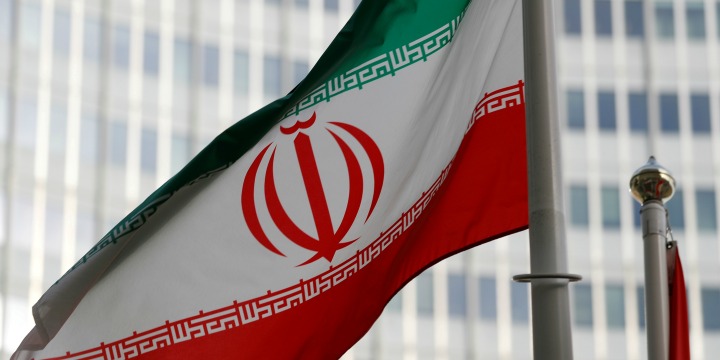
An Iranian flag flutters in front the International Atomic Energy Agency (IAEA) headquarters in Vienna, Austria, March 4, 2019. Photo: Reuters / Leonhard Foeger / File.
The UN nuclear watchdog and the United States pressured Iran on Wednesday to finally explain the origin of uranium particles found almost two years ago at an old but undeclared site that Israel has called a “secret atomic warehouse.”
Israeli Prime Minister Benjamin Netanyahu drew attention to the Turqazabad site in Tehran in a speech to the United Nations in September 2018, urging the International Atomic Energy Agency to visit it. Iran called it a carpet-cleaning facility.
IAEA inspectors went there in February 2019 and took environmental samples that showed traces of processed uranium. The Vienna-based UN watchdog has been seeking answers on where those traces came from ever since; it says only part of Iran‘s explanations have held water.
“We believe they need to give us information which is credible. What they are telling us from a technical point of view doesn’t add up, so they need to clarify this,” IAEA Director General Rafael Grossi told a news conference during a quarterly meeting of his agency’s 35-nation Board of Governors.
The IAEA and US intelligence services have long believed Iran had a coordinated, clandestine nuclear weapons program that it halted in 2003. Iran‘s 2015 nuclear deal with major powers effectively drew a line under much of its past.
Irrespective of the deal, however, the IAEA is in charge of accounting for all nuclear material in countries that have ratified the global Non-Proliferation Treaty to ensure none is being diverted to make nuclear weapons, even if evidence of previously unknown material is many years old.
Israel has said it seized part of an Iranian “archive” of its past nuclear work, and has used that to call attention to Iranian activities long predating the 2015 deal.
Iran has objected to use of that archive material, denouncing “attempts to open an endless process of verifying and cleaning-up of ever-continuing fabricated allegations.” It claims it has never sought to weaponize nuclear energy.
An IAEA report last week said further analysis of the Turqazabad samples found “isotopically altered particles of low enriched uranium.” Similar particles were found in Iran in the past, linked to secretly imported centrifuge components originally from Pakistan, it added.
“Whatever nuclear material left such traces was very likely enriched or irradiated,” the United States said in its statement to the board. “This raises a whole new series of questions about where such material came from and what Iran may still be hiding. It should be of the utmost concern to all Board members.”