 Pod Save America Hosts Call on Democrats to Cut All Israel Military Aid, No Longer Accept AIPAC Funding
 Jews, Israelis Targeted in Austria Amid Surge in Antisemitic Incidents; Local Jewish Community Calls for Action
 ‘All of Our Strength’: Over 1,000 Pro-Israel Activists Gather in DC for Solidarity Conference
 ‘Devastated’: Wesley LePatner, Killed in Manhattan Mass Shooting, Was a Jewish Communal, Philanthropic Leader
 Sen. Angus King Vows to No Longer Vote for Israel Military Aid Until Gaza Conditions Improve
 Europe Won’t Pressure Israel to ‘Commit Suicide’ Amid Gaza Backlash, Palestinian State Push, Says Israeli FM
 Israel’s National Soccer Coach Attacked in Athens Before Soccer Fans Chant ‘F–K Israel, Free Palestine’ at Match
 New York Judge Sentences Neo-Nazi to 5 Years for Livestreaming Bomb Threats Against Jewish Hospitals
 US Pressures Lebanon to Issue Cabinet Decision to Disarm Hezbollah Before Talks Continue
 UK Plans to Recognize Palestinian State in September Unless Israel Meets Conditions, Starmer Says


David Riesman and American Assimilation
Error: Contact form not found.
 by Harold Brackman

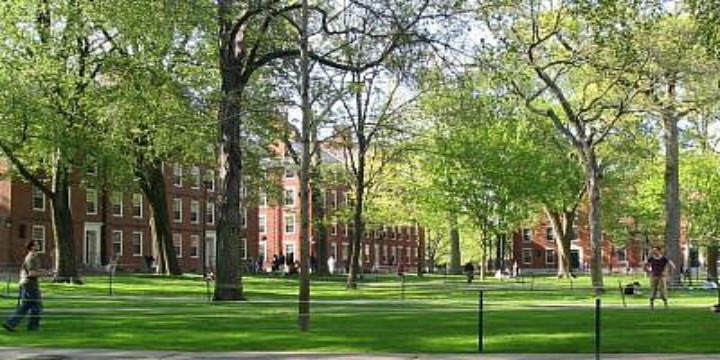
The Harvard campus. Photo: Wiki Commons.
Today, David Riesman is mostly remembered for his celebrated The Lonely Crowd (1950).
American Jewish life was hardly mentioned. Yet the book is inflected by Riesman’s Jewish identity.
Before The Lonely Crowd, Riesman wrote a biography of the maverick economist Thorstein Veblen. Veblen authored an influential essay arguing that Jews became intellectual innovators because they were “marginal men” belonging to a minority in-but-not-of western Christian societies. Riesman depicted Veblen as “a marginal man” because his Norwegian immigrant family’s isolation on a Wisconsin farm made him unable to “assimilate and accept the available forms of Americanism.”
Riesman was born in Philadelphia in 1909 to a well-to-do German-Jewish family headed by a doctor who was a distinguished clinician at the University of Pennsylvania. At age 22, Riesman graduated from Harvard with a degree in biochemistry. He then excelled at the Harvard Law Review, and clerked for Supreme Court Justice Louis Brandeis.
After working for Sperry Gyroscope during World War II, Riesman wrote The Lonely Crowd while on a fellowship at Yale. In 1958, he became a professor of sociology at Harvard. Riesman was psychoanalyzed by Erich Fromm, and was influenced by the Freudian and Marxist analyses of Jewish émigré intellectuals belonging to the Frankfurt School.
As Susan Glenn has pointed out, intramural Jewish conflicts shaped Riesman’s career until his study of the clash between “other-directed” conformity and “inner-directed” individualism in American life propelled him onto the cover of TIME magazine. In 1953 — in Phylon, an African-American journal — Riesman analyzed “a very savage fight” at a Long Island Jewish hospital over whether or not to install a kosher kitchen.
Not a parochial dispute in Riesman’s eyes, this was a struggle between laudable American pluralism and what now might be called suffocating “identity politics.” The crux of the matter was whether doctors “are physicians and efficient hospital administrators or policemen for a kind of ‘Israeli’ extraterritoriality.” Riesman concluded: “If Hitler had not attacked and exterminated Jews, the physicians in the Long Island hospital would find it easier to resist fanatic politicians.”
Since 1946, Riesman had been changing his focus from civil liberty issues to concern over internal minority conflicts in which groups like Jews and African-Americans tried to impose conformity on their own dissidents. He accepted the view that antisemitism was a declining issue, much less important than the fight against “totalitarian” Russia that Jewish intellectuals should lead. But he cautioned Jewish organizations to stop trying to impose acceptance of Jewish statehood on reluctant Jews.
Riesman went beyond secularism to distance himself from membership in Jewish organizations as “a needful preventive against any tendencies to become false and pious about the Jewish past and present.”
Only toward the end of The Lonely Crowd did these simmering Jewish disputes spill over. The struggle in American Jewish life, according to Riesman, was between “assimilation” (which he favored) and “groupism.” The problem was that even those Jews who wanted to assimilate were being pressured into in-group conformity by “small-time [ethnic] culture dictators” manipulating “peer-group censorship.” African-Americans should not be compelled to embrace jazz and Jackie Robinson — nor Jews “Israel or Einstein.”
In the 1960s, Bob Dyan in a ballad sang The Lonely Crowd’s title, and young radicals took Riesman’s attack on “Jewish conformity” to embarrassing extremes. Riesman cried “Stop!” but to no avail.
Historian Harold Brackman is co-author with Ephraim Isaac of From Abraham to Obama: A History of Jews, Africans, and African Americans (Africa World Press, 2015).