 Pod Save America Hosts Call on Democrats to Cut All Israel Military Aid, No Longer Accept AIPAC Funding
 Jews, Israelis Targeted in Austria Amid Surge in Antisemitic Incidents; Local Jewish Community Calls for Action
 ‘All of Our Strength’: Over 1,000 Pro-Israel Activists Gather in DC for Solidarity Conference
 ‘Devastated’: Wesley LePatner, Killed in Manhattan Mass Shooting, Was a Jewish Communal, Philanthropic Leader
 Sen. Angus King Vows to No Longer Vote for Israel Military Aid Until Gaza Conditions Improve
 Europe Won’t Pressure Israel to ‘Commit Suicide’ Amid Gaza Backlash, Palestinian State Push, Says Israeli FM
 Israel’s National Soccer Coach Attacked in Athens Before Soccer Fans Chant ‘F–K Israel, Free Palestine’ at Match
 New York Judge Sentences Neo-Nazi to 5 Years for Livestreaming Bomb Threats Against Jewish Hospitals
 US Pressures Lebanon to Issue Cabinet Decision to Disarm Hezbollah Before Talks Continue
 UK Plans to Recognize Palestinian State in September Unless Israel Meets Conditions, Starmer Says


Israeli Central Bank Chief Deplores Lack of Stable Government, State Budget
Error: Contact form not found.
 by Reuters and Algemeiner Staff

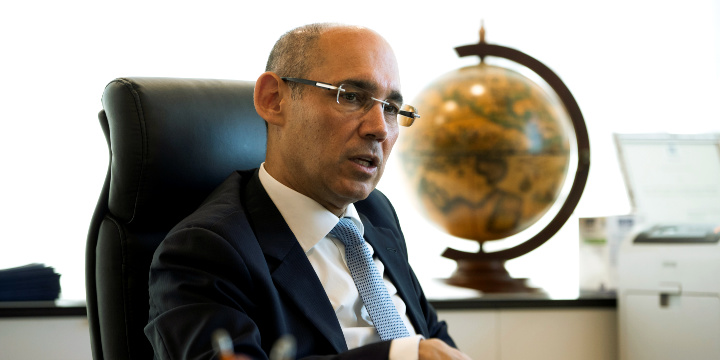
Bank of Israel Governor Amir Yaron gestures while he speaks during his interview with Reuters in Jerusalem, June 16, 2020. Photo: REUTERS/Ronen Zvulun.
The lack of a stable government and a state budget for 2021 are making structural economic changes that Israel needs to ensure long-term growth very difficult, its central bank chief said on Tuesday.
Israel’s fourth election in two years on March 23 was once again inconclusive but President Reuven Rivlin has asked Prime Minister Benjamin Netanyahu to try and form a government.
“It’s clearly far from optimal for there not to be a government and a budget,” Bank of Israel Governor Amir Yaron told a news conference.
Israel is using a pro-rated version of a base 2019 budget that was approved in mid-2018.
On the heels of a large stimulus package to help those affected by the COVID-19 pandemic, Israel’s budget deficit reached 11.6% of gross domestic product last year, while the debt-to-GDP ratio hit 73%, up from 60% in 2019.
Yaron said getting back to 60% could take two decades, especially if the budget deficit — above 4% before the pandemic — stays high. A deficit of 4%, he said, was not sustainable but he did not advocate tax hikes until 2022 or 2023.
FISCAL RISKS
Yaron urged the government not to extend state benefits expiring in June to those on unpaid leave, saying: “Let people understand they need to return to the employment cycle.”
Last week, Standard & Poor’s projected a 7.5% deficit in 2021 and expressed concern that “persistently fragmented domestic politics” could lead to fiscal risks if finding policy consensus proved difficult.
Yaron said monetary policy would remain expansionary, although a current 0.1% level in its benchmark rate appears to be a floor, while the central bank focuses on ensuring credit supply through its bond buying and other programm.
Israel’s economy shrank 2.5% in 2020 due to the pandemic, but Yaron said Israel’s performance was decent versus other countries due to strong high-tech exports.
The jobless rate was nearly 17% in February but is believed to have started to decline in March after Israel’s economy reopened due to a world-beating COVID-19 vaccination roll-out that sharply reduced the number of infections. More than half of Israelis above 16 have now received two vaccine doses.
The central bank forecasts growth of up to 6.3% in 2021 if the pace of vaccinations is kept up. The International Monetary Fund (IMF) on Tuesday raised its growth estimate for Israel to 5% from 4.1% in January and projected 4.3% in 2022.