 Pod Save America Hosts Call on Democrats to Cut All Israel Military Aid, No Longer Accept AIPAC Funding
 Jews, Israelis Targeted in Austria Amid Surge in Antisemitic Incidents; Local Jewish Community Calls for Action
 ‘All of Our Strength’: Over 1,000 Pro-Israel Activists Gather in DC for Solidarity Conference
 ‘Devastated’: Wesley LePatner, Killed in Manhattan Mass Shooting, Was a Jewish Communal, Philanthropic Leader
 Sen. Angus King Vows to No Longer Vote for Israel Military Aid Until Gaza Conditions Improve
 Europe Won’t Pressure Israel to ‘Commit Suicide’ Amid Gaza Backlash, Palestinian State Push, Says Israeli FM
 Israel’s National Soccer Coach Attacked in Athens Before Soccer Fans Chant ‘F–K Israel, Free Palestine’ at Match
 New York Judge Sentences Neo-Nazi to 5 Years for Livestreaming Bomb Threats Against Jewish Hospitals
 US Pressures Lebanon to Issue Cabinet Decision to Disarm Hezbollah Before Talks Continue
 UK Plans to Recognize Palestinian State in September Unless Israel Meets Conditions, Starmer Says


The Gaza War Ended, the Hamas Problem Remains
Error: Contact form not found.
 by Gershon Hacohen

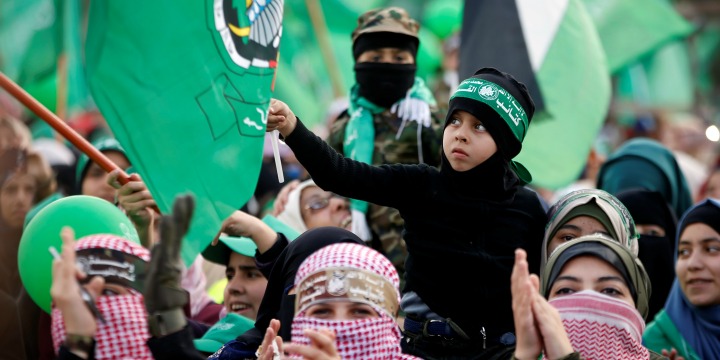
Hamas supporters take part in a rally celebrating the 30th anniversary of the group’s founding, in Gaza City on Dec. 14, 2017. Photo: Reuters / Mohammed Salem.
As the fourth war between Israel and Hamas in a decade draws to a close after ten days of fighting, there is little doubt that the terror organization’s military infrastructure was massively degraded. Yet through unwavering commitment to its Islamist precepts and vision, Hamas managed to divert attention from these losses to its supposed success in defending Islam’s holy shrines in Jerusalem, thus casting itself in the eyes of Muslims throughout the world as the unquestionable winner of the war.
From Israel’s vantage point, on the other hand, the war’s success will be determined not only by the length of the tranquility established along the Gaza Strip, but also by the Jewish State’s ability to realize its national interests in Jerusalem. Hence Israel’s relations with Hamas in the coming months will be tested first and foremost by the strengthening of Israeli sovereignty in Jerusalem. In these circumstances, the potential for renewed conflagration is extremely high.
There is more than one way to reach a ceasefire. Some ceasefires are grounded in agreements or memoranda of understanding, others are marked by the simple cessation of hostilities in keen anticipation of looming developments, as seems to be the case here. In these circumstances, the question of “What to do with Gaza?” will continue to preoccupy Israel’s political and military leaderships for a long time.
Though taken by surprise by the outbreak of hostilities, the IDF had meticulously prepared for such eventuality, having enhanced its capabilities over the past two years under the able leadership of chief-of-staff Aviv Kochavi, especially through the adoption of groundbreaking technologies.
With the end of the war, and given the likelihood of renewed hostilities, the IDF will surely strive to incorporate the lessons of the war into its updated operational concepts, including a possible deep ground incursion into Gaza. More broadly, Israel will need to reexamine the extent of its continued ability to live under Hamas’ Damocles sword.
The IDF should be congratulated on its operational achievements in the current round of fighting, as should be Israeli society on its resilience and cohesion that transcended its endemic tensions and divisions. This impressive display of national resilience is bound to play an important role in the government’s handling of the Gaza problem in the coming months and years.
Maj. Gen. (res.) Gershon Hacohen is a senior research fellow at the Begin-Sadat Center for Strategic Studies. He served in the IDF for 42 years. He commanded troops in battles with Egypt and Syria. He was formerly a corps commander and commander of the IDF Military Colleges.
A version of this article was published by The BESA Center.