 Pod Save America Hosts Call on Democrats to Cut All Israel Military Aid, No Longer Accept AIPAC Funding
 Jews, Israelis Targeted in Austria Amid Surge in Antisemitic Incidents; Local Jewish Community Calls for Action
 ‘All of Our Strength’: Over 1,000 Pro-Israel Activists Gather in DC for Solidarity Conference
 ‘Devastated’: Wesley LePatner, Killed in Manhattan Mass Shooting, Was a Jewish Communal, Philanthropic Leader
 Sen. Angus King Vows to No Longer Vote for Israel Military Aid Until Gaza Conditions Improve
 Europe Won’t Pressure Israel to ‘Commit Suicide’ Amid Gaza Backlash, Palestinian State Push, Says Israeli FM
 Israel’s National Soccer Coach Attacked in Athens Before Soccer Fans Chant ‘F–K Israel, Free Palestine’ at Match
 New York Judge Sentences Neo-Nazi to 5 Years for Livestreaming Bomb Threats Against Jewish Hospitals
 US Pressures Lebanon to Issue Cabinet Decision to Disarm Hezbollah Before Talks Continue
 UK Plans to Recognize Palestinian State in September Unless Israel Meets Conditions, Starmer Says


Bank of Israel to Hold Interest Rates as Inflation Nudges Higher
Error: Contact form not found.
 by Reuters and Algemeiner Staff

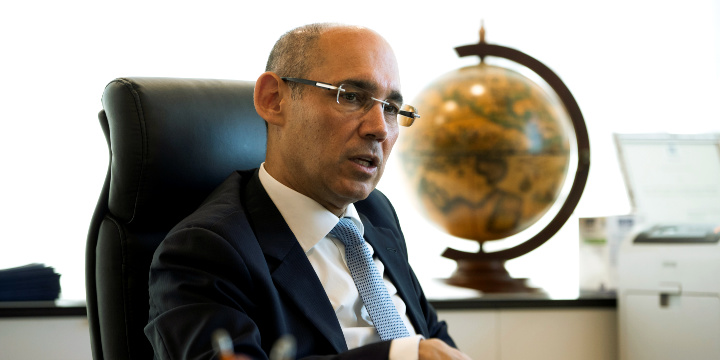
Bank of Israel Governor Amir Yaron gestures while he speaks during his interview with Reuters in Jerusalem, June 16, 2020. Photo: REUTERS/Ronen Zvulun.
The Bank of Israel is expected to leave short-term interest rates unchanged this week for its ninth straight policy meeting, amid higher inflation and a view that a rapid COVID-19 vaccination roll-out will revive economic growth.
All 17 economists polled by Reuters believe the monetary policy committee (MPC) will keep the benchmark rate at an all-time low of 0.1% when the decision is announced on Monday at 4 p.m. (1300 GMT).
The next policy move is widely expected to be a rate increase, but not until at least 2022, with some projecting 2023.
“No change in monetary policy is expected, but a very optimistic tone is certainly expected by the Bank of Israel, given the sharp decline in morbidity and the full opening of the economy,” said Leader Capital Markets chief economist Jonathan Katz.
With 55% of adults fully vaccinated, the number of active COVID cases has dropped to below 400 in Israel, prompting a near full reopening of the economy, and the jobless rate has fallen to 7.9%.
Economists forecast economic growth of 4-6% in 2021 after it shrank 2.6% in 2020. In the first quarter, the economy contracted an annualized 6.5% from the prior quarter.
Israel’s inflation rate reached 0.8% in April after turning positive in March for the first time in a year. Based on bond yields, the rate is expected to reach 1.7% in a year’s time — near the middle of the government’s 1-3% annual target.
Bank of Israel Governor Amir Yaron told Reuters this month that interest rate increases are some way off given inflation is expected to stay well contained. He said it was still too early to determine how much of the gain stems from bottlenecks in the economy and adjustments in supply and demand.
“At some point, depending on economic activity and depending on inflation, depending on financial stability, etc., those will be the considerations that will enact a change in the primary focus point for a change in the (interest rates) stance,” he said on May 10.
At the prior meeting on April 19, five of the central bank’s six policymakers voted to hold the key rate.
Since the pandemic began, the central bank has lowered its key rate once — from 0.25% in April 2020. It has relied instead on buying government and corporate bonds and offering cut-rate loans to banks to encourage lending to small businesses.
It has also bought nearly $20 billion of foreign currency in the first four months of this year to help stem the shekel’s gains.