 Pod Save America Hosts Call on Democrats to Cut All Israel Military Aid, No Longer Accept AIPAC Funding
 Jews, Israelis Targeted in Austria Amid Surge in Antisemitic Incidents; Local Jewish Community Calls for Action
 ‘All of Our Strength’: Over 1,000 Pro-Israel Activists Gather in DC for Solidarity Conference
 ‘Devastated’: Wesley LePatner, Killed in Manhattan Mass Shooting, Was a Jewish Communal, Philanthropic Leader
 Sen. Angus King Vows to No Longer Vote for Israel Military Aid Until Gaza Conditions Improve
 Europe Won’t Pressure Israel to ‘Commit Suicide’ Amid Gaza Backlash, Palestinian State Push, Says Israeli FM
 Israel’s National Soccer Coach Attacked in Athens Before Soccer Fans Chant ‘F–K Israel, Free Palestine’ at Match
 New York Judge Sentences Neo-Nazi to 5 Years for Livestreaming Bomb Threats Against Jewish Hospitals
 US Pressures Lebanon to Issue Cabinet Decision to Disarm Hezbollah Before Talks Continue
 UK Plans to Recognize Palestinian State in September Unless Israel Meets Conditions, Starmer Says


The Day After Lebanon Implodes
Error: Contact form not found.
 by Eyal Zisser / Israel Hayom / JNS.org

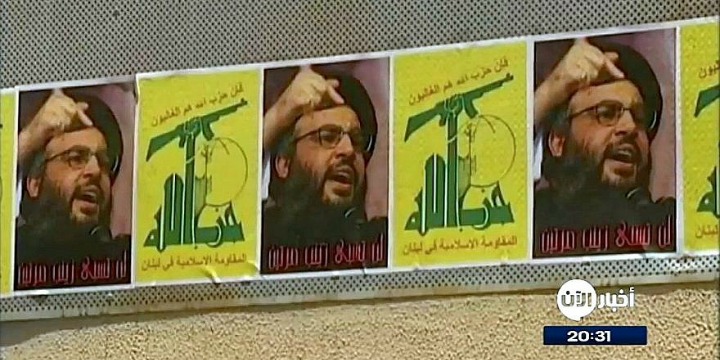
Posters of Hezbollah’s flag and the terrorist group’s leader, Hassan Nasrallah, in Beirut. Photo: Al Aan Arabic Television via Wikimedia Commons.
JNS.org – Hezbollah leader Hassan Nasrallah’s latest speech had little to do with his usual anti-Israel propaganda. He also barely made mention of the fact that his longtime ally Ebrahim Raisi was elected president of Iran, nor was his speech rife with the usual calls for Arabs worldwide to support Hamas and fight for Jerusalem.
Friday’s address focused on domestic issues in Lebanon—the water and power supplies, petrol rations and food stamps. Lebanon, you see, is in a freefall, and it is threatening to take Hezbollah and Nasrallah down with it.
For the past few years, Lebanon has been plagued with an insurmountable political crisis that has prevented the formation of a government. It was also hit by a dire financial crisis that has left it bankrupt. Banks have shuttered, food has become scarce, hospitals are unable to care for patients and now the military is struggling to provide its troops with the necessary supplies.
After two decades of effective rule in Lebanon, many Lebanese hold Hezbollah responsible for the country’s woes, especially over its ties to Iran and the shady alliance with Syrian President Bashar Assad—moves that have placed Lebanon at odds with (now reluctant) Gulf and Western donors.
Even Shi’ites in Lebanon—Nasrallah’s natural allies—demand answers, and together, this is enough to curb Hezbollah’s activities and force it to maintain the calm along the Lebanon-Israel border.
Nevertheless, leaders in the Middle East never hold back on military investments. Rulers and regimes in the Middle East are also unwilling to shelve their dreams and messianic ideology simply to avoid economic hardship for their people.
This is also true for Iran and Hamas, which continue to invest their money in fighting against Israel rather than in improving the living conditions of their people.
Hezbollah has invested hundreds of millions of dollars over the past decade in fighting alongside Assad in Syria—losing thousands of operatives in the process. It later invested hundreds of millions of dollars in digging cross-border tunnels into Israeli territory, only to have them discovered and destroyed by the Israel Defense Forces.
Now, Hezbollah is pouring funds into developing precision-guided missiles. This endeavor represents a major threat to Israel; Hezbollah’s missile arsenal puts Hamas’s to shame. We can, of course, hope that the 15-year calm along the northern border persists and that Hezbollah’s missiles rust away, but Israel would be wise to undermine this effort sooner rather than later.
Eyal Zisser is a lecturer in the Middle East History Department at Tel Aviv University.
This article first appeared in Israel Hayom.