 Pod Save America Hosts Call on Democrats to Cut All Israel Military Aid, No Longer Accept AIPAC Funding
 Jews, Israelis Targeted in Austria Amid Surge in Antisemitic Incidents; Local Jewish Community Calls for Action
 ‘All of Our Strength’: Over 1,000 Pro-Israel Activists Gather in DC for Solidarity Conference
 ‘Devastated’: Wesley LePatner, Killed in Manhattan Mass Shooting, Was a Jewish Communal, Philanthropic Leader
 Sen. Angus King Vows to No Longer Vote for Israel Military Aid Until Gaza Conditions Improve
 Europe Won’t Pressure Israel to ‘Commit Suicide’ Amid Gaza Backlash, Palestinian State Push, Says Israeli FM
 Israel’s National Soccer Coach Attacked in Athens Before Soccer Fans Chant ‘F–K Israel, Free Palestine’ at Match
 New York Judge Sentences Neo-Nazi to 5 Years for Livestreaming Bomb Threats Against Jewish Hospitals
 US Pressures Lebanon to Issue Cabinet Decision to Disarm Hezbollah Before Talks Continue
 UK Plans to Recognize Palestinian State in September Unless Israel Meets Conditions, Starmer Says


World Leaders Seek Ways to Strengthen Global Supply Chains
Error: Contact form not found.
 by Reuters and Algemeiner Staff

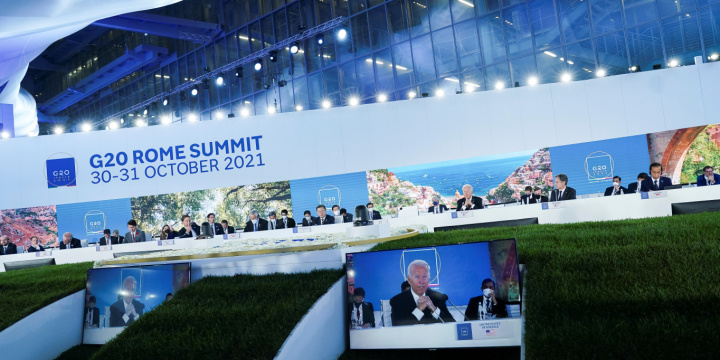
US President Joe Biden speaks during an event on global supply chain resilience through the coronavirus disease (COVID-19) pandemic and recovery, on the sidelines of the G20 leaders’ summit in Rome, Italy October 31, 2021. REUTERS/Kevin Lamarque
US President Joe Biden and 16 other world leaders on Sunday discussed action to make supply chains more resilient in the face of any future health crises, as well as climate change and even planned attacks.
Supply chain problems have emerged as the global economy has pulled out of a pandemic-induced recession and threaten to slow recovery. They have already stoked inflation.
“We have to take action now, together with our partners in the private sector, to reduce the backlogs that we’re facing. And then, we have to prevent this from happening again in the future,” Biden told world leaders at a meeting to address supply chain bottlenecks on the sidelines of the G20 in Rome.
“Now that we have seen how vulnerable these lines of global commerce can be, we cannot go back to business as usual. This pandemic won’t be the last global health crisis we face. We also need to increase our resilience in the face of climate change, natural disasters, and even planned attacks,” he said.
Apart from the United States, leaders and representatives from the European Union, Australia, Britain Canada, Democratic Republic of Congo, Germany, Indonesia, India, Italy, Japan, Mexico, the Netherlands, Republic of Korea, Singapore and Spain took part in the meeting.
A written White House summary of the talks said countries expressed willingness to work together to make supply chains more resilient. It said they had agreed to work for more transparency and information-sharing between countries and on the need to have multiple reliable suppliers of raw materials, intermediate and finished goods.
“Openness and communication can promote a swift response to disruptions to supply chains — like those that the globe is facing right now — and allow other players within a supply chain to take mitigating steps,” the White House summary said.
“We should avoid any unnecessary trade restrictions and maintain free flow of goods and services,” it said.
The leaders emphasized also the need for security, especially in technology supply chains, and for fair and sustainable labour conditions and said they would work with the private sector to reach these goals.