 Pod Save America Hosts Call on Democrats to Cut All Israel Military Aid, No Longer Accept AIPAC Funding
 Jews, Israelis Targeted in Austria Amid Surge in Antisemitic Incidents; Local Jewish Community Calls for Action
 ‘All of Our Strength’: Over 1,000 Pro-Israel Activists Gather in DC for Solidarity Conference
 ‘Devastated’: Wesley LePatner, Killed in Manhattan Mass Shooting, Was a Jewish Communal, Philanthropic Leader
 Sen. Angus King Vows to No Longer Vote for Israel Military Aid Until Gaza Conditions Improve
 Europe Won’t Pressure Israel to ‘Commit Suicide’ Amid Gaza Backlash, Palestinian State Push, Says Israeli FM
 Israel’s National Soccer Coach Attacked in Athens Before Soccer Fans Chant ‘F–K Israel, Free Palestine’ at Match
 New York Judge Sentences Neo-Nazi to 5 Years for Livestreaming Bomb Threats Against Jewish Hospitals
 US Pressures Lebanon to Issue Cabinet Decision to Disarm Hezbollah Before Talks Continue
 UK Plans to Recognize Palestinian State in September Unless Israel Meets Conditions, Starmer Says


Accept Turkish Relations for What They Are
Error: Contact form not found.
 by Eyal Zisser / Israel Hayom / JNS.org

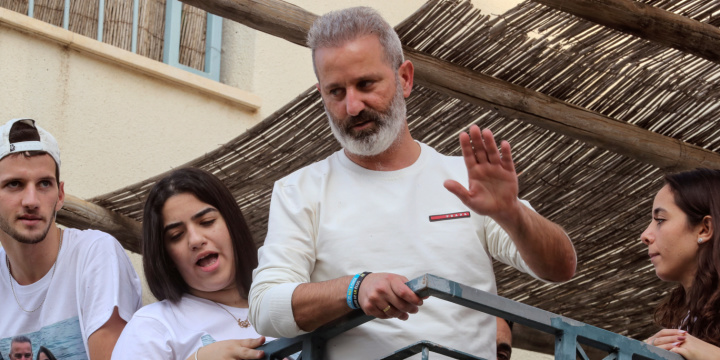
Mordi Oknin gestures from his balcony after him and his wife Natali were detained over espionage charges for allegedly taking photographs of President Tayyip Erdogan’s residence during a trip to Istanbul, and Turkey has released them, in his home in Modiin Israel, November 18, 2021 REUTERS/ Ammar Awad
JNS.org – All’s well that ends well. After eight turbulent days in prison, Natalie and Mordy Oknin have returned home. Fortunately, the affair came to an end before the Israeli media could turn a tempest in a teacup into a tsunami for ratings, possibly resulting in extended detention for the couple and shattered Israel-Turkey relations.
Israeli media outlets have now made the shift from depression to euphoria, replacing assessments this would likely constitute a major crisis in Ankara-Jerusalem relations with rosier, albeit unrealistic, forecasts of coming warming bilateral ties.
The simple truth is that these ties have a glass ceiling that we cannot and should not attempt to break. Below it exists a reasonable and tolerable relationship, better even than those that Israel maintains with other countries in the region. After all, when was the last time Israeli tourists visited Cairo or Amman en masse? We should protect and advance this relationship, but we should not expect to achieve much more than we currently have.
Israel and Turkey became close allies in the 1990s, working closely together on both the military and security fronts. Economic ties flourished, and Turkey even became a top destination for Israeli tourists.
However, ever since President Recep Tayyip Erdoğan came to power in the early 2000s, bilateral ties have been in an ongoing state of crisis. They have been held hostage to the ups and downs of Israel-Palestinian relations. Each incident that takes place in Judea and Samaria, Jerusalem and the Gaza Strip leads him to excoriate Israel, sometimes to the point of antisemitism, and even go so far as to harm its diplomatic representatives in Ankara and Istanbul.
At the same time, Erdoğan has taken care not to cross the line by avoiding harming economic ties, which have in fact continued to develop. This is in fact a pattern in his treatment of other countries, chief among them the US and European states.
Yet this policy has a price. Turkey’s economy is collapsing; its relationship with the US is in a state of ongoing crisis; and it has been left without any friends in the region. This is why Erdoğan is trying to repair the damage.
In an effort to restore ties with Egyptian President Abdel-Fattah El-Sissi, Erdoğan is willing to expel Muslim Brotherhood members who were given refuge in Turkey. He is also willing to respectfully receive United Arab Emirates Crown Prince Mohammed bin Zayed al-Nahyan. Just a year ago, he recalled Turkey’s ambassador to Abu Dhabi in protest of the UAE’s signing of the Abraham Accords.
Nevertheless, Erdoğan remains an unpredictable politician. We should assume that when the next Israeli-Palestinian crisis arises, the “real” Erdoğan will once again take center stage.
This does not mean that Israel should give up on Turkey. The existence of dialogue, even in matters of regional security, is always preferable to disengagement, and there is much more that can be done to promote economic ties.
We just need to be cognizant of the limits of this relationship. There is no reason whatsoever to cede relationships and alliances forged in the fields of economy, energy and security with Cyprus, Greece and Egypt for talks with Turkey. On the contrary, Ankara should do the right thing and join the aforementioned countries as a welcome partner.
Eyal Zisser is a lecturer in the Middle East History Department at Tel Aviv University.
This article first appeared in Israel Hayom.