 Pod Save America Hosts Call on Democrats to Cut All Israel Military Aid, No Longer Accept AIPAC Funding
 Jews, Israelis Targeted in Austria Amid Surge in Antisemitic Incidents; Local Jewish Community Calls for Action
 ‘All of Our Strength’: Over 1,000 Pro-Israel Activists Gather in DC for Solidarity Conference
 ‘Devastated’: Wesley LePatner, Killed in Manhattan Mass Shooting, Was a Jewish Communal, Philanthropic Leader
 Sen. Angus King Vows to No Longer Vote for Israel Military Aid Until Gaza Conditions Improve
 Europe Won’t Pressure Israel to ‘Commit Suicide’ Amid Gaza Backlash, Palestinian State Push, Says Israeli FM
 Israel’s National Soccer Coach Attacked in Athens Before Soccer Fans Chant ‘F–K Israel, Free Palestine’ at Match
 New York Judge Sentences Neo-Nazi to 5 Years for Livestreaming Bomb Threats Against Jewish Hospitals
 US Pressures Lebanon to Issue Cabinet Decision to Disarm Hezbollah Before Talks Continue
 UK Plans to Recognize Palestinian State in September Unless Israel Meets Conditions, Starmer Says


Shabbat Bo: Blood on the Doorpost
Error: Contact form not found.
 by Jeremy Rosen

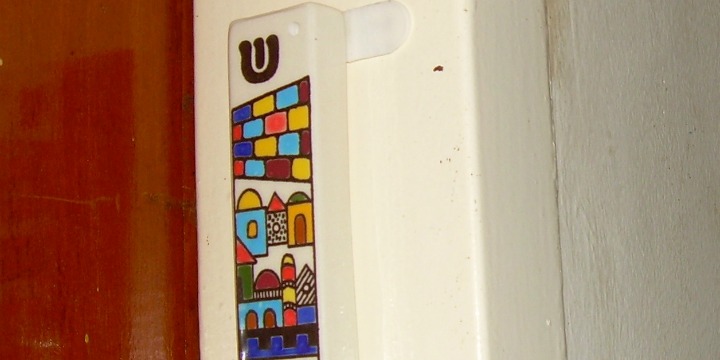
A mezuzah. Photo: Wikimedia Commons.
We are all familiar with the mezuzah, which we place on the right doorpost of our houses and offices. Many people believe its function is to ward off evil spirits and guarantee protection. But its origins are not obvious. The Shema prayer tells us to bind the words of the Torah on our bodies and homes. But that could just be a metaphorical way of telling us to remember our values and commitment to the Torah. Much debate has gone on over the millennia about the details of the mezuzah.
This week, we read about the first commandment given to the Children of Israel (as opposed to individuals beforehand). Moses told them to prepare for the coming plague of the death of all the Egyptian first-borns that will finally lead to the exodus. But first, the Israelites are commanded to prepare for it with the rituals of the first Passover festival. An animal had to be set apart three days in advance in public view. Then, when they came to slaughter the animals, they were commanded to daub the blood on their doorposts so that when the plague began to take effect, they — as the followers of God — would be spared.
Why blood? Blood always had ritual significance. In the pagan world, it was swallowed to give power and protection. But for Judaism, blood was sacrosanct, the symbol of the value of life.
Its purpose here was to differentiate those Israelites who wanted to be identified with the Children of Israel, and begin the challenging journey towards physical and spiritual freedom. We know from many sources in the Midrash that many Jews had either assimilated or were relatively well off and wanted to stay in Egypt. Besides, the journey has hazardous.
The blood on the doorpost was not to ward off evil spirits, but rather, a sign of identity and commitment. This commitment was both a national one and a religious one. It meant that each house with blood on its door was an outward expression of Jewish identity for all to see. It sent a message to the rest of the world.
And this was and is the real message of the mezuzah. If we think it is there to protect us, then how do we make sense of all those households that had fixed mezuzahs, yet were destroyed by our enemies throughout our history? In fact, we are here today because we perpetuated the traditions that the mezuzah symbolizes.
Shabbat Shalom.
The author is a writer and rabbi, currently based in New York.