 Pod Save America Hosts Call on Democrats to Cut All Israel Military Aid, No Longer Accept AIPAC Funding
 Jews, Israelis Targeted in Austria Amid Surge in Antisemitic Incidents; Local Jewish Community Calls for Action
 ‘All of Our Strength’: Over 1,000 Pro-Israel Activists Gather in DC for Solidarity Conference
 ‘Devastated’: Wesley LePatner, Killed in Manhattan Mass Shooting, Was a Jewish Communal, Philanthropic Leader
 Sen. Angus King Vows to No Longer Vote for Israel Military Aid Until Gaza Conditions Improve
 Europe Won’t Pressure Israel to ‘Commit Suicide’ Amid Gaza Backlash, Palestinian State Push, Says Israeli FM
 Israel’s National Soccer Coach Attacked in Athens Before Soccer Fans Chant ‘F–K Israel, Free Palestine’ at Match
 New York Judge Sentences Neo-Nazi to 5 Years for Livestreaming Bomb Threats Against Jewish Hospitals
 US Pressures Lebanon to Issue Cabinet Decision to Disarm Hezbollah Before Talks Continue
 UK Plans to Recognize Palestinian State in September Unless Israel Meets Conditions, Starmer Says


‘Guardian’ Feature Downplays Palestinian Initifada, Romanticizes Violence Against Israelis
Error: Contact form not found.
 by Emanuel Miller

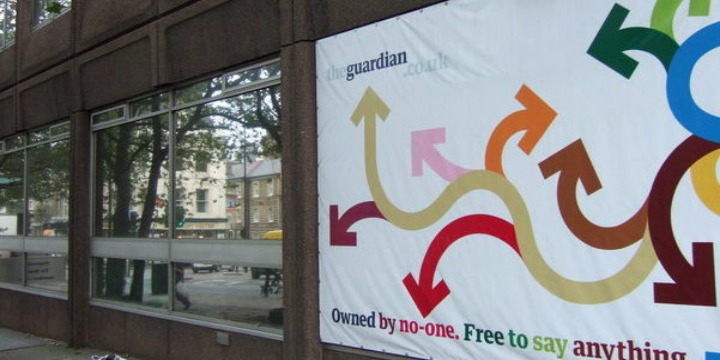
The Guardian newspaper’s London offices in 2017. Photo: Wikimedia Commons.
“What did you do when the world went into lockdown in 2020?”
For many Palestinians, the answer was the same as for most other people: they stayed home, practiced some form of social distancing, and wore masks.
It’s been relatively quiet in Israel recently, which may explain why The Guardian’s new correspondent in Jerusalem, Bethan McKernan, has now dredged up a story about how one Palestinian man used his time during the lockdown to digitize an old music album, romanticizing it as the uncovering of a “treasure trove” that included long-forgotten music that “animated Palestinian life during the 1980s.”
McKernan describes the music as being recorded at the time “when the first intifada (uprising) broke out.”
Notably, McKernan does not refer to the lyrics of the songs.
One, “I’m from Jerusalem,” by Riad Awwad, includes the refrain, “I will fight and fight and fight and fight,” and speaks of the places that the singer desires to fight in: streets, factories, farms, alleyways.
In fact, despite the video being embedded on the Guardian website, McKernan fails to note the lyrics in any way, meaning that readers of the print edition are left uninformed as to the precise words of the songs.
Similarly, she does not describe how a youth throwing a rock against Israeli military infrastructure is depicted in the video. This needs to be stated clearly as fact.
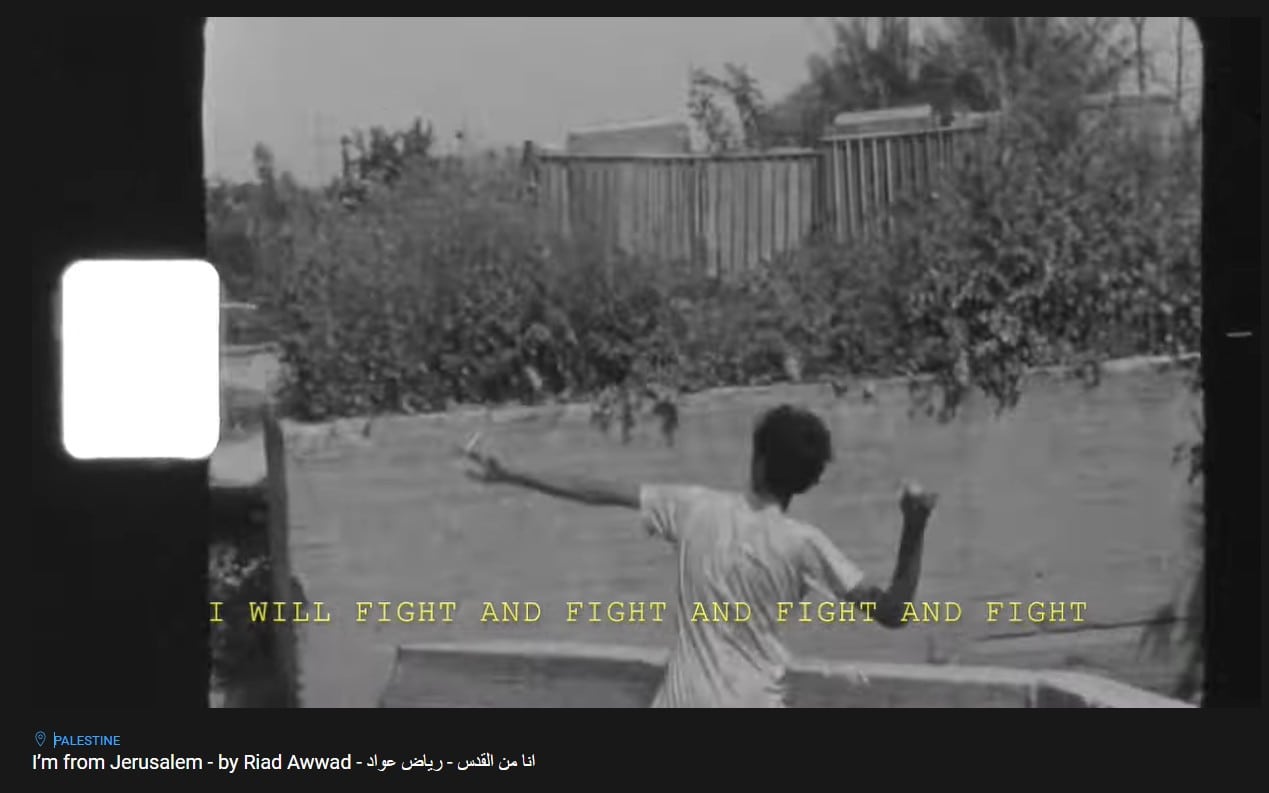
McKernan depicts Israel as acting “over fears” that the song lyrics “would incite people to violence.” In doing so, she engages in a version of a practice that is routinely employed by journalists — citing Israeli concerns by using phrases such as “Israel says” or “the IDF said,” rather than stating these concerns as facts.
Here’s what the article misses out on altogether:
The Intifada wasn’t simply a “struggle for freedom,” to use McKernan’s words.
If that were the case, then Israeli soldiers alone would have been the targets of Palestinian violence. But although some in the media like to push that lie, the truth is that between 1987 and 1993, the number of Israeli civilians killed (175) was higher than the number of troops and security personnel killed (102).
From the very beginning of the Intifada, Israeli citizens were considered legitimate targets, and many were attacked as they drove or walked through predominantly Arab areas. Some were not seriously harmed, but media portrayals of the period almost invariably disproportionately focus on Palestinian youths armed with rocks and slingshots, and not on their Israeli victims.
Notable terror organizations such as Palestinian Islamic Jihad (PIJ) and Hamas were involved in the violence. PIJ masterminded several suicide attacks in Israel, including a suicide attack on a bus in 1989, when a terrorist killed 16 people after seizing the steering wheel and driving it off a steep cliff into a ravine in the region of Kiryat Ye’arim, located near Jerusalem.
In another PIJ attack at the height of the Intifada, a busload of Israeli tourists traveling not far from Cairo were ambushed by gunmen. Nine Israeli passengers and two Egyptians were killed in the carnage.
Over the course of six years, Palestinians in the West Bank and Gaza regularly participated in violent demonstrations and launched attacks against Israeli soldiers and civilians alike.
According to the IDF, tens of thousands of rock-throwing attacks took place during the first four years of the Intifada alone. There were also in excess of 3,600 assaults using Molotov cocktails, 100 hand grenade attacks, and 600 incidents involving guns or explosives. Many thousands of Israelis — both soldiers and civilians — were injured.
In short, the Intifada posed a serious threat to Israel, and concerns about violence weren’t just “Israeli fears” as McKernan depicts them.
This latest article by McKernan is entirely in keeping with a long list of such Guardian pieces, failing to hold the Palestinians accountable for such violence, and essentially romanticizing their murderous “struggle.”
Most disconcerting, media accounts such as this fail to mention at all how the uprising was used by the Palestinian leadership as an excuse to conduct purges. As the uprising began to quiet down in early 1991, most of the deaths on the Palestinian side came from the Palestinian leadership executing anyone suspected of collaborating with the Israelis. These “collaborators” were found hacked to death with axes, clubbed, burned with acid, stabbed, and shot.
From 1989-1992, 1,000 Palestinians were killed by other Palestinians under this pretext.
Yet none of this is mentioned in The Guardian.
Why not?
The author is a contributor to HonestReporting, a Jerusalem-based media watchdog with a focus on antisemitism and anti-Israel bias — where a version of this article first appeared.