 Pod Save America Hosts Call on Democrats to Cut All Israel Military Aid, No Longer Accept AIPAC Funding
 Jews, Israelis Targeted in Austria Amid Surge in Antisemitic Incidents; Local Jewish Community Calls for Action
 ‘All of Our Strength’: Over 1,000 Pro-Israel Activists Gather in DC for Solidarity Conference
 ‘Devastated’: Wesley LePatner, Killed in Manhattan Mass Shooting, Was a Jewish Communal, Philanthropic Leader
 Sen. Angus King Vows to No Longer Vote for Israel Military Aid Until Gaza Conditions Improve
 Europe Won’t Pressure Israel to ‘Commit Suicide’ Amid Gaza Backlash, Palestinian State Push, Says Israeli FM
 Israel’s National Soccer Coach Attacked in Athens Before Soccer Fans Chant ‘F–K Israel, Free Palestine’ at Match
 New York Judge Sentences Neo-Nazi to 5 Years for Livestreaming Bomb Threats Against Jewish Hospitals
 US Pressures Lebanon to Issue Cabinet Decision to Disarm Hezbollah Before Talks Continue
 UK Plans to Recognize Palestinian State in September Unless Israel Meets Conditions, Starmer Says


Shabbat Vayikra: The Power of Ethical Leadership
Error: Contact form not found.
 by Jeremy Rosen

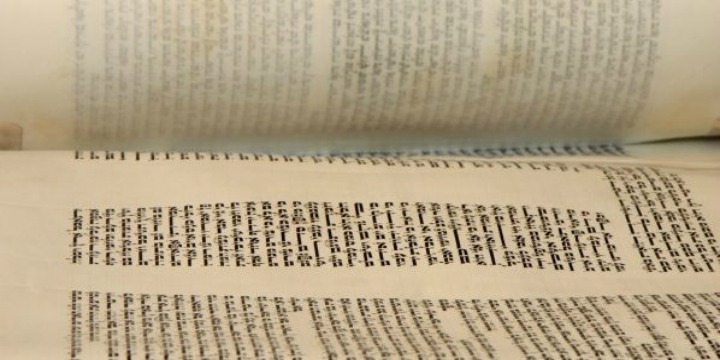
A Torah scroll. Photo: RabbiSacks.org.
The Book of Exodus — which we have just completed — provides us with two examples of leadership. First, there is Pharaoh, an omnipotent autocrat, rooted in a static and immovable mindset, who was unable to comprehend the inhumanity of his policies or an alternative narrative. On the other hand, Moses, a revolutionary, was animated by ideals and spiritual inspiration. Both sought order — one through oppression, the other through inspiration.
Pharaoh was concerned only with the preservation of power through force. Pharaoh expected his inner circle of oligarchs, priests, magicians, and advisors to support and reinforce his policies. Moses was brought up experiencing different cultures, and he challenged authority and fixed ways of thinking.
He was open to different ways of life, and yet remained loyal to the people of his birth. And his openness to new ideas enabled him to experience the Divine presence, which led him on his mission to free the enslaved Hebrews and establish a new kind of religious community.
It is a feature of the Biblical narrative that its main figures all experience changes and new experiences, which I believe is one of the main reasons that Jews have survived so much adversity over such a long time — not just because we have always been on the move and been adaptable, but also because we had a strong sense of our identity. This has enabled us to adjust and be on the lookout for different ways of dealing with challenges, while remaining rooted in a religious culture that values education, knowledge, ambition, and stresses behavior rather than theology.
Looking around us today, we see that leaders with fixed ways of thinking end up failing their countries and people. And those who believe in force, censorship, and corruption are destined to do more harm than good. Power corrupts, and absolute power corrupts absolutely. This also applies to religious communities that try to suppress or exclude different ideas.
Contrast this with Moses, who always listened to the complaints and needs of his flock, and who was a reluctant and modest leader uninterested in power, but one animated by humane and spiritual ideals. His legacy has inspired humanity, and is far greater than all the violent destructive tyrants.
We now start the Book of Leviticus, Vayikra. Its sacrificial system is predicated on the idea of forgiveness, purity, and ethical behavior, even if the ceremonials come from a different era. These are legacies to be proud of.
Shabbat Shalom, and Happy Purim next Wednesday night.
The author is a writer and rabbi based in New York.