 Pod Save America Hosts Call on Democrats to Cut All Israel Military Aid, No Longer Accept AIPAC Funding
 Jews, Israelis Targeted in Austria Amid Surge in Antisemitic Incidents; Local Jewish Community Calls for Action
 ‘All of Our Strength’: Over 1,000 Pro-Israel Activists Gather in DC for Solidarity Conference
 ‘Devastated’: Wesley LePatner, Killed in Manhattan Mass Shooting, Was a Jewish Communal, Philanthropic Leader
 Sen. Angus King Vows to No Longer Vote for Israel Military Aid Until Gaza Conditions Improve
 Europe Won’t Pressure Israel to ‘Commit Suicide’ Amid Gaza Backlash, Palestinian State Push, Says Israeli FM
 Israel’s National Soccer Coach Attacked in Athens Before Soccer Fans Chant ‘F–K Israel, Free Palestine’ at Match
 New York Judge Sentences Neo-Nazi to 5 Years for Livestreaming Bomb Threats Against Jewish Hospitals
 US Pressures Lebanon to Issue Cabinet Decision to Disarm Hezbollah Before Talks Continue
 UK Plans to Recognize Palestinian State in September Unless Israel Meets Conditions, Starmer Says


A Passover Guide for the Perplexed
Error: Contact form not found.
 by Yoram Ettinger

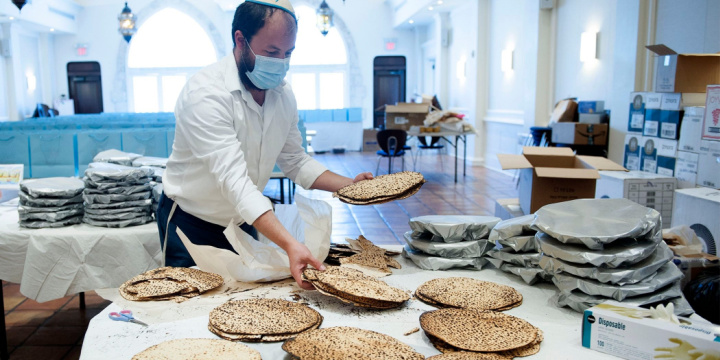
Rabbi Yosef Rice packs handmade matzah into 425 Passover packages at the Palm Beach Synagogue Tuesday March 23, 2021 in Palm Beach. MEGHAN McCARTHY/Palm Beach Daily NewsPbn 032321 Passover 07
Here are some helpful things to know ahead of Passover 2022:
1. Some 3,600 years ago, the Passover Exodus catapulted the Jewish people from the lowest ebb of spiritual and physical servitude in Egypt, to the highest level of liberty in the Land of Israel.
2. According to Heinrich Heine, the 19th century German poet, “Since the Exodus, freedom has always spoken with a Hebrew accent.”
3. During the 19th century, Harriet Tubman, who was one of the leaders of the “Underground Railroad,” was known as “Mama Moses.” Paul Robeson and Louis Armstrong leveraged the liberty theme of Passover through the lyrics: “When Israel was in Egypt’s land, let my people go! Oppressed so hard they could not stand, let my people go! Go down Moses, way down in Egypt’s land; tell old Pharaoh to let my people go….!”
On December 11, 1964, upon accepting the Nobel Peace Prize, Martin Luther King, Jr., once called“the Moses of his age,” said: “The Bible tells the thrilling story of how Moses stood in Pharaoh’s court centuries ago and cried, ‘Let my people go!’”
4. The Exodus is mentioned 50 times in the Five Books of Moses, equal to the 50 years of the Jubilee — the Biblical foundation of liberty, which is also featured on the Liberty Bell in Philadelphia, Pennsylvania: “Proclaim liberty throughout all the land, unto all the inhabitants thereof (Leviticus, 25:10).” Moses received the Torah — which includes 50 gates of wisdom — 50 days following the Exodus, as celebrated by the Shavuot/Pentecost holiday, 50 days following Passover.
The goal of Passover’s liberty was not revenge, nor the subjugation of the Egyptian people, but the veneration of liberty throughout the globe, including in Egypt.
5. According to the late professor Yehudah Elitzur, one of Israel’s pioneers of Biblical research, the Exodus took place in the second half of the 15th century BCE, during the reign of Egypt’s Amenhotep II. Accordingly, the 40-year national coalescing of the Jewish people — while wandering in the desert — took place when Egypt was ruled by Thutmose IV.
6. The annual celebration of the Passover legacy aims at commemorating, refreshing, and upgrading core values, which are prerequisites to a free and vibrant society:
Faith;
Humility;
Physical and spiritual liberty must not be taken for granted;
Education of all ages;
Defiance of odds, pessimism, and fatalism;
Optimism in face of adversity (crises are opportunities in disguise);
Can-do mentality;
Family and communal cohesion;
Communal and national solidarity and responsibility;
Patriotism;
Sustained study of historic, religious and cultural roots, in order to learn from — and avoid — past mistakes, while enhancing the present and the future.
7. Passover highlights the central role of women in Jewish history. For instance, Yocheved, Moses’ mother, hid Moses and then breastfed him at the palace of Pharaoh, posing as a nursemaid. Miriam, Moses’ older sister, was her brother’s keeper. Batyah, the daughter of Pharaoh, saved and adopted Moses (Numbers 2:1-10). Shifrah and Pou’ah, two Jewish midwives, risked their lives to spare the lives of Jewish male babies, in violation of Pharaoh’s command (Numbers 1:15-19). Tziporah, a daughter of Jethro and Moses’ wife, saved the life of Moses and set him back on the Jewish course (Numbers, 4:24-27). They followed in the footsteps of Sarah, Rebecca, Leah and Rachel — the Matriarchs — and many others.
8. Passover is the first of the three Jewish pilgrimages to Jerusalem, followed by Shavuot, which commemorates the receipt of the Ten Commandments, and Sukkot, which was named after Sukkota — the first stop in the Exodus.
9. Since the 586 BCE destruction of Jerusalem and the First Jewish Temple, the annual Passover seder was concluded with the declaration: “Next Year in the rebuilt Jerusalem!” Because Jerusalem has always been the capital of the Jewish people.
The author is a writer and former Israeli ambassador.