 Pod Save America Hosts Call on Democrats to Cut All Israel Military Aid, No Longer Accept AIPAC Funding
 Jews, Israelis Targeted in Austria Amid Surge in Antisemitic Incidents; Local Jewish Community Calls for Action
 ‘All of Our Strength’: Over 1,000 Pro-Israel Activists Gather in DC for Solidarity Conference
 ‘Devastated’: Wesley LePatner, Killed in Manhattan Mass Shooting, Was a Jewish Communal, Philanthropic Leader
 Sen. Angus King Vows to No Longer Vote for Israel Military Aid Until Gaza Conditions Improve
 Europe Won’t Pressure Israel to ‘Commit Suicide’ Amid Gaza Backlash, Palestinian State Push, Says Israeli FM
 Israel’s National Soccer Coach Attacked in Athens Before Soccer Fans Chant ‘F–K Israel, Free Palestine’ at Match
 New York Judge Sentences Neo-Nazi to 5 Years for Livestreaming Bomb Threats Against Jewish Hospitals
 US Pressures Lebanon to Issue Cabinet Decision to Disarm Hezbollah Before Talks Continue
 UK Plans to Recognize Palestinian State in September Unless Israel Meets Conditions, Starmer Says


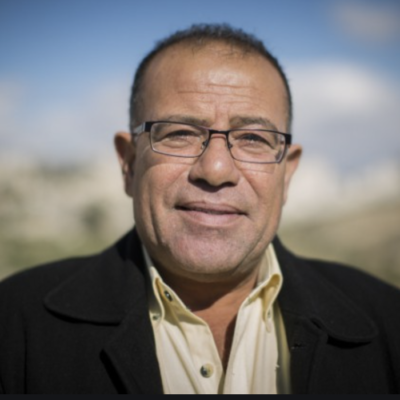

The Arab world has seen more displacement than almost any other region, as modern refugee populations from Iraq and Syria can attest. Although my family is Muslim, I was born in the Jewish Quarter of the Old City of Jerusalem, then under Jordanian control. In 1966, when I was 8 years old, the Jordanian government moved my family north of Jerusalem to the Shuafat Refugee Camp. It was the government of Jordan, not the government of Israel, that made me a refugee.
The difference between a Palestinian culture taught to celebrate grievance and an Israeli culture that idealizes freedom is stark. The Christian minority population, for example, has plummeted in Palestinian Authority-controlled territory. In Bethlehem, it has dropped from 84% to 22% in the last decade alone. Meanwhile, a party with Islamic foundations has a critical role in Israel’s current government, and Israel’s Supreme Court recently appointed its first Muslim justice, Khaled Kabub.
Palestinians should celebrate our rich heritage and, like our Jewish cousins, grieve our losses. But now is the time for negotiated reconciliation, not the perpetuation of generation-old victimhood. “Nakba Day” is part of the victimhood problem, not part of the forward-looking solution. Reconciliation happens only when both sides take a step back and acknowledge joint suffering. “Nakba Day” does the reverse. Whereas Israel has three times offered Palestinians peace, dignity and independence, Yasser Arafat launched — and Mahmoud Abbas has failed to contain — the violent public culture of the 2000-05 Second Intifada, for which the 1998 establishment of “Nakba Day” can be understood as a buildup.
The fetishization of Israel’s very existence as a catastrophe is a distortion that wounds our children and leads them to war and suicide bombing. Nearly 1 million Jews in Islamic lands faced their own nakba after Israel’s independence. Perhaps if more Palestinians understood this, we would better understand our Israeli neighbors.
We must teach our children about our neighbors, seek understanding and champion peace. The Palestinian leadership should reverse course on the incitement against Israel and Jews — including the spread of antisemitic stereotypes — in public education and media. Instead, Palestinian schoolchildren and citizens should learn the history, the joys and the traumas of our neighbors the Israelis, with whom we have a great deal in common. In so doing, we can lay the foundations of a new Middle East, and cities like my native Jericho in the Jordan Valley can blossom as hubs of international cooperation and commerce. This can only be achieved if we learn to understand our neighbors’ grief, not exacerbate our own.
“Nakba Day” does the opposite and should be abolished.
Bassem Eid is a Palestinian human-rights activist, political analyst and journalist.