 Pod Save America Hosts Call on Democrats to Cut All Israel Military Aid, No Longer Accept AIPAC Funding
 Jews, Israelis Targeted in Austria Amid Surge in Antisemitic Incidents; Local Jewish Community Calls for Action
 ‘All of Our Strength’: Over 1,000 Pro-Israel Activists Gather in DC for Solidarity Conference
 ‘Devastated’: Wesley LePatner, Killed in Manhattan Mass Shooting, Was a Jewish Communal, Philanthropic Leader
 Sen. Angus King Vows to No Longer Vote for Israel Military Aid Until Gaza Conditions Improve
 Europe Won’t Pressure Israel to ‘Commit Suicide’ Amid Gaza Backlash, Palestinian State Push, Says Israeli FM
 Israel’s National Soccer Coach Attacked in Athens Before Soccer Fans Chant ‘F–K Israel, Free Palestine’ at Match
 New York Judge Sentences Neo-Nazi to 5 Years for Livestreaming Bomb Threats Against Jewish Hospitals
 US Pressures Lebanon to Issue Cabinet Decision to Disarm Hezbollah Before Talks Continue
 UK Plans to Recognize Palestinian State in September Unless Israel Meets Conditions, Starmer Says


Chances for Iran Nuclear Deal Worse After Doha Talks: US Official
Error: Contact form not found.
 by Reuters and Algemeiner Staff

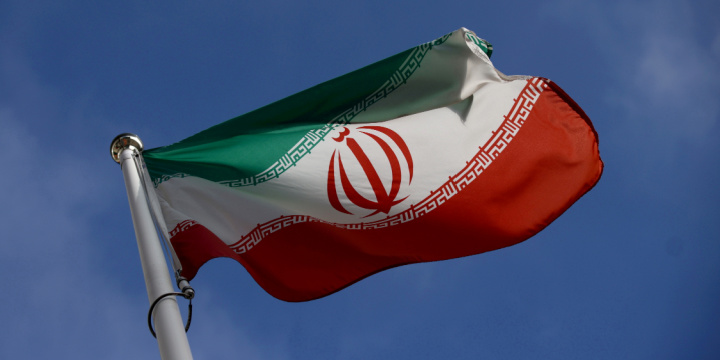
The Iranian flag waves in front of the IAEA headquarters before the beginning of a board of governors meeting, in Vienna, Austria, March 1, 2021. Photo: Reuters/Lisi Niesner
The chances of reviving the 2015 Iran nuclear deal are worse after indirect US-Iranian talks in Doha that ended without progress, a senior US official told Reuters on Thursday.
“The prospects for a deal after Doha are worse than they were before Doha and they will be getting worse by the day,” said the official on condition of anonymity.
“You could describe Doha at best as treading water, at worst as moving backwards. But at this point treading water is for all practical purposes moving backwards,” he added.
The official would not go into the details of the Doha talks, during which European Union officials shuttled between the two sides trying to revive the 2015 Joint Comprehensive Plan of Action (JCPOA) agreement under which Iran had limited its nuclear program in return for relief from economic sanctions.
Then US President Donald Trump withdrew from the agreement in 2018 and restored harsh US sanctions on Iran, prompting Tehran to start violating its nuclear restrictions about a year later.
“Their vague demands, reopening of settled issues, and requests clearly unrelated to the JCPOA all suggests to us … that the real discussion that has to take place is (not) between Iran and the US to resolve remaining differences. It is between Iran and Iran to resolve the fundamental question about whether they are interested in a mutual return to the JCPOA,” the senior US official said.
“At this point, we are not sure if they (the Iranians) know what more they want. They didn’t come to Doha with many specifics,” he added. “Most of what they raised they either knew – or should have known — was outside the scope of the JCPOA and thus completely unsellable to us and to the Europeans, or were issues that had been thoroughly debated and resolved in Vienna and that we were clearly not going to reopen.”
Speaking at the UN Security Council, US, British and French diplomats all placed the onus on Iran for the failure to revive the agreement after more than a year of negotiations.
Iran, however, characterized the Doha talks as positive and blamed the United States for failing to provide guarantees that a new US administration would not again abandon the deal as Trump had done.
“Iran has demanded verifiable and objective guarantees from the US that JCPOA will not be torpedoed again, that the US will not violate its obligations again, and that sanctions will not be re-imposed under other pretexts or designations,” Iran’s U.N. Ambassador Majid Takht Ravanchi told the council.
The senior US official said Washington had made clear since the talks began in April 2021 that it could not give Iran legal guarantees that a future US administration would stick to the deal.
“We said there is no legal way we can bind a future administration, and so we looked for other ways to give some form of comfort to Iran and … we — along with all of the other P5+1 (nations) and the EU coordinator — thought that file had been closed,” the senior US official added.
Iran struck the original deal with Britain, China, France, Russia, the United States and Germany, a group called the P5+1.
US and Iranian officials said that the ball was in the other’s court.
The senior US official disputed Tehran’s argument that Washington was to blame for the lack of progress, saying the United States had responded positively to proposed EU changes to the draft text of an agreement reached during wider talks in March while Iran had failed to respond to those proposals.
If the deal is not revived, he said “the Iranian leadership would need to explain why it turned its back on the benefits of the deal for the sake of issues that wouldn’t make a positive difference in the life of a single ordinary Iranian.”
The US official did not detail those issues. Restoring the deal would allow Iran to legally export its oil — the life blood of its economy.