 Pod Save America Hosts Call on Democrats to Cut All Israel Military Aid, No Longer Accept AIPAC Funding
 Jews, Israelis Targeted in Austria Amid Surge in Antisemitic Incidents; Local Jewish Community Calls for Action
 ‘All of Our Strength’: Over 1,000 Pro-Israel Activists Gather in DC for Solidarity Conference
 ‘Devastated’: Wesley LePatner, Killed in Manhattan Mass Shooting, Was a Jewish Communal, Philanthropic Leader
 Sen. Angus King Vows to No Longer Vote for Israel Military Aid Until Gaza Conditions Improve
 Europe Won’t Pressure Israel to ‘Commit Suicide’ Amid Gaza Backlash, Palestinian State Push, Says Israeli FM
 Israel’s National Soccer Coach Attacked in Athens Before Soccer Fans Chant ‘F–K Israel, Free Palestine’ at Match
 New York Judge Sentences Neo-Nazi to 5 Years for Livestreaming Bomb Threats Against Jewish Hospitals
 US Pressures Lebanon to Issue Cabinet Decision to Disarm Hezbollah Before Talks Continue
 UK Plans to Recognize Palestinian State in September Unless Israel Meets Conditions, Starmer Says


Freud, Psychoanalysis and Judaism
Error: Contact form not found.
 by Nathan Szajnberg

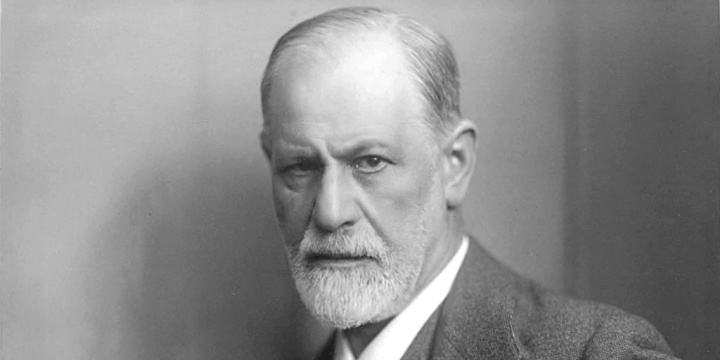
Sigmund Freud, circa 1921. Photo: Wikimedia Commons
What does it mean that psychoanalysis was founded by a Jew?
Why stop there? What does it mean that special relativity (Einstein); sociology (Durkheim); cultural anthropology (Boas); modern political philosophy (Strauss); art history (Panofsky); philosophy of science (Fleck, and later Kuhn); and archival work (Warburg) – were all founded by Jews?
What these Jews share is a search for universal principles, whether these be of the universe, mankind, or the sciences. And this is quite Jewish — to search for universals that underlie our common humanity.
The answer is a pillar of Judaism: the quest for universal principles, whether of the cosmos, mankind, or the sciences. To search for our common humanity is, indeed, to be a Jew.
This prideful fact gives rise to a tension: how is it that what makes Jews particularly Jewish is a quest to understand what binds all of humanity together?
Sigmund Freud — who dedicated much of his writing to understanding what makes us human, and what makes a Jew, Jewish — struggled to define his attraction to Judaism. Jewishness was “a clear consciousness of inner identity,” and represented “obscure emotional forces.”
Freud was extraordinarily articulate, a winner of the Goethe Prize; his inability to put his finger on what Judaism really meant leaves us puzzled, wanting. And yet in Freud’s connection to his faith, we can see an identification with this stiff-necked people who, to the dismay of antisemites the world over, just wouldn’t die.
Freud argued that the Jews’ stubbornness came from our everlasting belief in such things as a single god (or unity of one’s self) — it is our impulse control. The clarity of the Ten Commandments is its simplicity: I’m the Lord; only Me, “God” not in vain; keep Shabbat; honor mother and father; and five “no’s:” don’t murder, don’t adulter; don’t steal; don’t bear false witness; don’t covet.
It’s true. We Jews are enigmatic. We are stiff-necked and straight-spined. We refuse to lose our common identity or to forget our stories dating back to Abraham. With our straight, solid spine we are flexible, and we adapt to the ever-changing world around us.
Freud attributed Jew-hatred as due, in part, to precisely this quality. The proud Jew who refused to budge evoked envy and thus hatred. Freud looked candidly at such stubbornness and explained, without justifying, the gentile’s antisemitism as a reaction to the pride we had in our legacy and our ability to thrive in various foreign “soils.”
In his diagnosis, Freud recognized that Jew-hatred stretches back at least two millennia. Before Christ and Mohammed, the first century Roman Seneca called Jews “a criminal tribe.” Richard Wagner, Hitler, Celine, or Saramago certainly had long-standing predecessors for their more modern Jew-hatred.
The words we use now to describe Jew hatred — antisemitism, xenophobia — were created in the era that was otherwise a time of great liberation for nations; the 1848 revolutions gave birth to European nations and identities. Except for Jews. Jews belonged nowhere.
Freud’s Vienna was a cauldron of ambivalence for Jews: antisemitism and great cosmopolitanism. The most enthusiastic 1930’s antisemites were academics, students, “intellectuals.” A young Hanna Arendt who was seduced by Martin Heidegger, the middle-aged, married, Nazi-sympathizing professor, discovered this bitterly. Today, we have Israel, a chicken bone stuck in the craw of many Westerners.
And yet we must contend with Jew-hatred, which, from Haman to Hamas, remains a fact of every Jews’ life.
If there is a lesson to take from Freud, it is to look at Jew-hating bluntly and call it that (not the sterile phrase “antisemitism”). We cannot excuse anyone — not overt Jew-threateners, nor those who use thinly-disguised phrases to threaten Jews.
But let us return to our original question: what to make of psychoanalysis being discovered by a Jew? In short, the search continues. In keeping with our great tradition, we thrive for ourselves and for humankind’s benefit. This is not an indictment of Jews; Freud prided himself and his people in their searches.
We live in a dilemma. Psychoanalysis had to be discovered by a Jew; perhaps also sociology or anthropology or relativity. We seek common truths that underlie our universe even as we hold dear to what makes us Jews. This is the best we can do.
Nathan M. Szajnberg, MD, is the former Freud Professor at The Hebrew University.