 Pod Save America Hosts Call on Democrats to Cut All Israel Military Aid, No Longer Accept AIPAC Funding
 Jews, Israelis Targeted in Austria Amid Surge in Antisemitic Incidents; Local Jewish Community Calls for Action
 ‘All of Our Strength’: Over 1,000 Pro-Israel Activists Gather in DC for Solidarity Conference
 ‘Devastated’: Wesley LePatner, Killed in Manhattan Mass Shooting, Was a Jewish Communal, Philanthropic Leader
 Sen. Angus King Vows to No Longer Vote for Israel Military Aid Until Gaza Conditions Improve
 Europe Won’t Pressure Israel to ‘Commit Suicide’ Amid Gaza Backlash, Palestinian State Push, Says Israeli FM
 Israel’s National Soccer Coach Attacked in Athens Before Soccer Fans Chant ‘F–K Israel, Free Palestine’ at Match
 New York Judge Sentences Neo-Nazi to 5 Years for Livestreaming Bomb Threats Against Jewish Hospitals
 US Pressures Lebanon to Issue Cabinet Decision to Disarm Hezbollah Before Talks Continue
 UK Plans to Recognize Palestinian State in September Unless Israel Meets Conditions, Starmer Says


How Did the Media Cover the Terrorist Doctor of Jenin?
Error: Contact form not found.
 by Chaim Lax

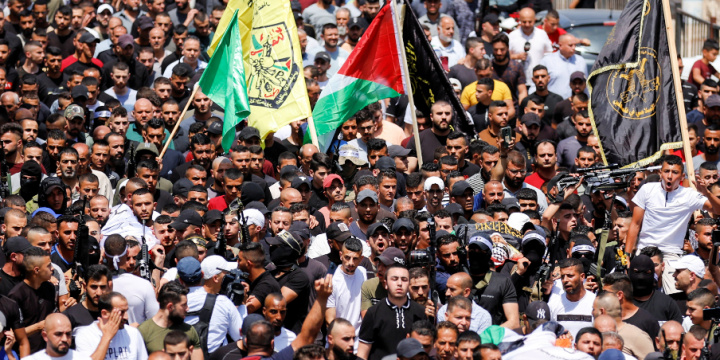
Palestinians in Jenin at the funeral of gunman Youssef Salah who was killed in an exchange of fire with Israeli forces. Photo: Reuters/Mohamad Torokman
On Friday October 14, Israeli forces entered the Jenin refugee camp in the northern West Bank, in order to arrest a Hamas operative who was alleged to be responsible for a number of recent terror attacks in the Judea and Samaria region.
During this counter-terror operation, Israeli soldiers were confronted by armed Palestinians who engaged them with gunfire and explosives.
After the fighting was over, the Palestinian Ministry of Health announced that two Palestinians had been killed in the fighting: a 25-year-old member of the Palestinian Islamic Jihad terror group and a local doctor.
VIDEO: Palestinian militants use a Palestinian Red Crescent ambulance as cover as they fire at Israeli servicemen in the Jenin refugee camp earlier today.
This is, of course, a war crime. No one will ever be held to account. pic.twitter.com/nOX5cveVZ7
— Avi Mayer (@AviMayer) October 14, 2022
However, soon after this official announcement, the Al-Aqsa Martyrs’ Brigade, an internationally-recognized terror organization loosely affiliated with the ruling Fatah party, declared that the doctor was a member of the organization and that he had “died in an armed clash … defending the homeland.”
Thus, contrary to the impression put out by the Palestinian Health Ministry, the doctor who was killed in the fighting was a member of a terrorist organization and is claimed to have been actively involved in the gunfight with Israeli soldiers.
You might be hearing news that a Palestinian ‘doctor’ Abdullah Al-Ahmad was reportedly killed in clashes with Israel, during a terrorism counter-raid in Jenin.
This is a picture of him. Some ‘doctor’, hey? pic.twitter.com/v2UE7PueXm
— Arsen Ostrovsky (@Ostrov_A) October 14, 2022
So, how did the international media report on the complex nature of this incident?
Overall, the media did pretty well in providing a complete portrayal of the circumstances surrounding the doctor’s death for their readers.
For instance, in its report, the Associated Press wrote “The Palestinian Health Ministry said Dr. Abdullah al-Ahmed was on duty, attending to the wounded outside his hospital when he was shot. The Al-Aqsa Martyrs Brigade, an armed offshoot of the secular Fatah party, claimed he was a member.”
Similarly, Reuters wrote that “Atta Abu Rumeileh, a leader for the Fatah group in Jenin, told Reuters that the other man killed was a doctor and Fatah member who participated in the fighting” while the New York Times reported on the doctor’s death by saying that, “One of the dead was a medical doctor whom a Palestinian militia later claimed as its leader, posting pictures of him carrying three assault rifles.”
For its part, France 24 did report that the doctor was claimed by “the armed wing of the mainstream Fatah movement,” although it only included this information six paragraphs after iwriting that “Two Palestinians including a doctor were killed Friday in an Israeli raid.” Additionally, France 24’s headline reads “Palestinian doctor among two killed in Israeli army West Bank raid.”
By failing to mention the fact that the doctor was a member of a terrorist organization in either its headline or opening paragraph, France 24 effectively “buried the lede.”
An egregious example of a news organization not properly covering the story of the terrorist doctor is CNN, which reported on the Palestinian Health Ministry’s announcement — but didn’t mention the Al-Aqsa Martyrs’ Brigade claiming him as a member of the terrorist organization who was killed in active fighting.
Therefore, anyone who uses CNN as their primary news source will be left with the false impression that the doctor was an innocent bystander who was killed by Israeli forces — and not the fighting member of a terrorist organization that he is purported to be.
When reporting on clashes between Israeli security forces and Palestinian gunmen, it is imperative that news organizations provide a complete picture of the events in question to their readers and viewers.
When news organizations fail to do so, they are not only shirking their journalistic responsibility but are also doing their viewers a disservice by not providing them with all the relevant information.