 Pod Save America Hosts Call on Democrats to Cut All Israel Military Aid, No Longer Accept AIPAC Funding
 Jews, Israelis Targeted in Austria Amid Surge in Antisemitic Incidents; Local Jewish Community Calls for Action
 ‘All of Our Strength’: Over 1,000 Pro-Israel Activists Gather in DC for Solidarity Conference
 ‘Devastated’: Wesley LePatner, Killed in Manhattan Mass Shooting, Was a Jewish Communal, Philanthropic Leader
 Sen. Angus King Vows to No Longer Vote for Israel Military Aid Until Gaza Conditions Improve
 Europe Won’t Pressure Israel to ‘Commit Suicide’ Amid Gaza Backlash, Palestinian State Push, Says Israeli FM
 Israel’s National Soccer Coach Attacked in Athens Before Soccer Fans Chant ‘F–K Israel, Free Palestine’ at Match
 New York Judge Sentences Neo-Nazi to 5 Years for Livestreaming Bomb Threats Against Jewish Hospitals
 US Pressures Lebanon to Issue Cabinet Decision to Disarm Hezbollah Before Talks Continue
 UK Plans to Recognize Palestinian State in September Unless Israel Meets Conditions, Starmer Says


Israeli PM to Attend UN Climate Change Summit in Egypt Next Month
Error: Contact form not found.
 by Sharon Wrobel

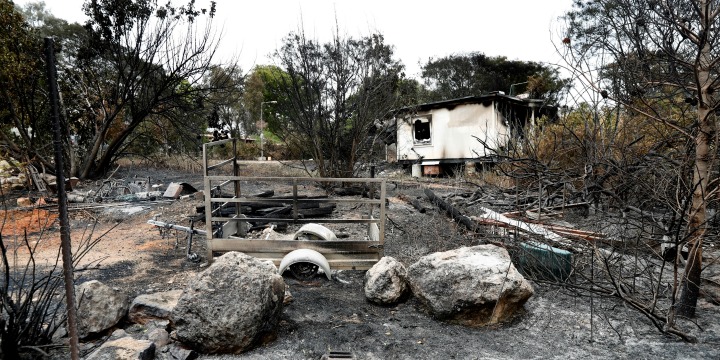
A house and its surroundings damaged by wildfires are seen at Kibbutz Harel during a record heatwave, in Israel, May 24, 2019. Photo: Reuters / Ronen Zvulun.
Israel’s Prime Minister will lead an Israeli delegation next month attending a United Nations climate change conference in Sharm el-Sheikh in Egypt.
Lapid is scheduled to depart on Nov. 7 for the 2022 United Nations Climate Change Conference, or COP 27, which will be held in Sharm el-Sheikh between Nov. 6 and Nov. 18. President Isaac Herzog is also expected to join the Israeli delegation. Israel will host a pavilion at the conference to forge regional and international cooperation as the country is poised to become a hub for climate-related technologies.
“With appropriate action and preparations, the climate crisis presents us with exceptional opportunities – not only a persistent struggle but for prosperity and advancing the Israeli economy to a new world,” Lapid said on Sunday.
Ahead of the conference, Israel’s cabinet on Sunday approved a new action climate plan calling on all government ministries by the end of 2023 to draft and present readiness plans to prepare for the effects and damage caused by climate change. The plans will be formulated according to climate change scenarios drawn up by the National Emergency Authority (NEA) and the Environmental Protection Ministry, including heat waves, wildfires, storms and extreme cold.
“We see the damage of the climate crisis, the most severe crisis facing humanity today, in all of our daily lives,” stated Environmental Protection Minister Tamar Zandberg. “Storms at sea are causing death and destruction around the world; as a result of the climate crisis, they are worsening and appearing more frequently.”
For example, global warming is slated to lead to fewer cold nights which in turn is set to change the agricultural produce appropriate for Israel. As a result, Israel’s cities will need to prepare by increasing shade and forestation to counter longer severe heat waves. Furthermore, maritime infrastructure will need to be adapted to the projected rise in sea levels.
To prepare for the expected changes in the wake of the climate crisis, Israel’s Environmental Protection Ministry is currently advancing a national plan to boost shade and cooling urban areas by planting trees, as well as a plan to rehabilitate streams and encourage local authorities to preserve natural urban green spaces.
Earlier this year, Israel passed its first climate bill on its first reading in the Knesset. The passage of the bill is part of a national strategy to cut greenhouse gas emissions to net zero by 2050.