 Pod Save America Hosts Call on Democrats to Cut All Israel Military Aid, No Longer Accept AIPAC Funding
 Jews, Israelis Targeted in Austria Amid Surge in Antisemitic Incidents; Local Jewish Community Calls for Action
 ‘All of Our Strength’: Over 1,000 Pro-Israel Activists Gather in DC for Solidarity Conference
 ‘Devastated’: Wesley LePatner, Killed in Manhattan Mass Shooting, Was a Jewish Communal, Philanthropic Leader
 Sen. Angus King Vows to No Longer Vote for Israel Military Aid Until Gaza Conditions Improve
 Europe Won’t Pressure Israel to ‘Commit Suicide’ Amid Gaza Backlash, Palestinian State Push, Says Israeli FM
 Israel’s National Soccer Coach Attacked in Athens Before Soccer Fans Chant ‘F–K Israel, Free Palestine’ at Match
 New York Judge Sentences Neo-Nazi to 5 Years for Livestreaming Bomb Threats Against Jewish Hospitals
 US Pressures Lebanon to Issue Cabinet Decision to Disarm Hezbollah Before Talks Continue
 UK Plans to Recognize Palestinian State in September Unless Israel Meets Conditions, Starmer Says


Lebanese-Canadian Academic on Trial in France for 1980 Synagogue Bombing
Error: Contact form not found.
 by Algemeiner Staff

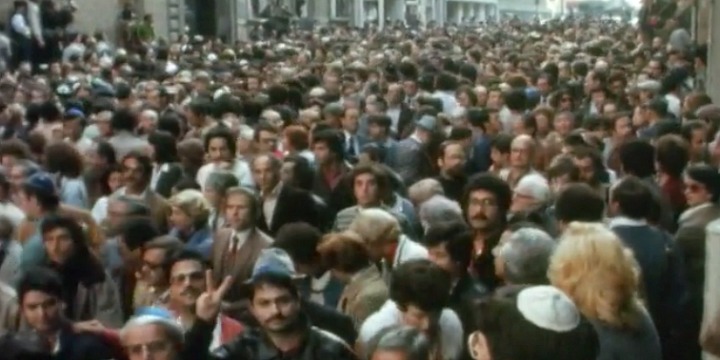
French Jews gathering outside the rue Copernic synagogue in Paris after it was bombed by a terrorist on October 3, 1980. Photo: Reuters TV.
The trial of a Canadian academic accused of involvement in the 1980 bombing of a synagogue in Paris that killed four people and injured more than 40 began in a French court on Monday.
The Lebanese-born academic, 69-year-old Hassan Diab, is being tried in absentia after French authorities declined to issue an international arrest warrant for him, leaving him free to decide whether to attend the proceedings.
Diab was first accused of involvement in the bombing by French intelligence agencies in 1999. Several years of legal wrangling resulted in Diab’s arrest in 2008 and his extradition from Canada to France in 2014. Four years later, Diab was released and returned to Canada after French prosecutors concluded there was not enough evidence against him for a trial. In 2021, the charges were reinstated following an appeal.
France’s case rested on the claim that a man who checked into a Paris hotel before the bombing using a Cypriot passport was in fact Diab. Eyewitness evidence and analysis of handwriting samples led the French authorities to conclude that the individual in question was Diab, despite the sociology professor’s insistence that he had been in Lebanon at the time. France alleged that Diab was a member of the special operations branch of the Popular Front for the Liberation of Palestine (PFLP), which was believed to be responsible for the attack.
The Ontario judge who approved Diab’s extradition in 2014 had rejected most of the evidence against Diab was unreliable, but said as well that the low threshold of Canadian extradition law – that a requesting state’s summary of its evidence is presumed to be reliable, unless shown otherwis — meant that the French request could not be denied, the Globe and Mail reported. Commenting on the handwriting evidence specifically, Judge Robert Maranger argued that while it was not “manifestly unreliable,” it was “convoluted, very confusing, with conclusions that are suspect.”
The bomb at the Rue Copernic Synagogue in Paris, containing 22lbs of explosive, was left in the saddlebags of a rented motorcycle parked outside the synagogue on October 3, 1980. The blast collapsed the synagogue’s glass roof down on those inside who were attending Shabbat services, which included the bar mitzvahs of three boys and the bat mitzvahs of two girls.
In the aftermath of the attack, then French Prime Minister Raymond Barre was lambasted by Jewish organizations for seemingly claiming that the Jewish victims were not innocent when he said, “This odious attack was aimed at hitting Jews going to the synagogue but hit innocent French people.”
A verdict in the Diab trial is expected on April 21.