 Pod Save America Hosts Call on Democrats to Cut All Israel Military Aid, No Longer Accept AIPAC Funding
 Jews, Israelis Targeted in Austria Amid Surge in Antisemitic Incidents; Local Jewish Community Calls for Action
 ‘All of Our Strength’: Over 1,000 Pro-Israel Activists Gather in DC for Solidarity Conference
 ‘Devastated’: Wesley LePatner, Killed in Manhattan Mass Shooting, Was a Jewish Communal, Philanthropic Leader
 Sen. Angus King Vows to No Longer Vote for Israel Military Aid Until Gaza Conditions Improve
 Europe Won’t Pressure Israel to ‘Commit Suicide’ Amid Gaza Backlash, Palestinian State Push, Says Israeli FM
 Israel’s National Soccer Coach Attacked in Athens Before Soccer Fans Chant ‘F–K Israel, Free Palestine’ at Match
 New York Judge Sentences Neo-Nazi to 5 Years for Livestreaming Bomb Threats Against Jewish Hospitals
 US Pressures Lebanon to Issue Cabinet Decision to Disarm Hezbollah Before Talks Continue
 UK Plans to Recognize Palestinian State in September Unless Israel Meets Conditions, Starmer Says


Israel Economy Grows 2.5% in Q1, Likely Clinches Another Rate Hike
Error: Contact form not found.
 by Reuters and Algemeiner Staff

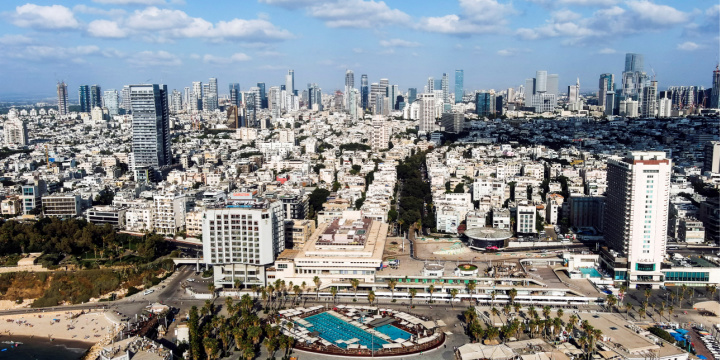
A general view shows part of Tel Aviv, Israel June 12, 2022. Picture taken with a drone on June 12, 2022. REUTERS/Ilan Rosenberg
Israel‘s economy slowed less than expected in the first quarter of 2023 due to strong industrial investment and along with strong inflation is expected to keep pressure on policymakers to rein in rising prices.
Gross domestic product grew an annualised 2.5% in the January-March period from the prior three months, the Central Bureau of Statistics said on Tuesday A Reuters poll of analysts had forecast a 1.8% rise.
First-quarter growth slowed from 5.3% in the fourth quarter, unrevised from a prior estimate.
“This print supports a 0.25 hike next week, also following the high CPI number in April,” said Jonathan Katz, chief economist at Leader Capital Markets.
The Bank of Israel on May 22 will decide on interest rates.
With inflation stubbornly high, partly due to a weaker shekel, the central bank has raised rates more than it had planned – to 4.5% from 0.1% in April 2022.
Data on Monday showed the annual inflation rate holding steady at 5% in April versus expectations of an ease to 4.7%.
Israel‘s economy grew 6.5% in 2022 and is expected to grow 2.5% in 2023, according to the Bank of Israel and the International Monetary Fund (IMF).
The Finance Ministry on Tuesday trimmed its 2023 growth forecast to 2.7% from 3% and saying the slowdown would cut tax revenue this year by 5.3 billion shekels ($1.5 billion).
It said the new forecasts take into account the fallout from uncertainty over the government’s judicial overhaul plan, which has been suspended due to heavy political and public pressure and amid a steep drop in foreign investment into tech firms that has weakened the shekel to a three year low versus the dollar.
Some analysts warn that the 2023 and 2024 state budget that must be approved by the end of the month does not do enough to encourage growth.
In the first quarter, investment in fixed assets grew 14.7%, although exports fell 3.5% and private spending dipped 1.7%.
On a per capita basis, GDP grew 0.1% in the first three months of the year.
The shekel was flat at 3.66 per dollar, while Tel Aviv share indexes were also largely unchanged.