 Pod Save America Hosts Call on Democrats to Cut All Israel Military Aid, No Longer Accept AIPAC Funding
 Jews, Israelis Targeted in Austria Amid Surge in Antisemitic Incidents; Local Jewish Community Calls for Action
 ‘All of Our Strength’: Over 1,000 Pro-Israel Activists Gather in DC for Solidarity Conference
 ‘Devastated’: Wesley LePatner, Killed in Manhattan Mass Shooting, Was a Jewish Communal, Philanthropic Leader
 Sen. Angus King Vows to No Longer Vote for Israel Military Aid Until Gaza Conditions Improve
 Europe Won’t Pressure Israel to ‘Commit Suicide’ Amid Gaza Backlash, Palestinian State Push, Says Israeli FM
 Israel’s National Soccer Coach Attacked in Athens Before Soccer Fans Chant ‘F–K Israel, Free Palestine’ at Match
 New York Judge Sentences Neo-Nazi to 5 Years for Livestreaming Bomb Threats Against Jewish Hospitals
 US Pressures Lebanon to Issue Cabinet Decision to Disarm Hezbollah Before Talks Continue
 UK Plans to Recognize Palestinian State in September Unless Israel Meets Conditions, Starmer Says


Parshat Pinchas: Succession
Error: Contact form not found.
 by Jeremy Rosen

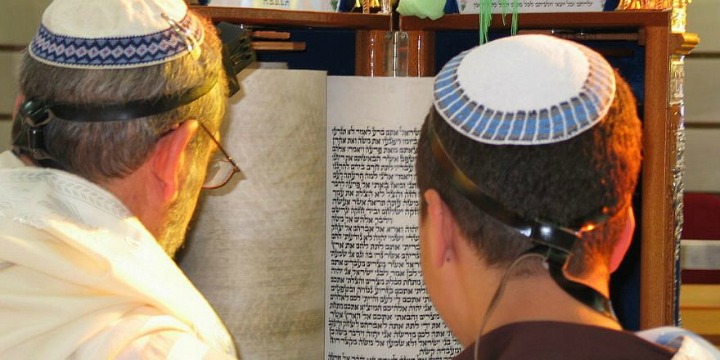
Reading from a Torah scroll in accordance with Sephardi tradition. Photo: Sagie Maoz via Wikimedia Commons.
Pinchas was the grandson of Aharon, the zealot who took the law into his own hands. There was a crisis over the leadership in response to the tribe of Moab. They had tried to stop the advance of the Israelites through magic. And when that did not work, they sent the women in. They succeeded not just in seducing some of the leading figures of the tribes, but also got them involved in idolatry. Moshe and Aharon seemed unable to respond. It was Pinchas who took a spear and bought the insurrection to a bloody, if controversial, end.
The Torah this week raises issues of leadership and succession. Pinchas should have been the natural leader if zealotry had been regarded as appropriate for leadership. But Pinchas does appear to have been a candidate.
The first example of succession concerns the allocation of tribal territory, when the Israelites would eventually move into the land of Canaan. The five daughters of Zelophchad, a man who had died earlier, turned to Moshe claiming that the division of the land is unfair because it was made only according to the males. In their case, because their father had only daughters, the family was going to miss out on the allocation of land which they thought was unfair, so they put their plea to Moshe.
Moshe referred the request to God, who agreed with them. This was a remarkable decision and all the more so, because it required specific authorization from God to even ask.
Given the nature of male society at that time, it was remarkable that these women felt able to stand up in public for their rights. I have never heard of anyone called Zelophchad, but the five remarkable daughters’ names are quite common Hebrew names nowadays.
The second issue of succession concerns Moshe. The Torah repeats the fact that he’s about to die before the people reach the land of Canaan.“God said to Moshe, ‘Ascend these heights of Abarim and view the land that I have given to the Israelite people. When you have seen it, you too shall die, as your brother Aharon has.’” ( Chapter 27:12-14).
Although Moshe knows his end is near, Moshe doesn’t yet know who God will approve of to take over from him. In this moving statement, he outlines not only the need for effective leadership but the nature and the quality of the leadership he’s looking for (and zealous Pinchas is not included). He says, “Appoint someone over the community who shall go out before them and come in before them, and who shall take them out and bring them in, so that they may not be like sheep that have no shepherd.”
The reply comes, “Single out Yehoshua son of Nun, a spiritual man, and lay your hand upon him. Invest him with some of your authority, so that the whole of the Israelite community may obey …And Eleazar the priest, shall on his behalf seek the decision of the Urim and on this basis, he will lead the Israelites and the community” ( Chapter 27:15-23).
The description of the ideal successor is someone who can deal with people, but also lead them in war and peace at the same time. Yehoshua had these qualities and more. He had served and been trained by Moshe while serving as his assistant and absorbed some of his qualities. On occasion, Moshe had corrected him. And then he laid his hands on him as a sign of approval.
Based on this episode, two conditions were later adopted for rabbinic authority. Shimush which means practical experience from a master — religious apprenticeship. And Semicha — the formal laying of hands, as a sign of authorization, which is nowadays done with a document.
These are two models that connect leadership not just to power, but giving people access to justice and fairness, and allowing them to state their cases.
The author is a writer and rabbi, currently based in New York.