 Pod Save America Hosts Call on Democrats to Cut All Israel Military Aid, No Longer Accept AIPAC Funding
 Jews, Israelis Targeted in Austria Amid Surge in Antisemitic Incidents; Local Jewish Community Calls for Action
 ‘All of Our Strength’: Over 1,000 Pro-Israel Activists Gather in DC for Solidarity Conference
 ‘Devastated’: Wesley LePatner, Killed in Manhattan Mass Shooting, Was a Jewish Communal, Philanthropic Leader
 Sen. Angus King Vows to No Longer Vote for Israel Military Aid Until Gaza Conditions Improve
 Europe Won’t Pressure Israel to ‘Commit Suicide’ Amid Gaza Backlash, Palestinian State Push, Says Israeli FM
 Israel’s National Soccer Coach Attacked in Athens Before Soccer Fans Chant ‘F–K Israel, Free Palestine’ at Match
 New York Judge Sentences Neo-Nazi to 5 Years for Livestreaming Bomb Threats Against Jewish Hospitals
 US Pressures Lebanon to Issue Cabinet Decision to Disarm Hezbollah Before Talks Continue
 UK Plans to Recognize Palestinian State in September Unless Israel Meets Conditions, Starmer Says


Choose a Society and Friends That Support Your Values
Error: Contact form not found.
 by Jeremy Rosen

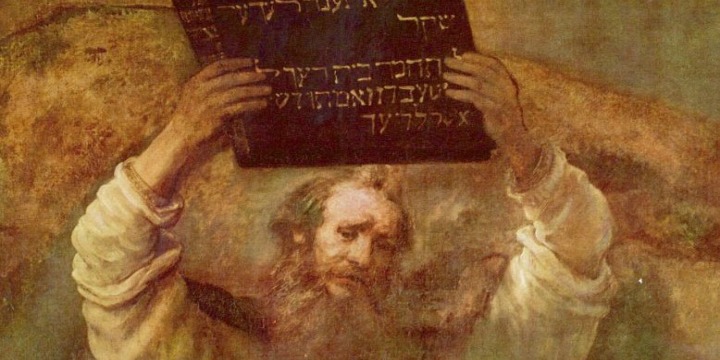
Moses Breaking the Tables of the Law (1659), by Rembrandt. Photo: Wikimedia Commons.
In this week’s parsha, as the children of Israel approach the Promised Land, they had to pass through what is now Transjordan. In those days, it was like the Wild West. As the Israelites moved up through these territories, they were forced to fight Sihon and Og. They defeated them and conquered their lands. The tribes of Reuven, Gad, and part of Menashe had built up large flocks and herds of grazing animals.
They approached Moses with a request — that they should be able to take over this land, instead of having a share in the hilly country to the West (Numbers 32). Moses’ initial reaction was shock and anger. He saw it as a rebellion against the Divine Plan. It looked as though they were breaking the solidarity of the 12 tribes. He accused them of taking advantage of what the tribes altogether had done. Moses felt this would undermine unity and strength, by breaking away from everyone else. And indeed, the text records that this was God’s reaction too when Moses went to consult him.
Nevertheless, the tribes persisted, and stressed their loyalty to all the other tribes. They argued that they would build cattle pens for the herds on the east bank, settle their families there, and then come over armed to fight for the rest of the tribes to secure their land too. As a result of the strength of their views and determination, Moses surprisingly conceded. In so doing, he came up with an oath they had to agree to. It was an oath of double condition. All Biblical agreements had to be double-edged. If you do this, then this will be the consequence, but if you do that, that will be the other consequence. Moses agreed that if they were given the land, they had to come over and fight for the others. And if they did not, the agreement would lapse, and the other tribes would reclaim the land.
But there was another aspect to this incident. The historical question was whether over time by staying on the east bank, they would assimilate and disappear.
The east bank Israelites disappeared much more quickly than the other tribes. The Jews on the west bank, with their heads in Jerusalem under the tribe of Judah survived, and we are descended from them. The moral of the story is reiterated by the rabbis who say one should always live somewhere where you’re surrounded by good people, and by people who are going to influence you positively. This is going to have an impact on who you are, and who your children will be.
Moses was right to worry. But he conceded out of an attempt at conciliation and compromise. You can’t always force people to make the right decision. The moral is that it is important to choose a society and or friends that share your values. How important is this today in the debate (or rather the fight) about what kind of society Israel or indeed the US and the UK should be?
The author is a writer and rabbi, currently based in New York.