 Pod Save America Hosts Call on Democrats to Cut All Israel Military Aid, No Longer Accept AIPAC Funding
 Jews, Israelis Targeted in Austria Amid Surge in Antisemitic Incidents; Local Jewish Community Calls for Action
 ‘All of Our Strength’: Over 1,000 Pro-Israel Activists Gather in DC for Solidarity Conference
 ‘Devastated’: Wesley LePatner, Killed in Manhattan Mass Shooting, Was a Jewish Communal, Philanthropic Leader
 Sen. Angus King Vows to No Longer Vote for Israel Military Aid Until Gaza Conditions Improve
 Europe Won’t Pressure Israel to ‘Commit Suicide’ Amid Gaza Backlash, Palestinian State Push, Says Israeli FM
 Israel’s National Soccer Coach Attacked in Athens Before Soccer Fans Chant ‘F–K Israel, Free Palestine’ at Match
 New York Judge Sentences Neo-Nazi to 5 Years for Livestreaming Bomb Threats Against Jewish Hospitals
 US Pressures Lebanon to Issue Cabinet Decision to Disarm Hezbollah Before Talks Continue
 UK Plans to Recognize Palestinian State in September Unless Israel Meets Conditions, Starmer Says


New York Times Writer Named as Part of US-Iran ‘Prisoner Swap’ — on Iranian Side
Error: Contact form not found.
 by Ira Stoll

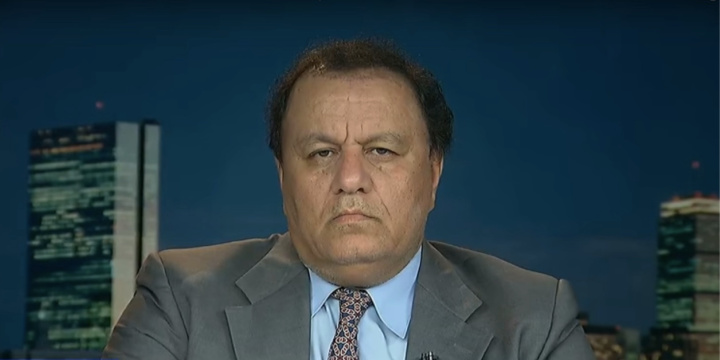
Kaveh Afrasiabi during an interview with CGTN in 2018 / YouTube screenshot
A frequent contributor to the New York Times facing federal criminal charges of being a paid, unregistered foreign agent of Iran is reportedly one of five people that the Iranian government is seeking to trade for as part of a “prisoner swap” with the United States.
Kaveh Afrasiabi, who was arrested in January 2021, has acknowledged to The Algemeiner that he was paid by the Iranian mission at the United Nations. He has pleaded not guilty, arguing that he was and remains “an agent of peace committed to US-Iran reconciliation and peace and dialogue” and that his writing was motivated only by his “moral responsibility as an intellectual.”
The New York Times published more than a dozen articles and letters to the editor by Afrasiabi, but it has not published any news of his arrest or coverage of the ongoing criminal case. Nor has the Times amended its online archives to indicate that Afrasiabi was being paid by the Iranian government. Prosecutors say he was paid approximately $265,000 by the Iranian mission at the UN since 2007 and also received health insurance benefits.
Iran’s UN mission named Afrasiabi as one of five individuals that the Iranian government is seeking as part of a “planned prisoner swap,” Al-Monitor reported.
On Monday, Congress received notification from US Secretary of State Blinken that to “facilitate” the release of five Americans from Iran, “the United States has committed to release five Iranian nationals currently held in the United States and to permit the transfer of approximately $6 billion in restricted Iranian funds,” according to press reports.
The deal is being criticized by Republican lawmakers. “A $6 billion reward to terrorists for taking hostages. What a message from Joe Biden,” Sen. Tom Cotton (R-AR) posted on X/Twitter. He added that Biden was desecrating the anniversary of the Sept. 11, 2001, terrorist attacks by “paying ransom to the world”s worst state sponsor of terrorism.”
Meanwhile, Sen. Ted Cruz (R-TX) described what he called “a $6 billion ransom and the release of Iranian operatives” as a “side deal” that he said was part of “a secret nuclear deal with the Iranian regime that is being kept from Congress and the American people.”
Blinken, who maintains the arrangement is independent of any nuclear negotiations with Iran, also claims the $6 billion will be transferred to “restricted accounts” where the funds will be available to the regime only for humanitarian trade.
Afrasiabi declined to comment to The Algemeiner in response to a query about the report that he was to be part of the prisoner swap. It’s possible that in such a swap, the charges would be dropped but he would remain in the United States rather than moving to Iran. He has lived for years in the Boston area and is a US permanent resident, though not a citizen.
The Foreign Agents Registration Act, passed in 1938 to curb foreign influence on American politics, has been used increasingly frequently by prosecutors, though in a series of recent cases, either jurors have acquitted defendants or judges have overturned initial convictions. In the case against Afrasiabi, prosecutors have cited emails in which he mentioned his published writings as reasons for the Iranian government to continue paying him. Afrasiabi has suggested the emails were fabricated. Some of the evidence in the case is classified and not available to the public.
If the criminal case against Afrasiabi were to be dropped as a result of a US-Iran diplomatic deal, it would be ironic. The US government would lose the opportunity to prove in a US court that Afrasiabi was an unregistered foreign agent. However, his inclusion in the deal as a request of the Iranian government would be an indication that the government in Tehran, or at least its UN Mission, has an interest in his fate.
Afrasiabi has been out of jail pending a trial, which is scheduled for Jan. 8, 2024, before Judge Brian Cogan of the US District Court for the Eastern District of New York.
Ira Stoll was managing editor of The Forward and North American editor of The Jerusalem Post. His media critique, a regular Algemeiner feature, can be found here.