 Pod Save America Hosts Call on Democrats to Cut All Israel Military Aid, No Longer Accept AIPAC Funding
 Jews, Israelis Targeted in Austria Amid Surge in Antisemitic Incidents; Local Jewish Community Calls for Action
 ‘All of Our Strength’: Over 1,000 Pro-Israel Activists Gather in DC for Solidarity Conference
 ‘Devastated’: Wesley LePatner, Killed in Manhattan Mass Shooting, Was a Jewish Communal, Philanthropic Leader
 Sen. Angus King Vows to No Longer Vote for Israel Military Aid Until Gaza Conditions Improve
 Europe Won’t Pressure Israel to ‘Commit Suicide’ Amid Gaza Backlash, Palestinian State Push, Says Israeli FM
 Israel’s National Soccer Coach Attacked in Athens Before Soccer Fans Chant ‘F–K Israel, Free Palestine’ at Match
 New York Judge Sentences Neo-Nazi to 5 Years for Livestreaming Bomb Threats Against Jewish Hospitals
 US Pressures Lebanon to Issue Cabinet Decision to Disarm Hezbollah Before Talks Continue
 UK Plans to Recognize Palestinian State in September Unless Israel Meets Conditions, Starmer Says


A Yom Kippur Guide for the Perplexed, 2023
Error: Contact form not found.
 by Yoram Ettinger

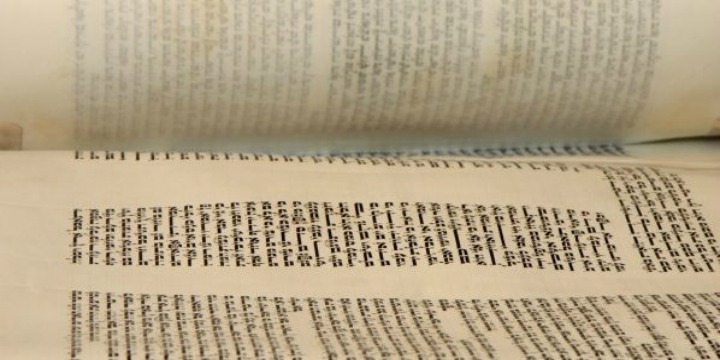
A Torah scroll. Photo: RabbiSacks.org.
As Yom Kippur approaches on Sunday night, here are some important facts about the holiday.
1. Soul searching. Yom Kippur is observed on the 10th day of the Jewish month of Tishrei. It is called the Super Sabbath (Shabbat Shabbaton in Hebrew), concluding 10 days of soul-searching and spiritual self-awareness and self-enhancement, which begins on Rosh Hashanah, the first day of the Jewish year.
According to Leviticus 23:26-32: “The Lord said to Moses, that the tenth day of the seventh month [Tishrei] is the Day of Atonement …. Do not do any work on that day. … This is a lasting ordinance for generations to come…”
Yom Kippur commemorates the day of Divine forgiveness for the sin of worshiping the golden calf idol. It cautions against the temptation to sacrifice spiritual values on the altar of materialism and convenience.
2. Social responsibility. Asking forgiveness of fellow human-beings is a major feature of Yom Kippur, transferring human behavior from acrimony and vindictiveness to forgiveness and peaceful coexistence. It is consistent with the philosophy of Hillel the Elder: “The essence of the Torah is: do not do unto your fellow person that which is hateful to you; the rest [of the Torah] is commentary.”
3. No ill-speaking. According to Judaism, the tongue can be a lethal weapon, and therefore, ill-speaking of other people (“evil tongue” in Hebrew) may not be forgiven. Yom Kippur is a reminder that words are controllable before they are uttered, but they become uncontrollable once they are spoken.
4. Behavioral enhancement. Yom Kippur highlights magnanimity, humility, genuine repentance, compassion, consideration, forgiveness, responsibility, optimism, and faith. It recognizes one’s fallibilities, emphasizes learning from one’s mistakes, minimizing future missteps, elevating morality, and enhancing family and community cohesion.
Criminals and sinners are invited to participate in Yom Kippur services.
5. Fasting is a key feature of Yom Kippur, reducing material pleasure, in order to focus on one’s soul-searching, and enhancing empathy with the needy. The Hebrew spelling of fasting is the root of the Hebrew word for reducing/focusing.
6. Kippur. The Hebrew word Kippur [כיפור] means atonement/repentance — a derivative of the Biblical word Kaporet [כפורת], which was the dome/cover of the Holy Ark in the Sanctuary, and the word Kopher [כופר], which was the cover/dome of Noah’s Ark and the Holy Altar in the Jerusalem Temple.
Yom Kippur resembles a spiritual cover/dome, which separates between spiritualism and materialism/mundane. The Kippah is the skullcap that covers one’s head during prayers.
7. Venus/Noga. The astrological sign of Tishrei is Libra, which symbolizes the scales of justice, truth, optimism, humility, and tolerance.
8. Shofar. Yom Kippur is concluded by blowing the Shofar (a ritual ram’s horn), which represents a moral wake up-call, optimism, determination, humility, and peace-through-strength.
The blowing of the Shofar commemorates the saving of Isaac by a ram’s horns; the receipt of the (second) Ten Commandments at Mount Sinai; the re-entry to the Land of Israel and the conquest of Jericho by Joshua; and Gideon’s victory over the much larger Midianite military.
9. Jonah. The Biblical Scroll of Jonah — which is the fifth book in The Twelve Prophets — is read on Yom Kippur, underscoring the four universal pillars of Yom Kippur: repentance, prayer/faith, justice, and forgiveness.
The Prophet Jonah (“dove” in Hebrew), son of Amitai (“truth” in Hebrew) sailed to a faraway land and transformed a sinful society into a pious society, thus displaying social responsibility.
10. Parents. A Memorial Candle in memory of one’s parents is lit on Yom Kippur, reaffirming “Honor thy father and mother,” providing an opportunity to ask forgiveness of one’s parent(s).
The author is a commentator, and former Israeli ambassador.