 Pod Save America Hosts Call on Democrats to Cut All Israel Military Aid, No Longer Accept AIPAC Funding
 Jews, Israelis Targeted in Austria Amid Surge in Antisemitic Incidents; Local Jewish Community Calls for Action
 ‘All of Our Strength’: Over 1,000 Pro-Israel Activists Gather in DC for Solidarity Conference
 ‘Devastated’: Wesley LePatner, Killed in Manhattan Mass Shooting, Was a Jewish Communal, Philanthropic Leader
 Sen. Angus King Vows to No Longer Vote for Israel Military Aid Until Gaza Conditions Improve
 Europe Won’t Pressure Israel to ‘Commit Suicide’ Amid Gaza Backlash, Palestinian State Push, Says Israeli FM
 Israel’s National Soccer Coach Attacked in Athens Before Soccer Fans Chant ‘F–K Israel, Free Palestine’ at Match
 New York Judge Sentences Neo-Nazi to 5 Years for Livestreaming Bomb Threats Against Jewish Hospitals
 US Pressures Lebanon to Issue Cabinet Decision to Disarm Hezbollah Before Talks Continue
 UK Plans to Recognize Palestinian State in September Unless Israel Meets Conditions, Starmer Says


Col. Richard Kemp: Task to Get Hostages Out of Gaza Is Herculean, but IDF Stands Highest Chance of Success
Error: Contact form not found.
 by Debbie Weiss

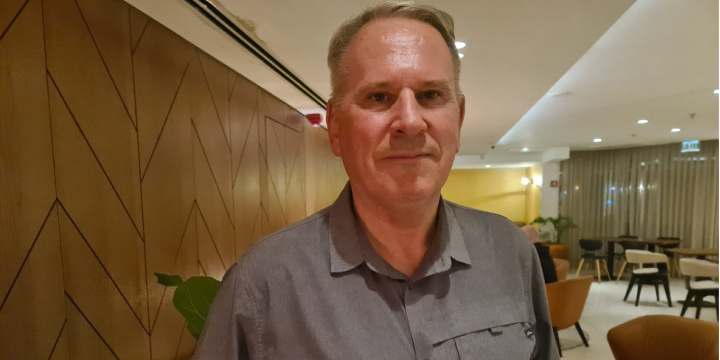
Col. (ret.) Richard Kemp in a hotel in Tel Aviv, Israel, following a press briefing by the families of hostages held by Hamas in Gaza, Oct. 19, 2023. Photo: Debbie Weiss
Col. (ret.) Richard Kemp, the former commander of British forces in Afghanistan, said this week that rescuing the hostages held by Hamas would be a “Herculean” task given the complexity of the situation in Gaza, but added that of all modern militaries, the Israel Defense Forces (IDF) had the highest chance of success.
The hostages — now numbering at least 243, according to the latest figures — are a “major factor” in the IDF’s operations inside Hamas-ruled Gaza and its choice to delay a full-scale ground operation, Kemp told The Algemeiner during a visit to Israel.
“Although the IDF have a great deal of experience of hostage rescue, and their special forces spend much time training and preparing for exactly that, it will be an extraordinarily challenging mission,” he said.
“But if anyone can get them out, it is the IDF,” he added.
The IDF on Monday announced the rescue of a soldier from Gaza. Private Ori Megidish was the first to be abducted by Hamas in its Oct. 7 onslaught of her observation post in Nachal Oz in southern Israel.
Kemp hailed Megidish’s safe return as “excellent news” that “demonstrates the strength of Israeli intelligence and special forces” and gives “renewed hope” to other families.
Kemp’s own military background saw him involved in rescue operations of British civilian hostages in Afghanistan and Iraq between 2003-2005. “Those operations each involved one or two hostages. Even that was incredibly complex and involved huge resources,” he said, adding that those rescue operations ultimately failed.
The element of surprise is “absolutely critical” for the IDF’s success, he said, but acknowledged the challenges in achieving this, especially in light of Hamas’ meticulous planning for its Oct 7. massacre in southern Israel and the Palestinian terrorist group’s likely preparedness for a rescue mission.
The key, Kemp said, is gathering extensive intelligence to accurately determine the hostages’ locations, to learn as much as possible about the captors, and understand their immediate environs, which, he asserted, are very likely to be “rigged with explosives and booby trapped.”
“Bear in mind also the hostages may be moved from time to time and will almost certainly each have a gun to their head with the trigger pulled at any suspicion of a rescue attempt. If that happens the terrorists would aim to kill the hostages and the rescuers,” he said.
Kemp also addressed the call by families of the hostages to Israeli Prime Minister Benjamin Netanyahu on Saturday to settle on an “all for all” prisoner exchange deal, in which Palestinian security prisoners would be released in return for the abductees.
“Hamas will attempt to drip-release prisoners to get Israel to stop its attacks,” he asserted.
Agreeing to such a deal, Kemp said, “could drag out the conflict endlessly and cannot be accepted.”
Israel has said in the past that a significant percentage of released prisoners from exchange deals have been subsequently re-arrested for involvement in terrorist activities, the most notable of which is the Gilad Shalit exchange. That deal saw 1,027 Palestinian prisoners, including Hamas’ current leader in Gaza, Yahya Sinwar, released in 2011 in exchange for the former Israeli soldier who was in captivity by the terror group for more than five years.
Kemp said that the carnage he witnessed in Kfar Aza, one of the Gaza envelope communities that was hardest hit in the Oct. 7 massacre, was “undoubtedly” the worst he’d ever seen.
“And I’ve seen some pretty devastating sites in my time,” Kemp told The Algemeiner after he returned from a tour of the massacred community.
“It was a combination of Islamic State and the Nazis murdering Jews in villages in Poland,” he said. “The horrors that happened [there] can only be dealt with by decisive military action.”
Addressing what would happen in the eventuality that the IDF succeeds in its stated mission of destroying Hamas, Kemp said the future was “far from clear” and underlined his concerns for widespread support of jihadist ideology among Gazan civilians.
“Someone will have to take control of the Gaza Strip and begin the process of reconstruction,” he said. “But one thing is certain: the IDF will have to impose its own direct security control over the Gaza Strip to prevent any successor terrorist groups establishing themselves.”
“Most of the population of Gaza support Hamas, despite the horrors it has inflicted on them, and they hate Israel. That hate will of course have been deepened by Israel’s war to eliminate Hamas,” he said.
Debbie Weiss is a freelance writer based in Israel.