 Pod Save America Hosts Call on Democrats to Cut All Israel Military Aid, No Longer Accept AIPAC Funding
 Jews, Israelis Targeted in Austria Amid Surge in Antisemitic Incidents; Local Jewish Community Calls for Action
 ‘All of Our Strength’: Over 1,000 Pro-Israel Activists Gather in DC for Solidarity Conference
 ‘Devastated’: Wesley LePatner, Killed in Manhattan Mass Shooting, Was a Jewish Communal, Philanthropic Leader
 Sen. Angus King Vows to No Longer Vote for Israel Military Aid Until Gaza Conditions Improve
 Europe Won’t Pressure Israel to ‘Commit Suicide’ Amid Gaza Backlash, Palestinian State Push, Says Israeli FM
 Israel’s National Soccer Coach Attacked in Athens Before Soccer Fans Chant ‘F–K Israel, Free Palestine’ at Match
 New York Judge Sentences Neo-Nazi to 5 Years for Livestreaming Bomb Threats Against Jewish Hospitals
 US Pressures Lebanon to Issue Cabinet Decision to Disarm Hezbollah Before Talks Continue
 UK Plans to Recognize Palestinian State in September Unless Israel Meets Conditions, Starmer Says


Iran’s Sham Elections: The Inevitable Charade of a Theocratic Regime
Error: Contact form not found.
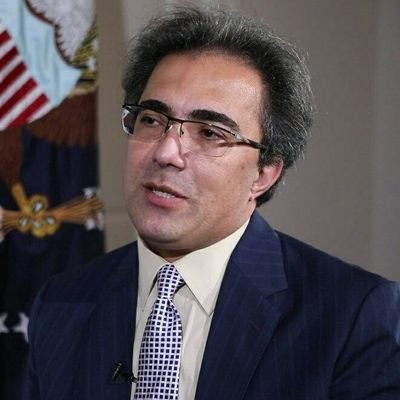 by Erfan Fard


Iran’s Supreme Leader Ayatollah Ali Khamenei performs prayer at a funeral for victims of helicopter crash that killed Iran’s President Ebrahim Raisi, Foreign Minister Hossein Abdollahian, and others, in Tehran, Iran, May 22, 2024. Photo: Office of the Iranian Supreme Leader/WANA (West Asia News Agency) Handout via REUTERS
As another presidential election looms in Iran, the charade orchestrated by the theocracy of Shiite mullahs unfolds yet again. This exercise, set against the backdrop of former President Ebrahim Raisi’s oppressive regime, is less about electoral competition and more a calculated spectacle of pseudo-democratic posturing.
With Raisi’s tenure coming to an ignominious close — marked by brutality and gross ineffectiveness — the stage is set not for change but for the reaffirmation of authoritarian control under the regime’s Supreme Leader Ali Khamenei and the omnipotent Guardian Council. In a nation gripped by the iron fist of a theocratic dictatorship, expecting any semblance of democracy, openness, or reform is nothing short of insanity.
The Illusion of Electoral Choice Amidst Systematic Suppression
The forthcoming electoral process, beginning with candidate registrations on May 30, is meticulously controlled to ensure no deviation from the regime’s hard-line ideology. Campaign efforts, kicking off on June 12 and culminating in the vote on June 28, are predicted to display a roster of candidates pre-approved by Khamenei, with the Guardian Council acting as the gatekeeper, filtering out any potential threats to the status quo.
Figures like Saeed Jalili, Mohammad Bagher Qalibaf, Hossein Dehghan, and Parviz Fattah are poised to continue the regime’s legacy — each embodying the regime’s preference for continuity, suppression, and control.
Peripheral contenders such as Mahmoud Ahmadinejad and Mohsen Rezaei, despite their familiarity in Iranian politics, face significant public and official disdain due to their problematic pasts. Meanwhile, reformist elements within the regime, crippled by a lack of support from Khamenei and real public backing, linger ineffectually, unable to mount any credible challenge to the conservative mainstream.
Widespread Disillusionment and the Mockery of Voting
The prevailing sentiment among the Iranian public is one of deep-seated disillusionment and disengagement. Recognizing the elections for the farce they are, many call for a boycott, unwilling to legitimize a process that mocks the very essence of democratic engagement. Historical participation rates hovering around 10-15% starkly contradict the regime’s inflated claims of electoral support, underscoring a profound disconnect between the government and the governed.
In a nation where approximately 10-15% of the populace still supports the outdated and fanatical ideologies of the regime, the vast majority of Iranians are disillusioned. They see the electoral process not as a mechanism of change, but as a tool to perpetuate a facade of legitimacy and democracy where none exists.
Global Perspective and Media Responsibility
As Iran stages this electoral theater, the international community, especially the United States, which will soon conduct its own elections, watches with a mix of skepticism and concern. Predictably, the outcome of Iran’s elections will lead to another term of oppression, devoid of any real representation or public voice, continuing under the guise of harsh and repressive governance akin to Raisi’s rule.
It is imperative for the international media to look beyond the regime’s narrative and focus on the real issues faced by the Iranian people. This stark disparity between Iran’s manipulated electoral displays and the democratic processes observed in more open societies highlights an urgent need for international media to expose the realities of the regime’s oppressive governance and the people’s genuine desire for change and democracy.
Conclusion: Reflecting on the Unyielding Grip of Theocracy
Reflecting on the upcoming electoral exercise in Iran, it is evident that the real challenge is not about choosing a new leader but about the broader struggle of the Iranian people to find their voice within a system fundamentally rigged against them. The anticipation of any democratic openness under the current theocratic regime is not just unrealistic; it is a delusion. The regime’s consistent manipulation of voter turnout and its unabashed perpetuation of a controlled political narrative reveal the systemic deceit at the heart of Iran’s political landscape.
In conclusion, as Iran stands on the precipice of another orchestrated electoral exercise, the contrast between the promise of democracy and the reality of theocratic oppression could not be clearer. As the world watches, it is crucial to recognize and support the Iranian people’s gradual but determined march towards reclaiming their autonomy, challenging the deeply entrenched theocracy that has long stifled their freedoms and aspirations.
Erfan Fard is a counterterrorism analyst and Middle East Studies researcher based in Washington, DC. Twitter @EQFARD.