 Pod Save America Hosts Call on Democrats to Cut All Israel Military Aid, No Longer Accept AIPAC Funding
 Jews, Israelis Targeted in Austria Amid Surge in Antisemitic Incidents; Local Jewish Community Calls for Action
 ‘All of Our Strength’: Over 1,000 Pro-Israel Activists Gather in DC for Solidarity Conference
 ‘Devastated’: Wesley LePatner, Killed in Manhattan Mass Shooting, Was a Jewish Communal, Philanthropic Leader
 Sen. Angus King Vows to No Longer Vote for Israel Military Aid Until Gaza Conditions Improve
 Europe Won’t Pressure Israel to ‘Commit Suicide’ Amid Gaza Backlash, Palestinian State Push, Says Israeli FM
 Israel’s National Soccer Coach Attacked in Athens Before Soccer Fans Chant ‘F–K Israel, Free Palestine’ at Match
 New York Judge Sentences Neo-Nazi to 5 Years for Livestreaming Bomb Threats Against Jewish Hospitals
 US Pressures Lebanon to Issue Cabinet Decision to Disarm Hezbollah Before Talks Continue
 UK Plans to Recognize Palestinian State in September Unless Israel Meets Conditions, Starmer Says


New Round of Gaza Ceasefire Talks Begins in Qatar
Error: Contact form not found.
 by Reuters and Algemeiner Staff

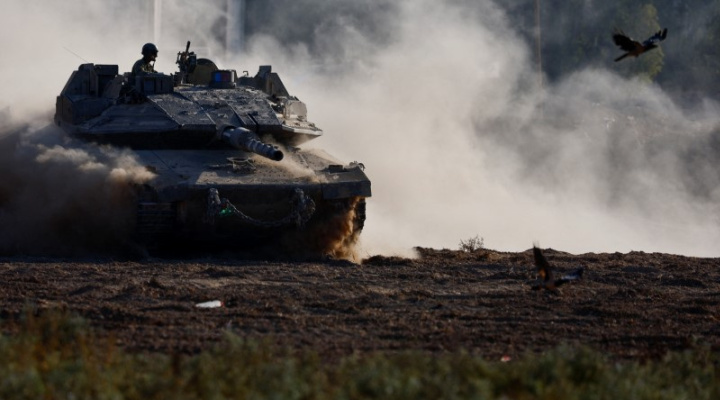
An Israeli tank maneuvers near the Israel-Gaza border, amid the ongoing conflict between Israel and Hamas, in Israel, Aug. 14, 2024. Photo: REUTERS/Amir Cohen
A new round of Gaza ceasefire talks was underway in the Qatari capital Doha on Thursday afternoon, an official briefed on the meeting told Reuters, with Israel‘s spy chief joining his US and Egyptian counterparts and Qatar’s prime minister for the closed-door meeting.
The talks, an effort to end 10 months of fighting in the Palestinian enclave and bring 115 Israeli and foreign hostages home, were put together as Iran appeared on the point of retaliating against Israel following the assassination of Hamas leader Ismail Haniyeh in Tehran on July 31.
With US warships, submarines, and warplanes dispatched to the region to defend Israel and deter potential attackers, Washington is hoping a ceasefire agreement in Gaza can defuse the risk of a full-out wider regional war.
Hamas officials, who have accused Israel of stalling, did not join Thursday’s talks. However, mediators planned to consult with Hamas’ Doha-based negotiating team after the meeting, the official briefed on the talks told Reuters.
Israel‘s delegation includes spy chief David Barnea, head of the domestic security service Ronen Bar, and the military’s hostages chief Nitzan Alon, defense officials said on Wednesday.
CIA Director Bill Burns and US Middle East envoy Brett McGurk represented Washington at the talks, convened by Qatari prime minister Sheikh Mohammed bin Abdulrahman Al Thani, with Egypt’s intelligence chief Abbas Kamel also in Doha.
Israel and Hamas have each blamed the other for failure to reach a deal but in the run-up to Thursday’s meeting, neither side appeared to rule out an agreement.
A source in the Israeli negotiating team said on Wednesday that Prime Minister Benjamin Netanyahu has allowed significant leeway on a few of the substantial disputes.
Gaps include the presence of Israeli troops in Gaza, the sequencing of a hostage release, and restrictions on access to northern Gaza.
In the lead-up to Thursday’s talks, Hamas, which rejects any US or Israeli intervention in shaping the “day after” the war in Gaza, told mediators that if Israel made a “serious” proposal that is in line with Hamas’ previous proposals the group would continue to engage in negotiations.
Senior Hamas official Sami Abu Zuhri told Reuters on Thursday that the group is committed to the negotiation process and urged mediators to secure Israel‘s commitment to a proposal Hamas agreed to in early July, which he said would end the war and required a full withdrawal of Israeli troops from Gaza.
Even as negotiators arrived in Qatar, fighting continued in Gaza, with Israeli troops hitting targets in the southern cities of Rafah and Khan Younis.
The war began on Oct. 7, when Hamas-led Palestinian terrorists invaded southern Israel, murdered 1,200 people, and kidnapped some 250 hostages, taking them to Gaza. Israel responded with a military campaign aimed at freeing the hostages and dismantling Hamas’ military and governing capabilities.
In a statement Hamas issued late on Wednesday jointly with some smaller factions, it reaffirmed the outstanding demands the factions wanted a ceasefire agreement to achieve.
The group said negotiations “should examine mechanisms to implement what was agreed upon in the framework deal submitted by mediators that would achieve a comprehensive ceasefire, a complete withdrawal of Israeli forces, breaking the siege, opening crossings and reconstruction of Gaza as well as reaching a serious hostages/prisoners deal.”
Iran’s threat of a response to the killing of Haniyeh has added extra gravity to the talks. Three senior Iranian officials have said that only a ceasefire deal in Gaza would hold Iran back from direct retaliation against Israel.
But a possible escalation from the Iranian-backed Hezbollah terrorist organization in southern Lebanon is also weighing on the outlook.
Following a missile strike that killed 12 youngsters in the Golan Heights on July 27, Israel assassinated Hezbollah’s senior military commander Fuad Shukr in Beirut, prompting vows of retaliation from the movement.
Israel and Hezbollah have been exchanging regular fire for months but the exchanges have been kept within tacitly understood red lines that risk being erased if the conflict escalates.
Israel has neither confirmed or denied its involvement in Haniyeh’s killing. The US Navy has deployed warships and a submarine to the Middle East to bolster Israeli defenses.





