 Pod Save America Hosts Call on Democrats to Cut All Israel Military Aid, No Longer Accept AIPAC Funding
 Jews, Israelis Targeted in Austria Amid Surge in Antisemitic Incidents; Local Jewish Community Calls for Action
 ‘All of Our Strength’: Over 1,000 Pro-Israel Activists Gather in DC for Solidarity Conference
 ‘Devastated’: Wesley LePatner, Killed in Manhattan Mass Shooting, Was a Jewish Communal, Philanthropic Leader
 Sen. Angus King Vows to No Longer Vote for Israel Military Aid Until Gaza Conditions Improve
 Europe Won’t Pressure Israel to ‘Commit Suicide’ Amid Gaza Backlash, Palestinian State Push, Says Israeli FM
 Israel’s National Soccer Coach Attacked in Athens Before Soccer Fans Chant ‘F–K Israel, Free Palestine’ at Match
 New York Judge Sentences Neo-Nazi to 5 Years for Livestreaming Bomb Threats Against Jewish Hospitals
 US Pressures Lebanon to Issue Cabinet Decision to Disarm Hezbollah Before Talks Continue
 UK Plans to Recognize Palestinian State in September Unless Israel Meets Conditions, Starmer Says


Here’s What You Should Know About Israeli Settlements
Error: Contact form not found.
 by Chaim Lax

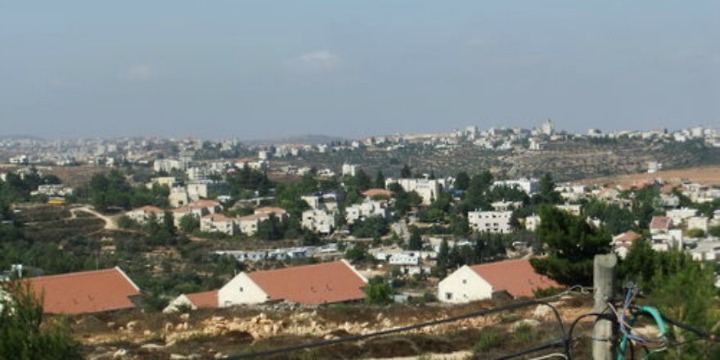
The Jewish community of Beit El in Judea and Samaria. Photo: Yaakov via Wikimedia Commons.
Whether in the mainstream media, academia, or a casual conversation among friends, any discussion of Israeli politics inevitably brings up the issue of “Israeli settlements.”
But while the term “Israeli settlements” has entered the popular lexicon, how much does the average person really know about them?
Let’s take a look at the history of the Israeli settlements from their genesis in 1967 until today.
The First Settlements (1967-1968)
In June 1967, Israel fought a defensive war against the armies of Egypt, Jordan, and Syria. After six days of fighting, the Israel Defense Forces (IDF) emerged victorious and not only pushed back the enemy militaries, but also gained control over large swathes of territory: the Sinai Desert and Gaza Strip from Egypt, the Golan Heights from Syria, and eastern Jerusalem and the West Bank from Jordan.
Soon after the war ended, Israelis began to undertake grassroots initiatives to establish communities in these new territories. These Israelis viewed this community-building as a continuation of the pioneering spirit that had infused the Jewish community before the creation of the State of Israel.
Most of these early settlements, which were few in number, were established in areas that were designated as being of strategic value by the Alon Plan, in order to keep Israel safe.
The Alon Plan, which was conceived by the Israeli Minister of Labor Yigal Alon between June and July 1967, was a program whereby Israel would maintain control over certain parts of the West Bank (primarily the Jordan Valley, Gush Etzion, and eastern Jerusalem) in order to protect itself from future Jordanian attacks. The rest of the territory would either go to Jordan or a Palestinian administration.
According to the vision of the Alon Plan, the newly founded settlements would serve as advanced positions that would help secure these new defensible borders.
In addition to security considerations, some of the early settlements were established on the sites of Jewish communities that had been depopulated during periods of violence, particularly during the Arab insurgency (1947-1948) and the Israeli War of Independence.
For example, Kibbutz Kfar Etzion, one of the first settlements to be established, was set up in September 1967 by children of the original residents of the kibbutz, who had largely been killed in a Jordanian-led massacre in May 1948.
The Second Wave of the Settlements (1968-1980)
In 1968, a group of religious families attempted to set up a community in the ancient city of Hebron, which had been emptied of its Jewish population following the 1929 Hebron Massacre. This group ultimately became the nucleus of the nearby settlement of Kiryat Arba and, later, the re-established Jewish community of Hebron.
This attempt heralded the “second wave” of settlement building, which was more ideologically driven and viewed the establishment of Jewish communities as a national and religious imperative, due to the status of Judea and Samaria (the traditional Jewish name for the West Bank) as the birthplace of the Jewish people.
In 1974, the Gush Emunim (“Bloc of the Faithful”) movement was officially established as a grassroots organization that would work towards setting up new Jewish communities across Judea and Samaria.
Following the election of Menachem Begin’s right-wing government in 1977, the Israeli government became more amenable to the establishment of Jewish communities across the West Bank.
However, this does not mean that Israelis were given carte blanche to set up settlements anywhere they saw fit.
In a now-famous 1979 incident, the Israeli government was compelled by the Supreme Court to move the nascent community of Elon Moreh six miles (10 kilometers) down the road following an appeal brought by Arab residents of a nearby village.
Settlement Growth, Settlement Freezes, and Settlement Destruction
Since the 1970s, there have been periods of settlement growth within Judea and Samaria as well as periods of construction freezes, particularly during periods of peace negotiations with the Palestinians and other neighboring Arab countries.
Due to the freeze on founding new settlements since the Oslo peace process, outposts were built by those who wished to create new communities in Judea and Samaria but did not have the permission of the Israeli government. Since the mid-1990s, several of these outposts have been recognized by the Israeli government as official settlements.
On occasion, the Israeli government has also uprooted Jewish communities in the West Bank, including four that were dismantled as part of the disengagement from Gaza in 2005 and the Amona settlement that was evacuated between 2006 and 2017.
For further information on settlements, outposts, and settlement blocs, see Blocs, Towns & Outposts: What Are the Settlements?
The author is a contributor to HonestReporting, a Jerusalem-based media watchdog with a focus on antisemitism and anti-Israel bias — where a version of this article first appeared.