 Pod Save America Hosts Call on Democrats to Cut All Israel Military Aid, No Longer Accept AIPAC Funding
 Jews, Israelis Targeted in Austria Amid Surge in Antisemitic Incidents; Local Jewish Community Calls for Action
 ‘All of Our Strength’: Over 1,000 Pro-Israel Activists Gather in DC for Solidarity Conference
 ‘Devastated’: Wesley LePatner, Killed in Manhattan Mass Shooting, Was a Jewish Communal, Philanthropic Leader
 Sen. Angus King Vows to No Longer Vote for Israel Military Aid Until Gaza Conditions Improve
 Europe Won’t Pressure Israel to ‘Commit Suicide’ Amid Gaza Backlash, Palestinian State Push, Says Israeli FM
 Israel’s National Soccer Coach Attacked in Athens Before Soccer Fans Chant ‘F–K Israel, Free Palestine’ at Match
 New York Judge Sentences Neo-Nazi to 5 Years for Livestreaming Bomb Threats Against Jewish Hospitals
 US Pressures Lebanon to Issue Cabinet Decision to Disarm Hezbollah Before Talks Continue
 UK Plans to Recognize Palestinian State in September Unless Israel Meets Conditions, Starmer Says


Greece in Talks With Israel to Develop 2 Billion Euro ‘Iron Dome’
Error: Contact form not found.
 by Reuters and Algemeiner Staff

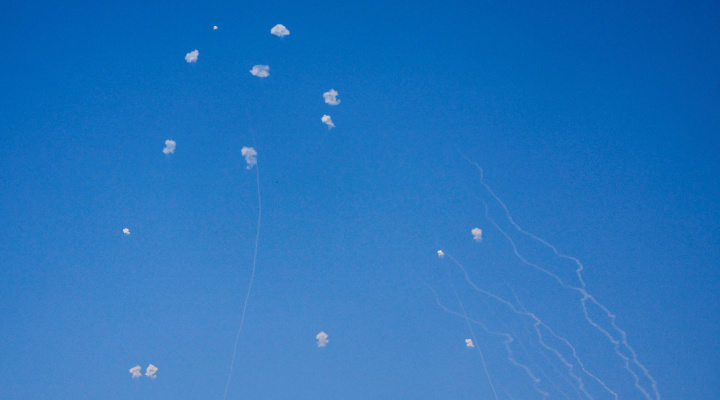
Israel’s Iron Dome anti-missile system intercepts rockets launched from Lebanon towards Israel, amid hostilities between Hezbollah and Israel, as seen from Haifa, northern Israel, Nov. 7, 2024. Photo: REUTERS/Ammar Awad
Greece is in talks with Israel to develop a 2 billion euro ($2.11 billion) anti-aircraft and missile defense dome, part of a wider push to modernize its armed forces as it recovers from a protracted debt crisis, Greek officials said on Thursday.
The defenses would likely mimic Israel‘s Iron Dome and other systems that intercept short- and long-range missiles launched during strikes from its neighbors amid the ongoing conflicts in Gaza and Lebanon.
Greece is keen to invest in its defenses to keep up with its NATO ally and historic rival Turkey, which is also developing its own air defenses, despite some improvement in relations.
“The plan is to create a multi-layer anti-aircraft and anti-drone system,” one source with knowledge of the issue told Reuters after a closed door briefing with Greek Defense Minister Nikos Dendias.
“We are in discussions with Israel,” the source said.
A second official confirmed the scale of the potential deal, adding that Greece needs to spend 12.8 billion euros by 2035 to modernize its armed forces.
The air defenses are part of Athens’ 10-year military purchasing plan that includes acquiring up to 40 new F-35 fighter jets and drones from the US, and four Belharra frigates and Rafale jets from France.
“Our effort is for a quick transition of our armed forces to the 21st century,” Defense Minister Dendias said before the Thursday briefing.
Greece currently uses US Patriot and old Russian S-300 systems to protect its airspace.
Despite some thaw in Greece‘s long-troubled relations with Turkey, its much larger eastern neighbor, the two countries remain at odds on a range of issues including sea boundaries, energy resources and airspace in the eastern Mediterranean.