 Pod Save America Hosts Call on Democrats to Cut All Israel Military Aid, No Longer Accept AIPAC Funding
 Jews, Israelis Targeted in Austria Amid Surge in Antisemitic Incidents; Local Jewish Community Calls for Action
 ‘All of Our Strength’: Over 1,000 Pro-Israel Activists Gather in DC for Solidarity Conference
 ‘Devastated’: Wesley LePatner, Killed in Manhattan Mass Shooting, Was a Jewish Communal, Philanthropic Leader
 Sen. Angus King Vows to No Longer Vote for Israel Military Aid Until Gaza Conditions Improve
 Europe Won’t Pressure Israel to ‘Commit Suicide’ Amid Gaza Backlash, Palestinian State Push, Says Israeli FM
 Israel’s National Soccer Coach Attacked in Athens Before Soccer Fans Chant ‘F–K Israel, Free Palestine’ at Match
 New York Judge Sentences Neo-Nazi to 5 Years for Livestreaming Bomb Threats Against Jewish Hospitals
 US Pressures Lebanon to Issue Cabinet Decision to Disarm Hezbollah Before Talks Continue
 UK Plans to Recognize Palestinian State in September Unless Israel Meets Conditions, Starmer Says


Reuters Accidentally Exposes Gaza ‘Famine’ Claims to Be a Downright Lie
Error: Contact form not found.
 by Rachel O'Donoghue

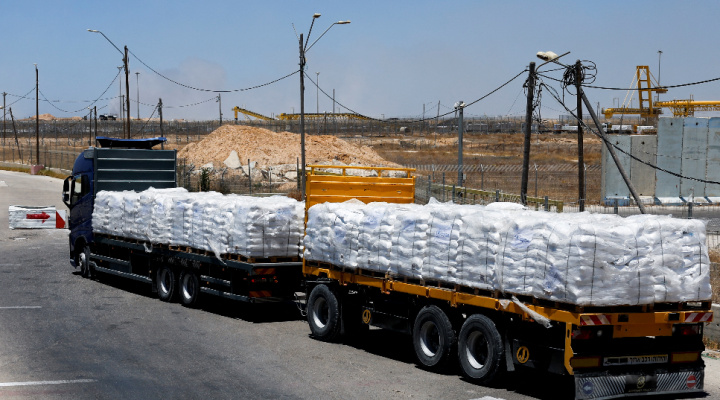
Egyptian trucks carrying humanitarian aid make their way to the Gaza Strip, amid the ongoing conflict in Gaza between Israel and Hamas, at the Kerem Shalom crossing in southern Israel, May 30, 2024. Photo: REUTERS/Amir Cohen
The so-called “special investigation” published by Reuters this week examining the global famine prevention system was certainly revealing — though perhaps not in the way the wire agency intended.
While claiming to expose the failures of the Integrated Food Security Phase Classification (IPC) system in preventing hunger — failures that Reuters insists are through no fault of the IPC — the investigation inadvertently highlighted glaring flaws in how famines are measured, particularly in Gaza.
The article discusses several famines from around the globe, including the alleged one in Gaza, where the IPC had warned of an “imminent famine” in the northern region. That famine, of course, never materialized, with HonestReporting previously revealing how the IPC quietly walked back its claim.
According to Reuters, however, this inaccurate forecast wasn’t due to dubious data or exaggerated claims — it was, naturally, Israel’s fault.
Citing “Israeli bombing and restrictions on movement” as the obstacles to collecting data on malnutrition and non-trauma-related deaths, Reuters sidesteps key facts.
For example, Israel has facilitated the entry of nearly half a million aid trucks into Gaza since the start of the war — information Reuters conveniently omits. Also missing is any mention of Hamas’ well-documented habit of stealing and hoarding aid.
In fact, the word “Hamas” appears a grand total of twice in the 4,000-word piece, and only then in photo captions referencing the “Israel-Hamas war.”
🧵 @Reuters’ “special investigation” accidentally exposes more than it intended about the so-called famine in Gaza. Spoiler: There isn’t one. https://t.co/NmFd7oHVBd
— HonestReporting (@HonestReporting) December 4, 2024
Reuters does acknowledge that the IPC’s data collection in Gaza is flawed, as the organization cannot use its “preferred methods” for assessing malnutrition, allegedly due to Israel’s destruction of hospitals and clinics. This apparently includes the obliteration of all of Gaza’s scales and height boards — tools it says are critical for measuring famine.
The inconvenient truth about Hamas turning hospitals into command centers and weapons depots? Not mentioned.
Instead, humanitarian groups have reportedly trained health workers to measure children’s upper arms, and this is the data upon which famine claims are based.
Yet, the IPC refuses to disclose who trained the workers responsible for collecting the data behind the famine claim, or even identify the workers themselves, citing fears that they “could be targeted by Israel.”
Yes, Reuters genuinely suggests that the IDF might hunt down health workers for reporting a famine. If this sounds conspiratorial, that’s because it is.
A far likelier reason for this secrecy? Naming names might reveal a roster of “health workers” doubling as Hamas operatives.
View this post on Instagram
Even more baffling, despite alleged safety concerns, the IPC didn’t collaborate with Israeli officials — something it has done with other governments in similar crises. Reuters explains this refusal by suggesting that the IPC assumed Israel didn’t want aid to reach starving Palestinians.
The reality? Half a million aid trucks have entered Gaza — even as Hamas continues to hold Israeli civilians hostage.
This is the story Reuters doesn’t want to tell. Instead, it bends over backward to explain why Gaza’s “imminent famine” remains perpetually delayed — always just around the corner, yet never quite arriving.
The author is a contributor to HonestReporting, a Jerusalem-based media watchdog with a focus on antisemitism and anti-Israel bias — where a version of this article first appeared.