 Pod Save America Hosts Call on Democrats to Cut All Israel Military Aid, No Longer Accept AIPAC Funding
 Jews, Israelis Targeted in Austria Amid Surge in Antisemitic Incidents; Local Jewish Community Calls for Action
 ‘All of Our Strength’: Over 1,000 Pro-Israel Activists Gather in DC for Solidarity Conference
 ‘Devastated’: Wesley LePatner, Killed in Manhattan Mass Shooting, Was a Jewish Communal, Philanthropic Leader
 Sen. Angus King Vows to No Longer Vote for Israel Military Aid Until Gaza Conditions Improve
 Europe Won’t Pressure Israel to ‘Commit Suicide’ Amid Gaza Backlash, Palestinian State Push, Says Israeli FM
 Israel’s National Soccer Coach Attacked in Athens Before Soccer Fans Chant ‘F–K Israel, Free Palestine’ at Match
 New York Judge Sentences Neo-Nazi to 5 Years for Livestreaming Bomb Threats Against Jewish Hospitals
 US Pressures Lebanon to Issue Cabinet Decision to Disarm Hezbollah Before Talks Continue
 UK Plans to Recognize Palestinian State in September Unless Israel Meets Conditions, Starmer Says


Iran’s Weakening Will Not Harm Iraq, Deputy Parliament Speaker Says
Error: Contact form not found.
 by Reuters and Algemeiner Staff

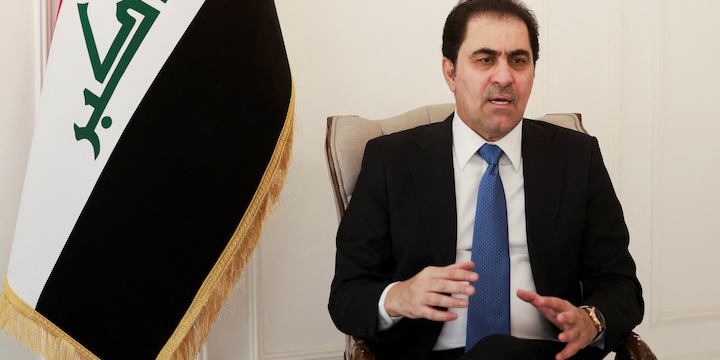
Mohsen al-Mandalawi, deputy speaker of Iraq’s parliament, speaks during an interview with Reuters in Baghdad, Iraq, January 18, 2025. Photo: REUTERS/Ahmed Saad
Iraq will not be negatively affected by the weakening of Iran’s influence in the Middle East, Iraq’s deputy parliament speaker said, with Baghdad looking to chart its own diplomatic path in the region and limit the power of armed groups.
Mohsen al-Mandalawi spoke to Reuters in a recent interview after seismic shifts in the Middle East that have seen Iran’s armed allies in Gaza and Lebanon heavily degraded and Syria’s President Bashar al-Assad overthrown by rebels.
US President Donald Trump’s new administration has promised to pile more pressure on Tehran, which has long backed a number of parties and an array of armed factions in Iraq.
Iraq, a rare ally of both Washington and Tehran, is trying to avoid upsetting its fragile stability and focus on rebuilding after years of war.
“Today, we have stability. Foreign companies are coming to Iraq,” said Mandalawi, himself a businessman with interests in Iraqi hotels, hospitals and cash transfer services.
“Iraq has started to take on its natural role among Arab states. Iran is a neighbor with whom we have historical ties. Our geographical position and our relations with Arab states are separate matters,” he said, speaking at his office in Baghdad’s fortified Green Zone, home to government institutions and foreign embassies.
“I don’t think that the weakening of Iran will negatively impact Iraq.”
Mandalawi is a member of Iraq’s ruling Shi’ite Coordination Framework, a grouping of top politicians seen as having close ties with Iran, and heads the Asas coalition of lawmakers in parliament.
Iraq’s balancing act between Tehran and Washington has been tested by Iran-backed Iraqi armed groups’ attacks on Israel and on US troops in the country after the outbreak of the Israel-Hamas war on Oct. 7, 2023.
That has led to several rounds of tit-for-tat strikes that have since been contained.
During Trump’s first 2017-2021 presidency, ties were tense after the US assassination of Iranian General Qassem Soleimani and top Iraqi militia commander Abu Mahdi al-Muhandis in Baghdad in 2020, leading to an Iranian ballistic missile attack on US forces in Iraq.
In recent months, ahead of Trump taking office again, there have been growing calls in Iraq to limit the role of Iran-backed armed factions.
Iraqi Foreign Minister Fuad Hussein told Reuters in an interview earlier this month that Iraq was trying to persuade armed factions allied with Iran to lay down their arms.
Mandalawi said he believed such a move would take time but it was possible given a shift in focus on growing political and economic interests.
“Limiting arms to the state is important and I hope that it will be implemented,” he said.