 Pod Save America Hosts Call on Democrats to Cut All Israel Military Aid, No Longer Accept AIPAC Funding
 Jews, Israelis Targeted in Austria Amid Surge in Antisemitic Incidents; Local Jewish Community Calls for Action
 ‘All of Our Strength’: Over 1,000 Pro-Israel Activists Gather in DC for Solidarity Conference
 ‘Devastated’: Wesley LePatner, Killed in Manhattan Mass Shooting, Was a Jewish Communal, Philanthropic Leader
 Sen. Angus King Vows to No Longer Vote for Israel Military Aid Until Gaza Conditions Improve
 Europe Won’t Pressure Israel to ‘Commit Suicide’ Amid Gaza Backlash, Palestinian State Push, Says Israeli FM
 Israel’s National Soccer Coach Attacked in Athens Before Soccer Fans Chant ‘F–K Israel, Free Palestine’ at Match
 New York Judge Sentences Neo-Nazi to 5 Years for Livestreaming Bomb Threats Against Jewish Hospitals
 US Pressures Lebanon to Issue Cabinet Decision to Disarm Hezbollah Before Talks Continue
 UK Plans to Recognize Palestinian State in September Unless Israel Meets Conditions, Starmer Says


Shabbat Teaches the Jewish People to Be Different — and We Should Embrace That
Error: Contact form not found.
 by Jeremy Rosen

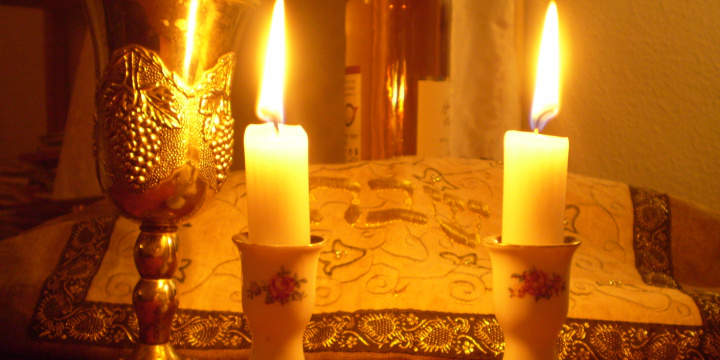
Shabbat candles. Photo: Olaf.herfurth via Wikimedia Commons.
“Moshe then gathered the whole Israelite community and said to them: These are the things that God has commanded you to do. On six days work may be done, but on the seventh day, you shall have a holy rest … You shall kindle no fire throughout your settlements on the Shabbat day” (Shemot 35.1-3).
The fundamental importance of Shabbat is reiterated more than any other mitzvah in the Torah. But little is said in the Torah itself about what to do and what not to, and how to define work. This reference to not burning or rather transferring fire, is the only clarification. Why is fire so important?
Fire was always the most important symbol of civilization and power. It was used not only for cooking in the home, but for almost every example of industrial activity. So much so, that fire came to symbolize society — both religiously through the sacrificial system, as well as through the production of metal instruments both for war and for peace.
Fire fueled early societies and the industrial revolution. If you had to choose one word to describe what human life depended and depends on, fire would be it. This is illustrated by the famous Greek myth of Prometheus who stole fire from the gods and gave it to men, and was punished by having eagles peck away at his chained body.
This law about transferring fire on Shabbat is another way of emphasizing that Shabbat is supposed to be a break from the domination or subordination to external societies. It has to be a different day, one dedicated to family, community and spirituality.
Nowadays electricity and energy are crucial to the functioning of society. Imagine city life with no electricity — air conditioning, heating, elevators, transports, communications all cease to function. But Shabbat tells us that there is another way of living one’s life apart from the dominant culture.
Significantly, the Torah doesn’t say we should not have fire or benefit from it. But rather that we prepare it in advance, so that it’s already there to take advantage of without being involved directly in its generation.
The Hebrew word for gather is Hakhel. This refers to a Biblical command that comes toward the end of the Torah (Dvarim 31:10-12) — gathering all of Israel (men, women, and children, as well as converts) to come together, to hear the reading of the Torah by the ruler or leader of Israel once every seven years.
This ceremony originally took place in Jerusalem during the festival of Sukkot. And it was performed throughout the years of the Temples. The Biblical mitzvah of Hakhel only applies when all the Jewish people reside in Israel.
Another word for community is the noun, Edah. Both come together in this week’s opening sentence of the Torah reading. But the word Hakhel is both a verb and a noun. It is where we get the term we now use for a Jewish community, particularly in the Diaspora, namely the Kahal. In addition, we have the word Am meaning the people. Each of these words convey different facets of Jewish communal and national life, and explain the differences and social conflicts that we experience internally and always have. All of them define what Jews are in different ways — a people, a nation, a community, in terms of social structure and religious activity.
We are a body of people who share a common origin, a national identity, a religious way of life, a culture, and a history that distinguishes us from all others. This is a source of pride but not superiority, and strong desire to preserve our traditions in the face of opposition and prejudice. When the world is in crisis because of its own failed or inadequate systems, we find ourselves caught up as the scapegoat for its deficiencies.
The author is a writer and rabbi, currently based in New York.