 Pod Save America Hosts Call on Democrats to Cut All Israel Military Aid, No Longer Accept AIPAC Funding
 Jews, Israelis Targeted in Austria Amid Surge in Antisemitic Incidents; Local Jewish Community Calls for Action
 ‘All of Our Strength’: Over 1,000 Pro-Israel Activists Gather in DC for Solidarity Conference
 ‘Devastated’: Wesley LePatner, Killed in Manhattan Mass Shooting, Was a Jewish Communal, Philanthropic Leader
 Sen. Angus King Vows to No Longer Vote for Israel Military Aid Until Gaza Conditions Improve
 Europe Won’t Pressure Israel to ‘Commit Suicide’ Amid Gaza Backlash, Palestinian State Push, Says Israeli FM
 Israel’s National Soccer Coach Attacked in Athens Before Soccer Fans Chant ‘F–K Israel, Free Palestine’ at Match
 New York Judge Sentences Neo-Nazi to 5 Years for Livestreaming Bomb Threats Against Jewish Hospitals
 US Pressures Lebanon to Issue Cabinet Decision to Disarm Hezbollah Before Talks Continue
 UK Plans to Recognize Palestinian State in September Unless Israel Meets Conditions, Starmer Says


When Journalists Spread Social Media Disinformation to Attack Israel
Error: Contact form not found.
 by Gilead Ini

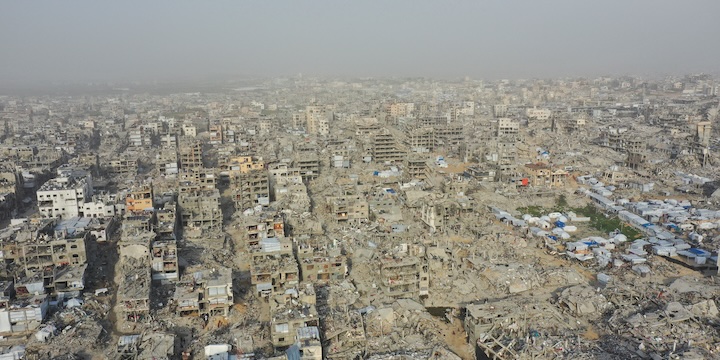
Beit Hanoun, Gaza Strip, March 5, 2025. REUTERS/Mahmoud Al-Basos
News consumers were told about inflammatory leaflets that Israel dropped on Gaza last Wednesday night.
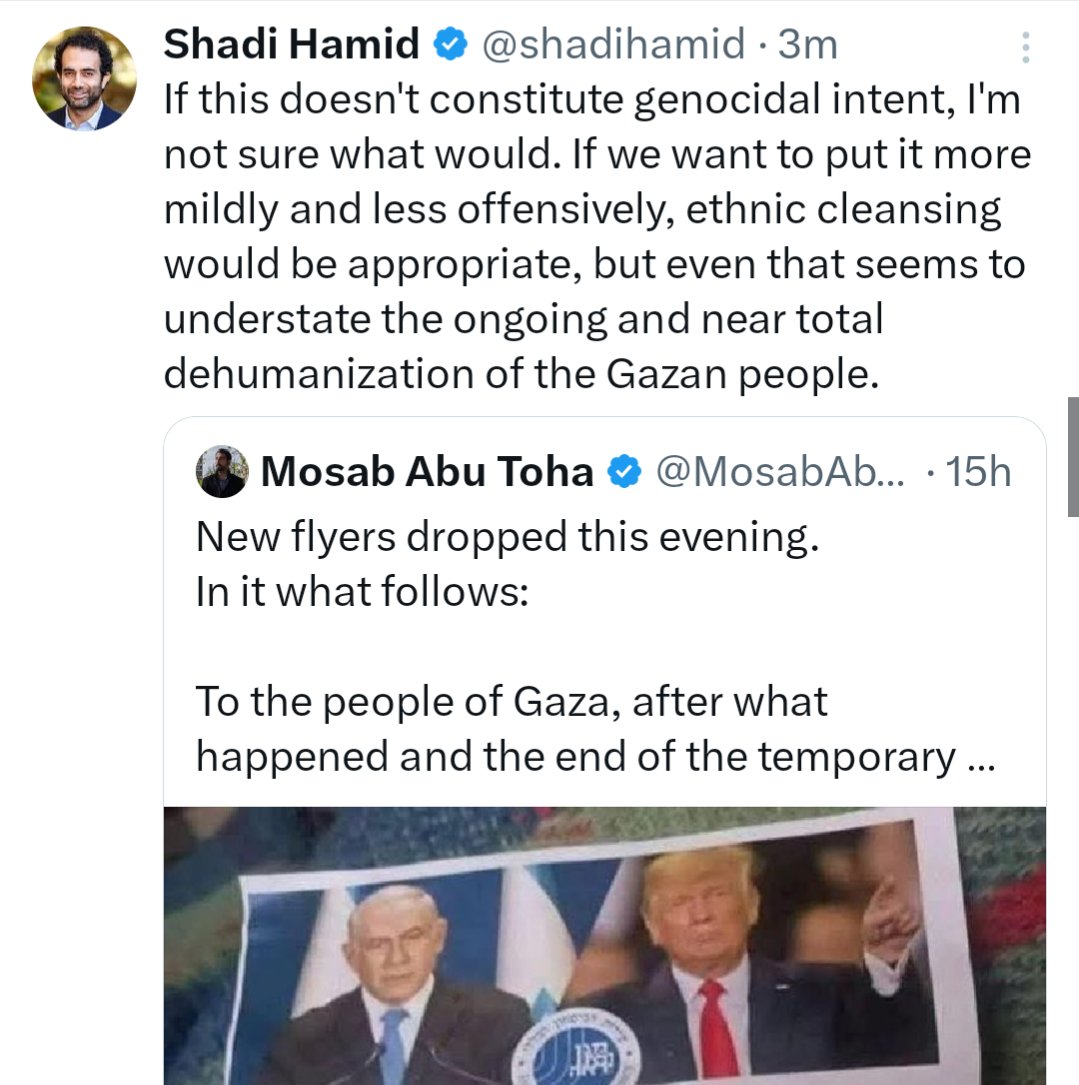
According to reports by ABC and the The Telegraph, the leaflets stated that “The world map will not change if all the people of Gaza vanish.” An online post by a Washington Post columnist charged that the flyer constitutes “genocidal intent.”
Their evidence? Social media said so.
It might not be a surprise, then, that the two news outlets later walk backed their claims, while the Post columnist, Shadi Hamid, quietly deleted his post on X.com.
The ABC article now opens with an editors’ note: “An earlier version of this article said that the IDF had dropped leaflets with disturbing messaging. ABC News has not been able to confirm the authenticity of these leaflets. The IDF denies dropping these leaflets.”
CORRECTION: Earlier report of leaflets with disturbing message in Gaza cannot be confirmed; the IDF has denied dropping them.https://t.co/w6noxC1Amn
— ABC News (@ABC) March 20, 2025
The Telegraph, too, deleted its claim. Its piece now states, “It was reported earlier that Israel had dropped leaflets on Gaza,” and that “The IDF has denied this.”
Not only did Israeli officials deny the authenticity of the leaflet, but the photo shared by so many social media users, of a leaflet purportedly dropped over the last week in Gaza, was the exact same photo posted a month ago. And already then, Israel had denied responsibility for the leaflet.
The media retractions didn’t come in time to stop the spread. Haaretz, for example, extensively quoted from ABC’s own extensive quotes of the flyer. (It later added a paragraph reporting on the ABC editor’s note, but it didn’t change its text and didn’t acknowledge that ABC had actually withdrawn its claim.)
Meanwhile, the claim was echoed in the British Parliament. During a March 20 debate at the House of Commons, Conservative Party politician Kit Malthouse told his peers: “Of course it’s been reported that leaflets were dropped across Gaza last night threatening extermination.” And yet another echo, as the media then reported on Malthouse’s charges.
.
Israel did drop a different leaflet over Gaza –the standard variety calling on Palestinians in a combat zones to evacuate for their own safety. Ironically, even as Israel was attacked as dropping a leaflet it didn’t drop, Al Jazeera accused the country of failing to drop the leaflets that it did, in fact, drop.
Echoes of Amsterdam
This is hardly the first time the media rushed to accept and amplify anti-Israel disinformation from social media.
As Jews and Israelis were being attacked in Amsterdam last November, an anonymous X.com user posted video purportedly showing “an Amsterdam taxi driver attacked and abused” by Israelis.
His allegation was echoed not only by a collection of anti-Israel social media users (including a Guardian columnist) — but also by the Dutch media network RTL News. From RTL, it spread to USA Today, Reuters, Yahoo News, the Jewish Chronicle, and others.
.
The viral clip was scrubbed of its audio. As it had to be — in the unedited footage, the attackers are heard shouting “Palestine!” while the victims, after picking themselves up from the ground, speak to each other in Hebrew. In other words, this wasn’t an attack by Israelis on taxi drivers but the opposite: An assault against Israelis by taxi drivers.
Instead of filtering out social media’s disinformation about anti-Jewish violence, journalists worked to spread it. (To be fair, it was also journalists who exposed RTL’s falsehood.)
Other bad actors on social media posted a mistranslated clip that they falsely claimed showed Israelis in Amsterdam singing gleefully about child casualties in Gaza. As with the mischaracterized clip of the assault, the purpose was to justify the Amsterdam “Jew hunt.” And here, too, news outlets that have elsewhere warned about social media disinformation acted to uncritically spread it. The New York Times, the Guardian, and others told their readers about the non-existent video. Only after CAMERA challenged them to produce evidence did they admit they had seen no such footage.
Social media will inevitably be used as an accelerant for misinformation. Responsible journalism would help stop the spread — if only that were inevitable.
Gilead Ini is a Senior Research Analyst at CAMERA, the foremost media watchdog organization focused on coverage of the Arab-Israeli conflict.