 Pod Save America Hosts Call on Democrats to Cut All Israel Military Aid, No Longer Accept AIPAC Funding
 Jews, Israelis Targeted in Austria Amid Surge in Antisemitic Incidents; Local Jewish Community Calls for Action
 ‘All of Our Strength’: Over 1,000 Pro-Israel Activists Gather in DC for Solidarity Conference
 ‘Devastated’: Wesley LePatner, Killed in Manhattan Mass Shooting, Was a Jewish Communal, Philanthropic Leader
 Sen. Angus King Vows to No Longer Vote for Israel Military Aid Until Gaza Conditions Improve
 Europe Won’t Pressure Israel to ‘Commit Suicide’ Amid Gaza Backlash, Palestinian State Push, Says Israeli FM
 Israel’s National Soccer Coach Attacked in Athens Before Soccer Fans Chant ‘F–K Israel, Free Palestine’ at Match
 New York Judge Sentences Neo-Nazi to 5 Years for Livestreaming Bomb Threats Against Jewish Hospitals
 US Pressures Lebanon to Issue Cabinet Decision to Disarm Hezbollah Before Talks Continue
 UK Plans to Recognize Palestinian State in September Unless Israel Meets Conditions, Starmer Says


It’s Not Just Talk With Iran
Error: Contact form not found.
 by Shoshana Bryen

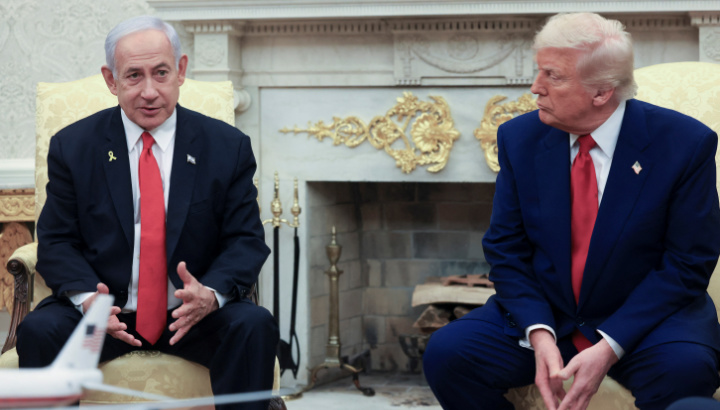
US President Donald Trump meets with Israeli Prime Minister Benjamin Netanyahu in the Oval Office at the White House in Washington, US, April 7, 2025. Photo: REUTERS/Kevin Mohatt
Two tropes came out of the meeting between US President Donald Trump and Israeli Prime Minister Benjamin Netanyahu — it was a great meeting for Israel, and it was a terrible meeting for Israel.
The “great meeting” people note the warm welcome and the fact that Netanyahu was having his second meeting with the president. The “terrible meeting” people note there was no tariff relief and — most important — the president’s announcement that the US is planning direct talks with Iran beginning on Saturday.
“Iran will just stall for time. Iran will cheat like it always does. Iran will use the time to finish its preparations. Iran will …” Iran will what? Yes, it will try to stall. Yes, it will try to continue to cheat. But the opening of kinetic warfare against a country that may actually already have nuclear capability is an enormous undertaking, so it would seem useful for the US and its allies, specifically Israel, to do two things first: talk to Iran while making sure everything is in place, if necessary, for a maximally effective strike against the Islamic Republic with minimal side effects.
This would seem the right moment.
Iran has been ousted from Gaza and Lebanon by Israel, which also paved the way for Iran’s ouster from Syria. There remain Iranian militias in Iraq, but it appears the Iraqis are getting tired of them.
Switch gears for a moment and consider American military activity in the Red Sea, where Houthi terrorists have been a major strategic asset for Iran for years.
On March 15, US Central Command (CENTCOM) informed us that it had “initiated an operation consisting of precision strikes against Iran-backed Houthi targets across Yemen in order to restore freedom of navigation.” CENTCOM also provided details of what it targeted: “The campaign involved a series of air and naval strikes targeting Houthi positions, including radar systems, air defenses, and missile and drone launch sites. These actions were in response to the Houthis’ attacks on commercial shipping and naval vessels in the Red Sea.”
If you read the Israeli, British, and professional press, Iran is effectively abandoning Yemen, unwilling to be caught there or resupply the Houthis.
If you look at the mainstream American press, on the other hand, that story hasn’t had much traction. The New York Times explained how much money the US has spent. The Washington Post reported from the region about Houthi casualties and how the numbers differed from the Trump administration numbers. There was a CNN story suggesting that the Houthis are relishing the attacks. CNN had what it called a “Yemen expert” to question the US endgame. “The Houthis have been bombed tens of thousands of times over the past decade and remain undeterred. So, one is left thinking that the bombing is largely performative: let’s show the world — we’ll do it because we can.”
There is likely a correlation between the American media fixation with “Signalgate” stories that claimed classified information went over the Signal system to the Iranians/Houthis regarding the strikes and a media desire to downplay any possible success of those strikes. Regardless of the truth of the accusation, or the propriety of using Signal, if the result of the operation was Iran pulling out of Yemen, the strikes were a success and “Signalgate” is diminished.
So, next, consider the coincident buildup of American naval and air assets in the region closer to Iran. The list of assets — certainly not exhaustive — includes Patriot batteries, THAD anti-ballistic missile defense systems, and military cargo flights including dozens of C-17s and C-5s arriving in US bases across the region. Gen. Michael Kurilla, commander of CENTCOM, visited Israel for talks with Lt. Gen. Eyal Zamir, chief of staff of the Israel Defense Forces (IDF), on the regional security situation. It was his third visit in the past six months and indicates ever-closer cooperation between two countries with the same end-game — an Iran without nuclear weapons.
It would appear that the United States is planning to take advantage of Iran’s weakened position, to offer the mullahs a chance to step away, and the ability to take the next steps if negotiations fail.
Former CENTCOM commander Lt. Gen. Kenneth Makenzie, Jr., wrote in The New York Times last week that Israel’s presence in CENTCOM — rather than the European Command where it had resided — “aligned Israel with a command center facing the same problem set. That created the structure and processes that have enabled Israel to work with the US and regional neighbors to successfully defend against two major Iranian attacks in 2024. This is a big deal.”
And, perhaps, to prepare for and defend against any Iranian retaliation for military strikes against its nuclear or other assets in the future. That would indeed be a “big deal.” In fact, it would be UUUUUUge.
Shoshana Bryen is Senior Director of The Jewish Policy Center and Editor of inFOCUS Quarterly magazine.