 Pod Save America Hosts Call on Democrats to Cut All Israel Military Aid, No Longer Accept AIPAC Funding
 Jews, Israelis Targeted in Austria Amid Surge in Antisemitic Incidents; Local Jewish Community Calls for Action
 ‘All of Our Strength’: Over 1,000 Pro-Israel Activists Gather in DC for Solidarity Conference
 ‘Devastated’: Wesley LePatner, Killed in Manhattan Mass Shooting, Was a Jewish Communal, Philanthropic Leader
 Sen. Angus King Vows to No Longer Vote for Israel Military Aid Until Gaza Conditions Improve
 Europe Won’t Pressure Israel to ‘Commit Suicide’ Amid Gaza Backlash, Palestinian State Push, Says Israeli FM
 Israel’s National Soccer Coach Attacked in Athens Before Soccer Fans Chant ‘F–K Israel, Free Palestine’ at Match
 New York Judge Sentences Neo-Nazi to 5 Years for Livestreaming Bomb Threats Against Jewish Hospitals
 US Pressures Lebanon to Issue Cabinet Decision to Disarm Hezbollah Before Talks Continue
 UK Plans to Recognize Palestinian State in September Unless Israel Meets Conditions, Starmer Says


How the Torah Teaches Us to Deal With — and Overcome — Physical Illness
Error: Contact form not found.
 by Jeremy Rosen

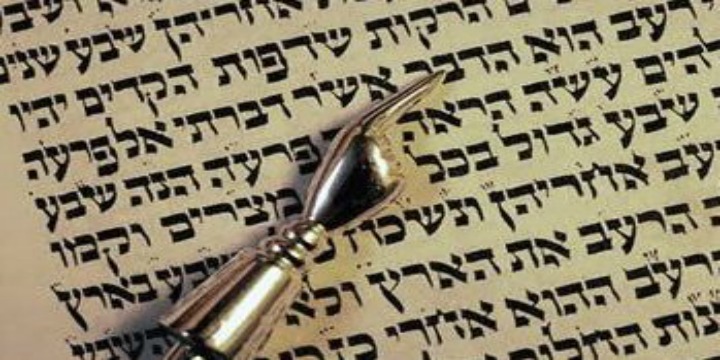
A Torah scroll. Photo: Wikimedia Commons.
The human body is an amazing organism. And a vehicle for spirituality. But we do tend to take it for granted until something bad happens, either from outside or from within.
What I find interesting is the extent to which the Torah is actually concerned with health and the well-being of the body. Although there are other sources in the Torah to support this contention, what we read this week on Shabbat is particularly relevant.
We start with the dislocation that comes with childbirth and the need for recuperation, which is just one of several examples of dislocation in the Torah. But physical change and recovery are only one aspect of the process. There is also a spiritual dimension. Recuperation whether from childbirth or from any dislocation within the human body requires not just the technical side of healing. It also requires a spiritual side.
How do we deal with challenges to our bodies when faced with something unusual? It is not just finding a cure in the physical sense — but how we deal mentally and emotionally.
The Gemara says that if something bad happens, we should examine our ways (Brachot 5a). This does not necessarily mean that we have done anything wrong. But rather that we should look at this as a challenge to do better. Not only should one try to see if they did anything wrong, but also to give the opportunity for reflection — to see what could be improved. It also helps us summon the emotional strength to fight for recovery.
How often have we seen that people have been able to recover from the direst situations because of their personal determination and commitment to heal? We should not simply be thinking in terms of a cure, but also in terms of raising the quality of our lives.
This explains why both with regard to childbirth and physical illness, the priests were engaged in important rituals to help resolve things. The role of the priesthood was not just to perform ceremonies, but also to be the healers and teachers. Although these roles ultimately were removed from them, at the time of the Torah, their role was crucial. And we can learn a lesson from it.
The Torah then goes into what is called leprosy, which really means any serious disease or infection of the body. The priest would first look at the problem and then advise the sufferer on how to proceed, and if it were necessary to put somebody into quarantine.
In its own way, the Torah is saying that we have to take care of our bodies, homes, and the atmospheres in which we live. Cleanliness and sanitation — and not just waiting for something to go wrong. The role of the priesthood is to remind us of the spiritual dimension. We need doctors and priests metaphorically, to help us overcome the challenges we face. The detail the Torah goes into during these chapters underlines how seriously health, cleanliness, and the spiritual qualities are for us.
The author is a writer and rabbi, currently based in New York.