 Pod Save America Hosts Call on Democrats to Cut All Israel Military Aid, No Longer Accept AIPAC Funding
 Jews, Israelis Targeted in Austria Amid Surge in Antisemitic Incidents; Local Jewish Community Calls for Action
 ‘All of Our Strength’: Over 1,000 Pro-Israel Activists Gather in DC for Solidarity Conference
 ‘Devastated’: Wesley LePatner, Killed in Manhattan Mass Shooting, Was a Jewish Communal, Philanthropic Leader
 Sen. Angus King Vows to No Longer Vote for Israel Military Aid Until Gaza Conditions Improve
 Europe Won’t Pressure Israel to ‘Commit Suicide’ Amid Gaza Backlash, Palestinian State Push, Says Israeli FM
 Israel’s National Soccer Coach Attacked in Athens Before Soccer Fans Chant ‘F–K Israel, Free Palestine’ at Match
 New York Judge Sentences Neo-Nazi to 5 Years for Livestreaming Bomb Threats Against Jewish Hospitals
 US Pressures Lebanon to Issue Cabinet Decision to Disarm Hezbollah Before Talks Continue
 UK Plans to Recognize Palestinian State in September Unless Israel Meets Conditions, Starmer Says


Bret Stephens Says ‘Never Again’ to Peter Beinart, but New York Times Fawns
Error: Contact form not found.
 by Ira Stoll

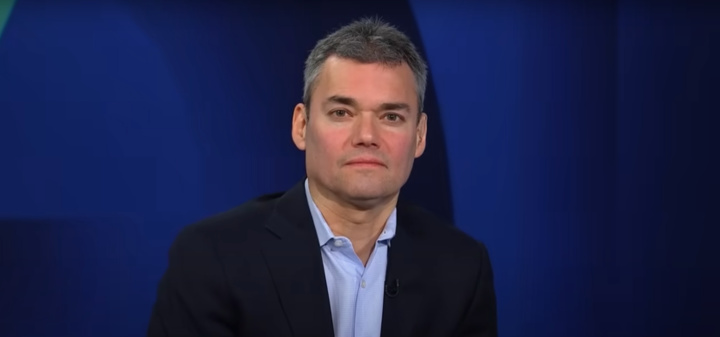
Peter Beinart, a prominent anti-Israel writer, being interviewed in January 2025. Photo: Screenshot
One of the big problems with New York Times coverage of Israel and American Jewry is the extent to which it relies on a single voice who is out of the mainstream and who isn’t a particularly reliable guide — Peter Beinart.
How far beyond the pale is Beinart? A Times columnist who is more sensible, Bret Stephens, recently wrote in Sapir about an invitation that involved “a well-known Jewish writer whose political views had, over the years, shifted from center-left Zionism to far-left anti-Zionism. The two of us had previously appeared in at least a dozen public events and, notwithstanding our deep political differences, had an amicable offstage relationship. There was also a generous honorarium on offer.”
Stephens wrote, “This time, however, something in me revolted at the thought of seeing my name next to his. I told the organizer that I would not share a platform with him. Not after October 7. Not for any amount of money. Never again.”
It was clearly a reference to Beinart. Stephens wrote, “To call now for the end of Israel invites the destruction of the Jews. That’s not a position that deserves a stage, particularly when it isn’t even made forthrightly. It fails the test of intellectual seriousness and honesty.”
Yet the New York Times has given Beinart a stage — with at least 11 Times bylines after October 7. I’ve called him the New York Times‘s favorite Jew.
Beinart’s latest piece for the Times was published April 18, complaining about what he calls a “redefinition of Jewishness” to include Zionism.
He claims that “in New York alone, at least 10 non-Zionist or anti-Zionist minyanim, or prayer communities, have sprouted in the past several years.” As much as Beinart may insist or attempt to portray anti-Zionism as authentically Jewish, these communities are going to have issues when they confront the actual words of the Hebrew Bible, with its story of the journey of the Jewish people to the land God promised and verses such as “If I forget thee, O Jerusalem, let my right hand forget her cunning.” The ones redefining Judaism are the anti-Zionists, not the Zionists.
Some of these anti-Zionist groups billing themselves as “Jewish” exist “with organizing support from Christians for a Free Palestine.” Or they are funded with money from the non-Jewish Rockefeller Brothers Fund (on whose board Beinart sits, a fact not disclosed to Times readers). There’s nothing wrong with Jewish groups taking non-Jewish money for Jewish purposes, but taking it to undermine Israel or to redefine Judaism as anti-Israel activism is something else. The Beinart column talks extensively about Jewish Voice for Peace without disclosing to Times readers that Beinart is on the board of a foundation that is one of its main funders.
If the regular appearances of Beinart’s column in the Times weren’t enough, the Times book review recently ran a piece that deifies Beinart, referring to his writing as “scriptural” and fawning about his supposed courage. “For years, and at great personal cost, Beinart has been one of the most influential Jewish voices for Palestine,” the Times book reviewer writes. Beinart may have paid a personal cost, but professionally, he’s done okay for himself: he’s a contributing opinion writer at the New York Times, a $182,710 a year distinguished professor at the City University of New York, and runs around giving speeches at Stanford, Princeton, and Harvard.
The Times briefly came to its senses and dumped Beinart as a contributing writer in April 2021 as part of a broader housecleaning, but he’s since regained the title. A year ago, when I wrote about this, I said Beinart’s utility at the Times was commercial: “Some portion of the Times online readership — alienated graduate students and other young, college educated liberals, along with increasing numbers of non-Americans — are looking for someone to give them a pass to hate Israel, basically to excuse their antisemitism. Beinart serves that function.” In that sense, Beinart himself is the New York Times version of those Jewish anti-Israel protesters on college campuses that he devotes his column so ardently to defending.
Good for Bret Stephens for giving Beinart the “never again” treatment. Eventually maybe the people running the New York Times will wise up and make the same call.
Ira Stoll was managing editor of The Forward and North American editor of The Jerusalem Post. His media critique, a regular Algemeiner feature, can be found here.